

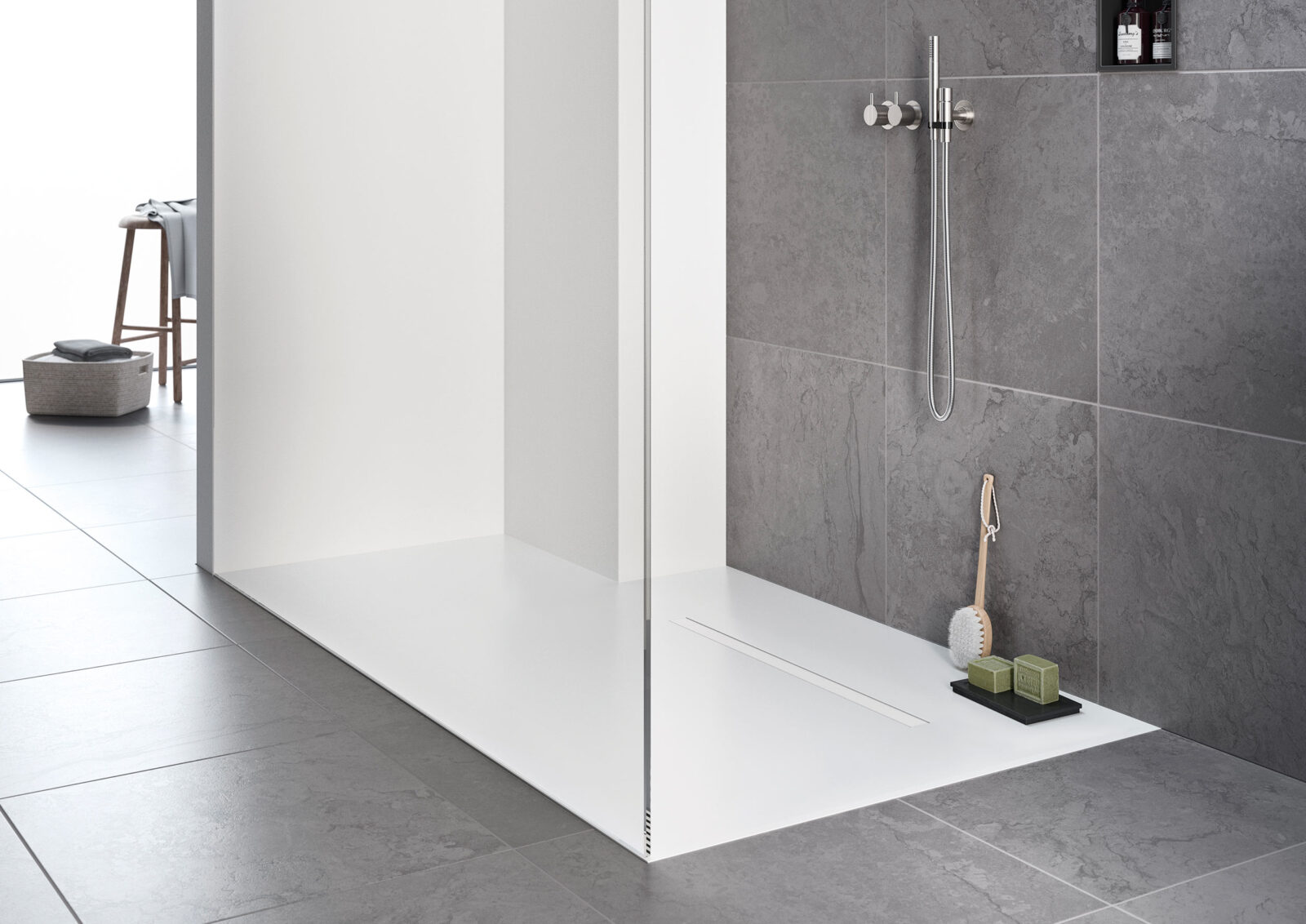
Shower trays play a key role in bathroom performance. In hotels, gyms, healthcare spaces, and residential projects, the wrong tray can lead to leaks, hygiene issues, and costly repairs. Many specifiers default to standard shower trays because they are easy to source. However, standard sizes often fail to suit real-world layouts.
Bespoke shower trays offer an alternative. They are made to exact dimensions and designed to suit the space, not the other way around. This guide explains the difference between bespoke shower trays and standard trays. It focuses on what specifiers need to know before making a decision.
The article covers performance, design, compliance, installation, cost, and long-term value.
What Is a Standard Shower Tray?
A standard shower tray is mass produced. It comes in fixed sizes and shapes. Most are made from acrylic, stone resin, or ceramic.
Common Standard Tray Sizes
- 700 x 700 mm
- 800 x 800 mm
- 900 x 900 mm
- 1200 x 800 mm
These sizes suit simple layouts. They work best in new builds with clear square spaces.
Limits of Standard Shower Trays
- Fixed sizes only
- Limited drain positions
- Often require layout changes
- More joints and seals
In complex projects, these limits create problems.
What Is a Bespoke Shower Tray?
A bespoke shower tray is made to order. It is produced to exact dimensions, shapes, and drain positions.
Key Features of Bespoke Shower Trays
- Made to fit the space
- Custom shapes and sizes
- Flexible drain locations
- Seamless integration
Bespoke trays suit both commercial and high-end residential projects.
Why the Choice Matters for Specifiers?
Specifiers must balance design, performance, cost, and compliance. Shower trays affect all four.
A poor choice can cause:
- Water leaks
- Slip risks
- Hygiene failures
- Maintenance issues
A well specified tray supports long-term performance and user safety.
Size and Layout Flexibility
Standard Trays and Layout Issues
Bathrooms rarely follow perfect shapes. Walls are often out of square. Services may sit in awkward positions.
Standard trays force compromises such as:
- Cutting tiles to fit
- Adding filler panels
- Moving walls or drains
These changes increase labour time and cost.
Bespoke Shower Trays Solve Layout Problems
Bespoke trays match the space exactly.
Benefits include:
- No wasted gaps
- No filler strips
- Clean edge details
- Better visual balance
This is valuable in refurbishments and heritage buildings.
Drainage Position and Flow
Drainage is critical in wet areas.
Drain Limits with Standard Trays
Most standard trays have fixed drain positions. This often causes issues when existing pipework does not align.
Problems include:
- Raised floors
- Extra boxing
- Slow water flow
Bespoke Trays Allow Drain Control
Bespoke shower trays allow:
- Drain is placed where needed
- Linear or central drains
- Improved water flow
According to UK Building Regulations Part H, proper drainage alignment reduces the risk of standing water and leaks.
Slip Resistance and Safety
Safety is a key concern in commercial bathrooms.
Risks with Standard Trays
Some standard trays focus on cost over safety. Smooth finishes can become slippery when wet.
Slip accidents are a major issue. The Health and Safety Executive reports that slips are among the most common causes of workplace injuries.
Bespoke Trays Can Improve Safety
Bespoke shower trays can include:
- Textured finishes
- Controlled gradients
- Even water fall
This helps reduce slip risks in hotels, gyms, and care settings.
Hygiene and Cleaning Performance
Hygiene standards continue to rise.
Hygiene Challenges with Standard Trays
Standard trays often require:
- Multiple seals
- Visible joints
- Hard to reach edges
These areas trap dirt and moisture.
Bespoke Trays Support Hygiene
Bespoke shower trays often offer:
- Fewer joints
- Seamless fit to walls
- Non-porous surfaces
The UK Food Standards Agency recommends smooth, non absorbent surfaces in wet environments to support hygiene control.
Material Performance Comparison
Common Materials Used
| Feature | Standard Trays | Bespoke Trays |
|---|---|---|
| Size flexibility | Low | High |
| Drain options | Limited | Flexible |
| Joint count | Higher | Lower |
| Hygiene control | Moderate | High |
| Installation fit | Variable | Precise |
Bespoke trays often use solid-surface or cultured-stone materials. These materials resist water damage and wear.
Installation Time and Site Risk
Standard Tray Installation Risks
Standard trays often need adjustments on-site.
This leads to:
- More cutting
- Higher error risk
- Longer install time
Bespoke Trays Reduce Site Issues
Bespoke shower trays arrive ready to fit.
Advantages include:
- Faster installation
- Less site waste
- Fewer callbacks
This is useful in hotel refurbishments where time matters.
Waterproofing and Leak Prevention
Leaks cause serious damage.
Leak Risks with Standard Trays
- Poor alignment
- Excess seals
- Inconsistent falls
These increase failure risk.
Bespoke Trays Improve Waterproofing
Bespoke trays are designed into the space.
Benefits include:
- Accurate falls
- Secure wall junctions
- Reduced seal reliance
The British Standards Institution highlights that correct falls and alignment reduce long-term water ingress issues.
Visual Design and Aesthetics
Design quality affects user experience.
Limits of Standard Trays
- Basic colours
- Visible step-ups
- Standard shapes
These restrict creative freedom.
Bespoke Shower Trays Support Design Intent
Bespoke trays allow:
- Flush floor designs
- Colour matching
- Clean minimal lines
This suits modern bathrooms and spa-style spaces.
Accessibility and Inclusive Design
Inclusive design is essential.
Issues with Standard Trays
Standard trays often create:
- Raised edges
- Limited sizes
- Poor wheelchair access
Bespoke Trays Support Accessibility
Bespoke options allow:
- Level access showers
- Wide entry points
- Custom gradients
This supports Part M of the UK Building Regulations for accessible bathrooms.
Long-Term Cost and Value
Initial price is not the full cost.
Standard Tray Cost Risks
- Higher maintenance
- More repairs
- Earlier replacement
Bespoke Tray Value Over Time
Bespoke shower trays offer:
- Longer lifespan
- Lower maintenance
- Reduced water damage risk
According to the Royal Institute of British Architects, durable materials reduce whole life costs in commercial buildings.
Sustainability Considerations
Sustainable design is now expected.
Standard Tray Waste Issues
- Off-cuts on site
- Shorter lifespan
- Replacement waste
Bespoke Trays Reduce Waste
- Made to size
- Less site waste
- Longer service life
The UK Green Building Council supports the use of durable materials as part of sustainable building strategies.
When Standard Shower Trays Still Work
Standard trays can still suit:
- Simple layouts
- Budget led projects
- Small residential bathrooms
They remain a valid choice in the right setting.
When Bespoke Shower Trays Are the Better Choice
Bespoke trays suit:
- Hotels and leisure
- Commercial washrooms
- Complex refurbishments
- Premium residential projects
They offer control and confidence for specifiers.
Key Specification Checklist
Before choosing, consider:
- Exact room size
- Drain position
- Slip resistance needs
- Hygiene standards
- Accessibility requirements
- Installation timeline
This helps avoid costly changes later.
Frequently Asked Questions
What is the main difference between bespoke and standard shower trays?
The main difference is size flexibility. Bespoke trays are made to exact dimensions. Standard trays come in fixed sizes.
Are bespoke shower trays more expensive?
The upfront cost can be higher. However, long-term costs are often lower due to reduced maintenance and fewer failures.
Do bespoke shower trays take longer to supply?
Lead times vary. Many UK manufacturers offer short production times due to local manufacturing.
Are bespoke shower trays suitable for commercial use?
Yes. They are widely used in hotels, gyms, and healthcare settings due to durability and hygiene benefits.
Can bespoke shower trays support level access showers?
Yes. Bespoke trays are ideal for level access and inclusive bathroom design.
Final Thoughts
Choosing between bespoke shower trays and standard trays is not only about price. It is about performance, safety, hygiene, and long-term value. Standard trays work in simple spaces. Bespoke shower trays provide control where layouts are complex and standards are high.
For specifiers who want fewer risks, better design outcomes, and long-term reliability, bespoke shower trays offer a clear advantage. UK manufacturers like Versital support this approach by producing made-to-order shower trays that meet modern design and performance demands.