

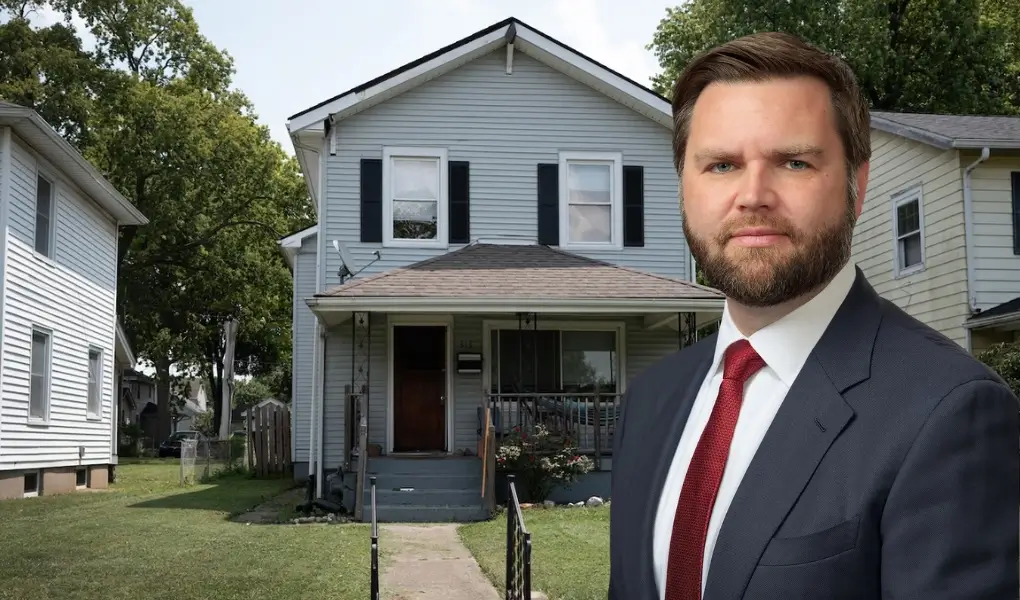
Vice President James David Vance’s private residence in Cincinnati offers far more than political curiosity. It represents a layered architectural artifact, a real estate milestone, and a powerful narrative of geographic and economic progression in Ohio.
Built in 1858 and set on a wooded bluff overlooking the Ohio River, the property in East Walnut Hills stands in stark contrast to Vance’s modest childhood home in Middletown.
Understanding this estate through an architectural and spatial lens reveals why it holds both cultural and structural significance.
A Landmark Estate in East Walnut Hills
Vance and his wife, Usha Vance, purchased the historic home in 2018 for about $1.4 million. Today, estimates place its value near $2.1 million.
The residence sits along William Howard Taft Road, roughly three miles northeast of downtown Cincinnati. According to reporting by the Cincinnati Enquirer, the home spans about 6,405 square feet and rests on nearly 2.3 acres of elevated land.
This positioning offers a rare blend of urban accessibility and natural immersion. Vance himself has described the property as an ideal balance between city life and quiet retreat. Wildlife sightings such as deer and wild turkey are common despite the home’s proximity to Cincinnati’s commercial core.
- Five bedrooms and nearly five bathrooms
- Four working fireplaces
- A carriage house and multiple guest structures
- Library and formal staircase with historic detailing
- Swimming pool and hot tub integrated into landscaped grounds
The spatial footprint allows for expansive views southward toward the Ohio River. This geographic relationship is crucial.
Properties on elevated riverfront bluffs have historically commanded premium valuations due to flood safety, air circulation, and scenic advantage.
Architectural Significance: Gothic Revival Meets Victorian Expression
The estate’s architectural pedigree is unusually strong. Designed by Samuel Hannaford, the influential architect behind Cincinnati Music Hall and City Hall, the structure reflects a transitional period between Mid Century Gothic Revival and High Victorian Gothic design. Architectural historian Walter E. Langsam has categorized the house as a “rustic” example of this stylistic shift.
These design movements emphasize verticality, textured masonry, and dramatic rooflines. While the original brick facade was later covered with white clapboards, many defining elements remain intact. Nearly 11 foot ceilings, original wood flooring, and decorative molding preserve the building’s 19th century character.
- Custom masonry detailing around windows and entryways
- Steeply pitched roof geometry consistent with Gothic forms
- White spindled staircase anchoring interior circulation
- Library space designed as a formal intellectual retreat
- Primary suite with river facing fenestration
The property once featured a rooftop widow’s walk. Historical accounts suggest this lookout platform provided uninterrupted river views before it was destroyed by fire. Such features were common in affluent river cities where commercial shipping traffic shaped daily life.
Historic Lore and Underground Railroad Connections
Local legend suggests the home may have functioned as a stop on the Underground Railroad. Some accounts reference a rumored basement hideaway used to shelter enslaved individuals seeking freedom before the Civil War. While definitive archival confirmation remains limited, the narrative adds cultural depth to the structure’s provenance.
The 1858 construction date anchors the estate firmly in pre war American history. This temporal context enhances both preservation value and storytelling relevance. Properties from this era that retain architectural integrity often command strong market interest from heritage focused buyers.
Modern Living Experience and Security Reality
Following Vance’s election as Vice President, the living experience around the property has changed significantly.
Reports from Business Insider note that frequent road closures and Secret Service checkpoints now shape access to William Howard Taft Road when the Vice President is expected to visit.
Security upgrades include more than $28,000 in enhanced window protection systems. These measures became particularly visible after a January 2026 incident in which a suspect allegedly broke multiple windows with a hammer while the Vance family was in Washington, D.C.
Such security overlays are typical for senior federal officials maintaining private residences. They create logistical challenges for neighborhoods but also raise property prestige and visibility.
Interior Craftsmanship and Estate Grounds
The estate’s interior design reflects continuity rather than renovation driven disruption. According to listing details highlighted by Realtor.com, the home retains much of its original craftsmanship. Wood floors show historic wear patterns that reveal previous circulation paths. Decorative plasterwork and deep window casings emphasize material authenticity.
The outdoor environment is equally deliberate. Mature gardens soften the Gothic massing and frame sightlines toward the river. Landscape design balances privacy with visual openness.
- Layered tree canopy for seasonal shading
- Stone pathways connecting guest houses
- Pool terrace oriented for maximum sunlight exposure
- Natural slope management to prevent erosion
Features such as guest houses and carriage structures reinforce the estate’s historical function as a semi rural retreat. These outbuildings also increase functional flexibility for modern hosting and staff accommodation.
Real Estate Progression: From Middletown Roots to Cincinnati Estate
Understanding Vance’s Ohio properties requires comparison. His childhood home in Middletown, a two story structure built in 1900, spans about 2,000 square feet. The residence on McKinley Street was central to his memoir Hillbilly Elegy, symbolizing working class instability and economic struggle.
Contrast this with the East Walnut Hills estate:
- Middletown home: roughly 2,000 square feet
- Cincinnati estate: over 6,400 square feet
- Approximate childhood home value: about $220,000
- Cincinnati purchase price: $1.4 million
- Current estimated Cincinnati value: about $2.1 million
This progression illustrates a measurable shift in socioeconomic positioning. Rather than celebrity spectacle, it reflects strategic investment in heritage real estate within a stable Midwestern market.
Relationship to the Official Vice Presidential Residence
While the Cincinnati home remains Vance’s primary private property in Ohio, his official residence is Number One Observatory Circle in Washington, D.C. This federally maintained mansion has housed vice presidents since the 1970s.
The dual residence dynamic underscores a common reality for national leaders. Private homes maintain personal identity and local ties. Official residences provide logistical infrastructure and security capacity.
Market Context and Long Term Value
Heritage estates in historic neighborhoods like East Walnut Hills often outperform newer construction in long term appreciation. Data reviewed by Mansion Global suggests buyers increasingly value architectural authenticity and land scale in urban markets.
Key value drivers for the Vance property include:
- Architectural authorship by Samuel Hannaford
- Pre Civil War construction date
- Large acreage near downtown Cincinnati
- River view orientation
- Security infrastructure tied to national office
These factors combine structural rarity with narrative significance. That blend is difficult to replicate in modern development.
Conclusion: A Property That Tells a Larger Story
Vice President JD Vance’s Cincinnati residence stands as more than a political footnote. It is a case study in architectural continuity, geographic advantage, and real estate mobility within Ohio.
From the compact Middletown childhood home to a Gothic Revival estate overlooking the Ohio River, the trajectory reflects both personal advancement and strategic property ownership.
In an era when historic homes often face demolition or insensitive renovation, the preservation of this 1858 structure offers a reminder of how built environments can anchor identity.
For analysts of architecture, urban development, and political biography alike, the East Walnut Hills estate represents a compelling intersection of design, history, and modern governance.