

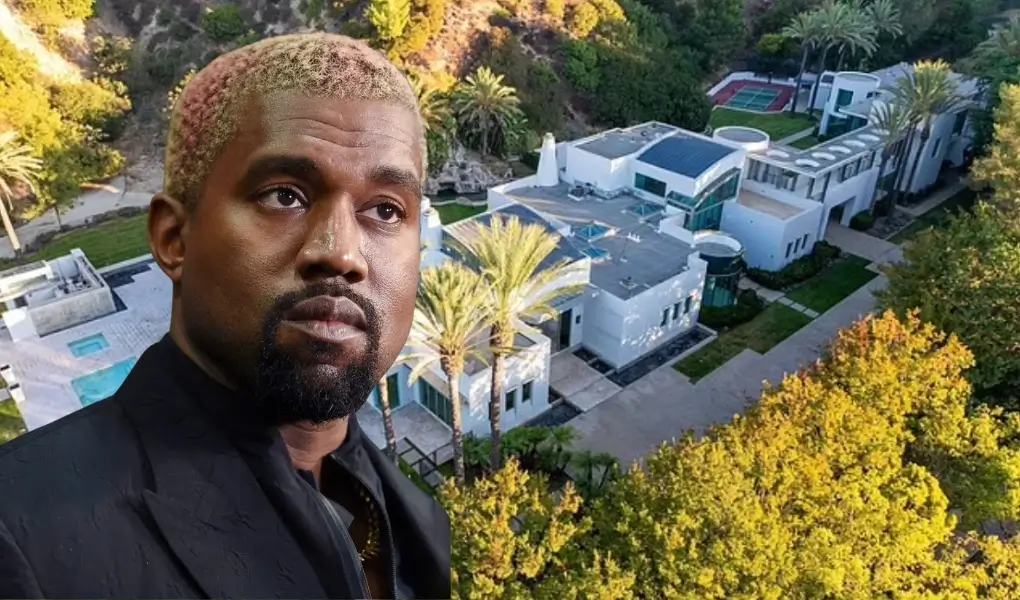
When Kanye West, now legally known as Ye, purchased a $35 million estate in October 2024, it signaled more than another celebrity real estate headline. It marked a decisive architectural and lifestyle pivot. After a costly and controversial experiment with stripped concrete minimalism in Malibu, Ye shifted toward a fully realized luxury residence designed for comfort, privacy, and high-profile entertaining. His new property at 72 Beverly Park Street sits in the elite enclave of Beverly Hills, California, specifically within the guarded community of North Beverly Park, one of the most exclusive residential zones in the United States.
This article explores the architectural significance, amenities, real estate context, and lifestyle implications behind the headline-grabbing purchase commonly searched as the Kanye West Beverly Hills house.
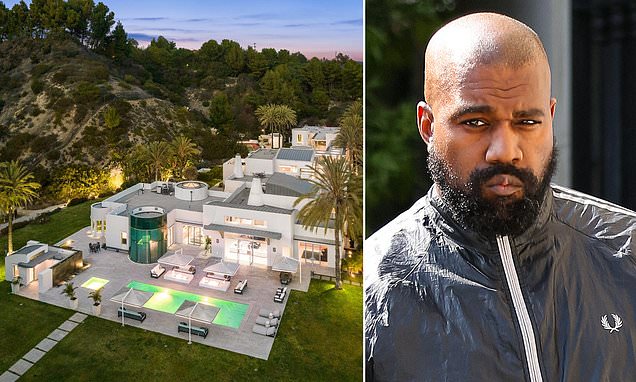
Aerial view of the $35 million Beverly Park estate at twilight
Architectural Pedigree and Property Origins
The mansion was originally commissioned in 2000 by mathematician and publisher Norman Zada, founder of Perfect 10 magazine. Designed by megamansion specialist Richard Landry, often referred to as the “King of the Megamansion,” the residence embodies a Mediterranean-inspired architectural language fused with modern luxury engineering.
Spanning roughly 20,000 square feet on 6.79 acres, the estate prioritizes spatial flow and visual drama. A defining structural element is a futuristic steel-columned bridge with a skylight canopy. This bridge connects the main residence to a multi-level guest house and a dedicated entertainment pavilion. The separation of private living zones from hosting areas reflects contemporary luxury design trends focused on privacy management.
From an expert architectural standpoint, Landry’s design approach contrasts sharply with the stark brutalist philosophy Ye previously pursued in Malibu. Where brutalism emphasizes raw structure and austerity, this Beverly Park residence embraces layered material richness, curvature, and resort-style landscaping.
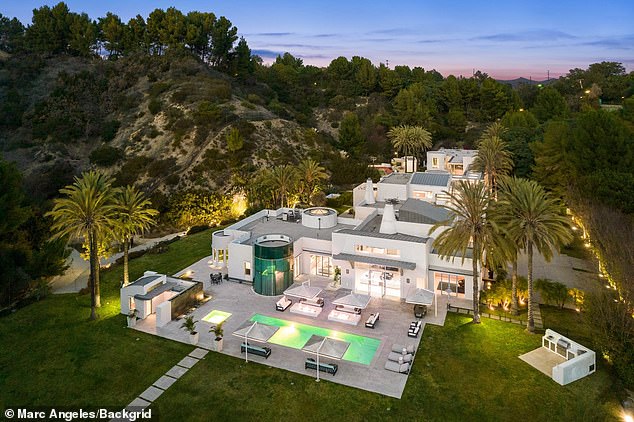
The estate’s outdoor patio and pool area illuminated at dusk
Grand Entry and Interior Spatial Experience
Visitors enter through a soaring two-story foyer defined by a sweeping spiral staircase and a dramatic chandelier installation. This vertical openness immediately communicates status and scale. The mansion features 11 bedrooms and 18 bathrooms, making it not just a home but a residential compound capable of accommodating extended family, staff, and high-profile guests.
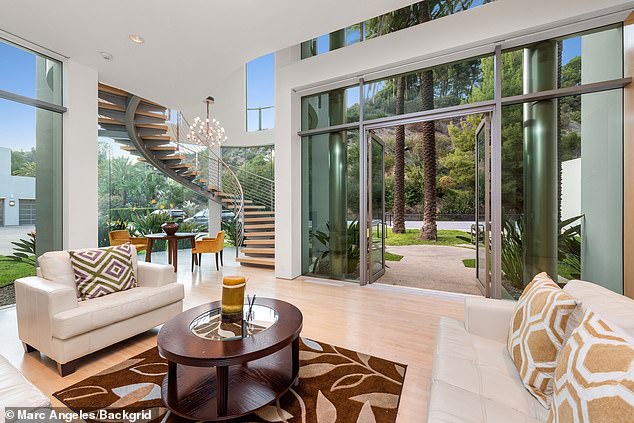
Grand living area with signature spiral staircase and floor-to-ceiling windows
The primary suite functions as a secluded sanctuary. It includes:
- A private lounge space for informal meetings or relaxation
- An expansive custom walk-in closet designed for high-volume wardrobe storage
- A spa-like bathroom with a marble freestanding tub and window-lined soaking area
From a real estate valuation perspective, such self-contained luxury suites significantly enhance resale potential because they provide hotel-level functionality within a residential setting.
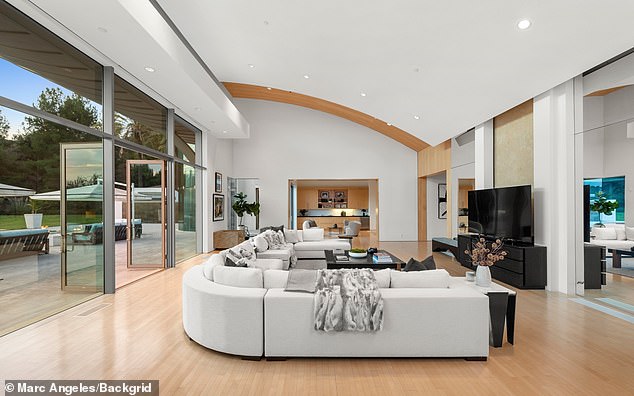
Elegant living room with curved architectural design and natural light
Culinary Design and Social Gathering Zones
The professional-grade kitchen is anchored by dual marble islands and streamlined wood cabinetry. A glass-enclosed breakfast nook surrounded by floor-to-ceiling windows offers panoramic garden views. This integration of culinary and landscape design reflects a broader trend in California luxury homes where indoor-outdoor continuity is central to daily living.
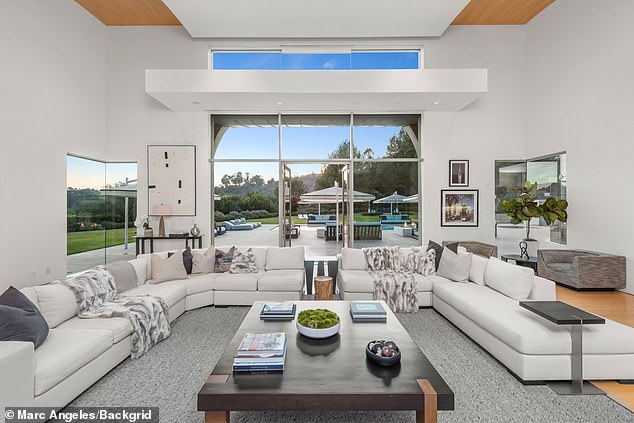
Open-concept living space with seamless indoor-outdoor flow
Multiple salons and reception rooms allow for flexible hosting formats. These spaces are critical for celebrity homeowners who require controlled environments for creative collaborations, private events, or media-sensitive gatherings.
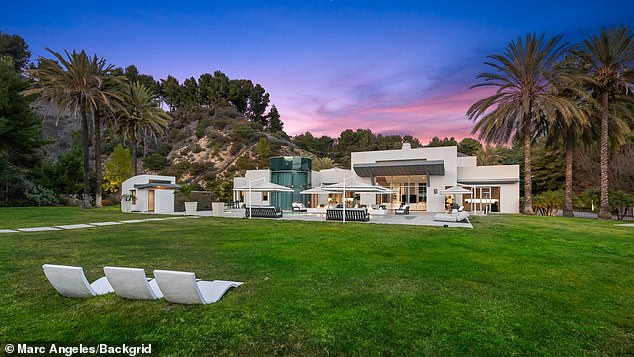
The Mediterranean-style estate exterior at twilight
Signature Wellness and Entertainment Amenities
Modern megamansions increasingly prioritize wellness infrastructure. Ye’s Beverly Hills estate delivers several standout features that align with this movement.
- Marble Hammam-Style Indoor Hot Tub: Inspired by traditional Turkish bathhouses, this feature combines ritualized relaxation with luxury material execution.
- Mirrored Fitness Studio: Positioned to capture views of the Los Angeles skyline, reinforcing psychological motivation through visual openness.
- Private Cinema Room: A dedicated media space designed for immersive viewing experiences.
These amenities highlight a key shift from performative architecture toward experiential architecture. The goal is no longer simply visual impact but lifestyle optimization.
Resort-Style Outdoor Landscape and Sports Facilities
The estate’s nearly seven-acre footprint allows for expansive outdoor programming rarely achievable within Beverly Hills boundaries. The grounds include:
- A resort-style swimming pool with cascading waterfalls
- A separate lap pool designed for athletic training
- A grotto and landscaped garden zones
- Two motor courts supporting high-security vehicle circulation
- A paddle tennis court engineered to double as a basketball court
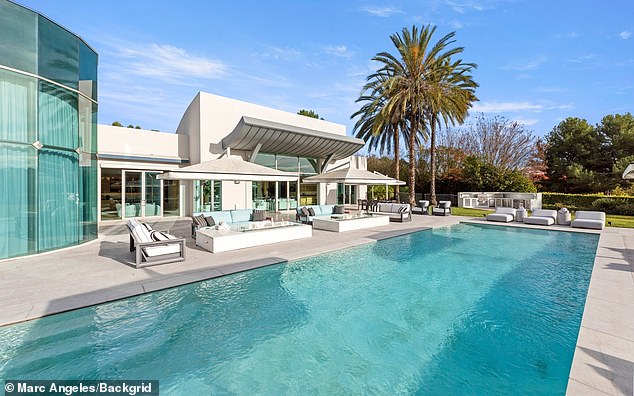
The resort-style pool area with contemporary design elements
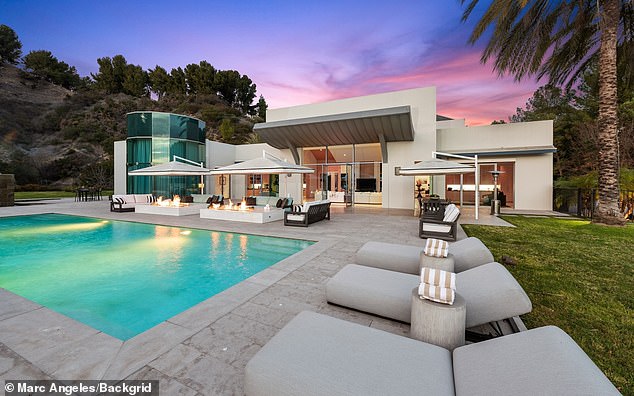
Evening ambiance at the pool area with fire pits and lounge seating
This level of recreational diversity positions the property closer to a luxury resort than a conventional residence. From a market analysis perspective, such comprehensive outdoor amenities can add millions in perceived value, particularly in climate-favorable regions like Southern California.
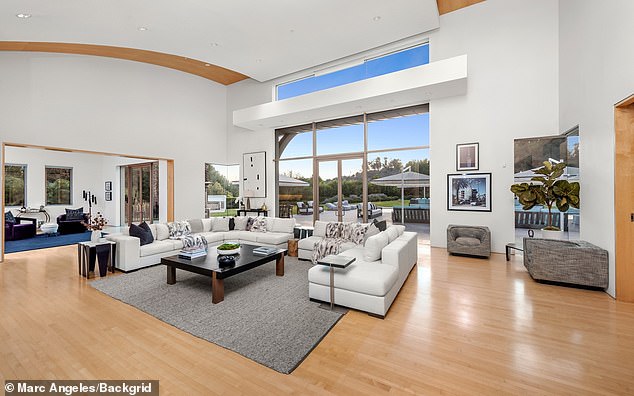
Figure 9: Interior living space showcasing high ceilings and premium finishes
Off-Market Transaction Strategy and Brokerage Representation
The acquisition was executed as an off-market transaction, a common tactic among ultra-high-net-worth buyers seeking discretion. Ye reportedly used the same LLC structure that handled previous property deals, reinforcing a consistent asset management strategy.
The listing representation involved high-profile real estate professionals including Jacob Greene of Douglas Elliman and Gigi Gharai of Coldwell Banker.
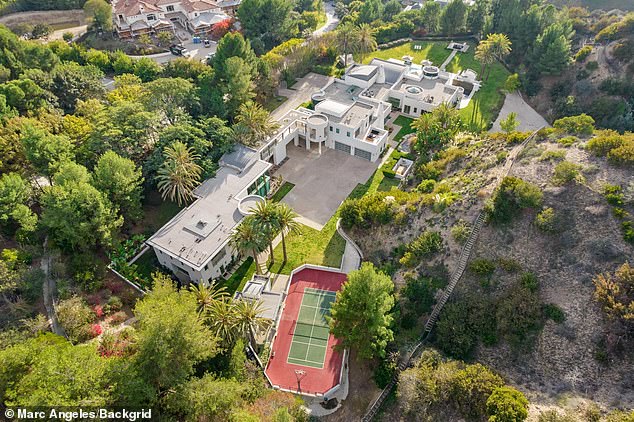
Figure 10: The 6.79-acre property with tennis court and manicured grounds
The Malibu Experiment and Financial Loss
Understanding the significance of Ye’s Beverly Park purchase requires examining his previous Malibu property journey. He had purchased a beachfront home known as the Sachs House, designed by Pritzker Prize-winning architect Tadao Ando. The residence originally cost over $57 million.
Ye later stripped the home down to its concrete shell in pursuit of a bunker-like aesthetic concept. The renovation stalled, resulting in legal disputes with contractor Tony Saxon and eventual resale to Belwood Investments for just $21 million. This represented a staggering financial loss exceeding $36 million.
From an expert real estate perspective, this sequence illustrates the risks of experimental architectural modifications without clear functional outcomes. It also underscores the importance of liquidity and move-in readiness in luxury property markets.
Lifestyle Context and Current Living Status
As of March 2026, Ye reportedly uses the Beverly Park estate as his primary residence with wife Bianca Censori. Reports from early 2025 suggested periods when Censori stayed at the mansion independently, reflecting the scale and privacy flexibility inherent in large residential compounds.
North Beverly Park’s gated security infrastructure and celebrity-heavy resident roster further enhance the property’s appeal. Privacy, controlled access, and expansive lot sizes are the defining attributes that sustain long-term property appreciation in this micro-market.
Market Analysis: Why This Mansion Represents Strategic Reset
Ye’s Beverly Hills purchase can be interpreted as a strategic reset rather than a simple relocation. Several factors support this view:
- Shift from conceptual architecture to functional luxury
- Enhanced resale security due to established design pedigree
- Improved lifestyle stability through amenity-rich infrastructure
- Geospatial prestige within a globally recognized luxury enclave
Unlike the Malibu project, which functioned as an artistic experiment, the Beverly Park estate aligns with conventional wealth preservation strategies. Properties designed by architects like Richard Landry typically maintain stronger market resilience because they appeal to a wider buyer demographic.
Final Perspective
The story behind the Kanye West Beverly Hills house extends beyond celebrity fascination. It reveals how architecture, lifestyle priorities, financial strategy, and public narrative intersect in ultra-luxury real estate. By moving from a radical minimalist vision to a fully developed megamansion ecosystem, Ye has repositioned himself within a property market that rewards functionality, provenance, and long-term value.
In many ways, this estate symbolizes a recalibration. It blends spectacle with practicality, artistic identity with financial discipline. Whether viewed through the lens of architecture, investment strategy, or cultural symbolism, Ye’s Beverly Park residence stands as one of the most compelling celebrity property acquisitions of the decade.