

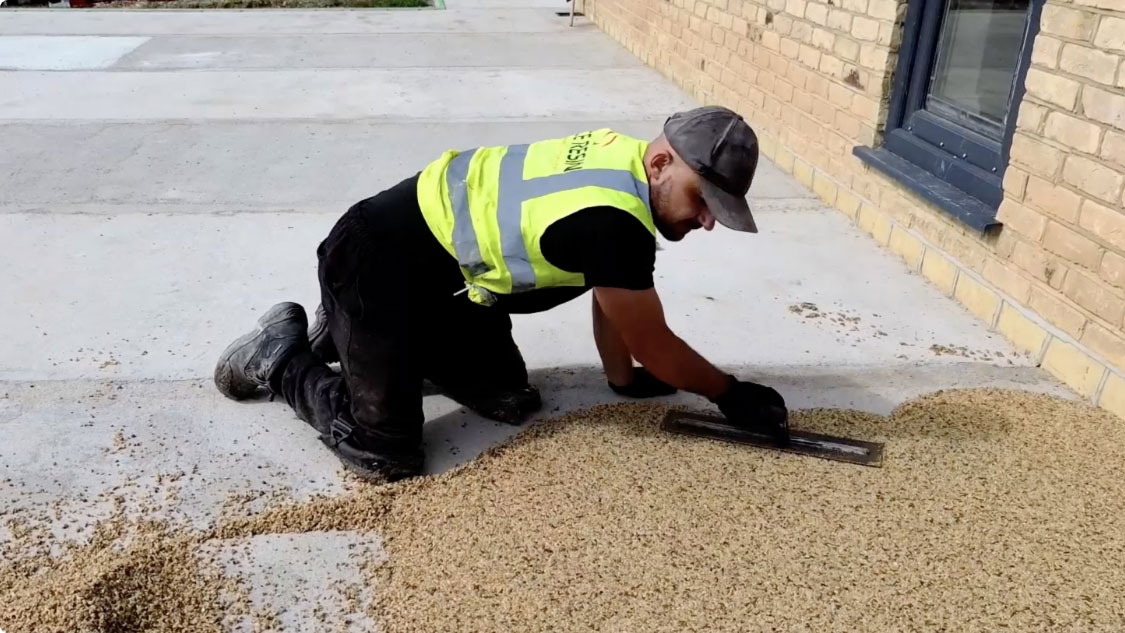
If you’ve ever walked past one of those smooth, pebbly, puddle‑free driveways and thought, “That looks smart, I could do that for a living”, you’re not alone. Resin bound surfaces have quietly become one of the fastest‑growing driveway options in the UK, popping up outside new builds, suburban semis and commercial sites all over the place.
That boom has created a big demand for people who actually know how to install them properly. Which is where Resin Bound Courses come in.
What is resin bound, and why is everyone obsessed with it?
In simple terms, a resin bound system is a mix of clear resin and decorative aggregates (think small stones) that’s laid over a suitable base to form a flat, hard‑wearing surface. It’s common on driveways, paths, courtyards and even commercial spaces like car parks and forecourts.
Homeowners love it because it looks premium, comes in loads of colours, is slip‑resistant and, when done right, can last 20 to 25 years with minimal maintenance. It’s also fully permeable and usually compliant with SuDS regulations, which means water drains through it instead of sitting on the surface. In practical terms, that often means no planning permission faff for most domestic driveways in the UK, and less risk of flooding.
All of that has turned resin bound into a very attractive niche for landscapers, builders, and people looking for a new trade.
So what actually happens on Resin Bound Courses?
A good resin bound training course is much more than “mix this with that and spread it out”. Most reputable UK providers run one‑day or two‑day, hands‑on sessions in dedicated training centres or on live job sites, often for a few hundred pounds per person.
Here’s what you can usually expect to cover.
Surface preparation
This is the bit that separates a long‑lasting driveway from one that cracks and fails after a couple of winters. You’ll learn:
– How to assess existing surfaces
– When you need to dig out and install a new sub‑base
– The difference between tarmac, concrete and other bases, and how each affects the resin layer
– Correct levels and falls so water goes where it should
Material knowledge and mixing
Resin might look simple, but the chemistry is unforgiving. Courses teach you:
– The different types of resins and aggregates, and which to use where
– Correct mixing ratios and pot life (how long you’ve got before it starts setting)
– How temperature and British weather affect curing
– How to calculate materials accurately so you’re not short halfway across a driveway
Laying and finishing techniques
This is where the theory meets the trowel. Most courses get you laying resin bound on practice bays or even full‑size mock‑up driveways with steps, edges and awkward corners.
You’ll be shown:
– How to pour, spread and compact the mix for a smooth, even finish
– The knack of blending batches so you don’t end up with visible lines
– How to deal with edges, manholes, threshold strips and details around doors
– Common mistakes that cause issues like loose stones, trowel marks or patchy colour
Dealing with problems
Real‑world installs rarely go perfectly. Good Resin Bound Courses cover:
– How to spot and avoid contamination from moisture, dust or oil
– What to do if the weather suddenly turns on you
– How to repair localised damage or failures without redoing the whole surface
Compliance, safety and regulations
Because resin bound is permeable, there’s a lot of focus these days on drainage and SuDS compliance. You’ll also touch on:
– Health and safety when handling chemicals and using mixing tools
– Building regulations and standards relevant to surfacing and drainage
– How to design installations that tick the planning and environmental boxes
Business and marketing
Some providers add in a business angle, particularly for people looking to set up or bolt resin onto an existing trade. That might include:
– How to price jobs and estimate materials
– How to explain the benefits of resin bound to homeowners in plain English
– Basic marketing ideas, from social media photos to van branding
– How to avoid classic quotation and contract headaches
Who are Resin Bound Driveway Training for?
You don’t have to be an old‑school builder to get something out of a course. Typical groups include:
– Landscapers who are sick of just laying turf and slabs
– Driveway and paving contractors wanting to offer something higher‑end
– General builders branching out into exterior works
– Ambitious DIYers who want to tackle their own home first, then maybe take it further
Some academies will tailor the content depending on whether you’re a total beginner or already hands‑on in construction.
How much do they cost and what do you get?
In the UK, one‑day resin bound training often starts around the £200 mark plus VAT per person, going up to £300–£400 and beyond for more advanced or multi‑day options. That usually includes:
– Classroom‑style theory sessions
– Full practical training with tools and materials
– Lunch and refreshments
– A certificate of completion at the end
Some providers also throw in trade discounts, supplier introductions or “approved installer” status, which can be handy when you’re just starting out and want to reassure customers.
Is it really worth doing a course?
Could you watch a few YouTube videos and have a go? Technically yes. Should you, on a paying customer’s driveway, where the materials alone can cost thousands? Probably not.
The problem with resin bound is that a failed job is expensive and very obvious. Once the surface has cracked, puddled or rutted, you can’t just “patch it a bit” and hope nobody notices. In many cases the only proper fix is taking it all up and starting again.
Spending a few hundred quid on proper training, learning from installers who’ve made all the mistakes already, and practising in a controlled environment is usually a lot cheaper than one badly installed driveway that you end up redoing at your own cost.
What to look for in Resin Bound Courses
If you’re shopping around, it’s worth asking:
– Do you get hands‑on practice on a full‑size area, not just a tiny demo board?
– Are the trainers active installers with real‑world experience?
– Is there any support after the course if you hit a problem on your first few jobs?
– Will you get access to trade prices or recognised supplier networks?
If the answer to most of those is yes, you’re probably looking at a course that can genuinely kick‑start a new income stream rather than just give you a day out of the rain.
For anyone in the UK thinking about getting into resin driveways or adding something fresh to an existing landscaping business, Resin Bound Courses are a very sensible first step. It’s a relatively low‑cost way to learn a modern, in‑demand skill that homeowners are increasingly asking for, and it might just be the thing that gets your phone ringing a lot more often.