

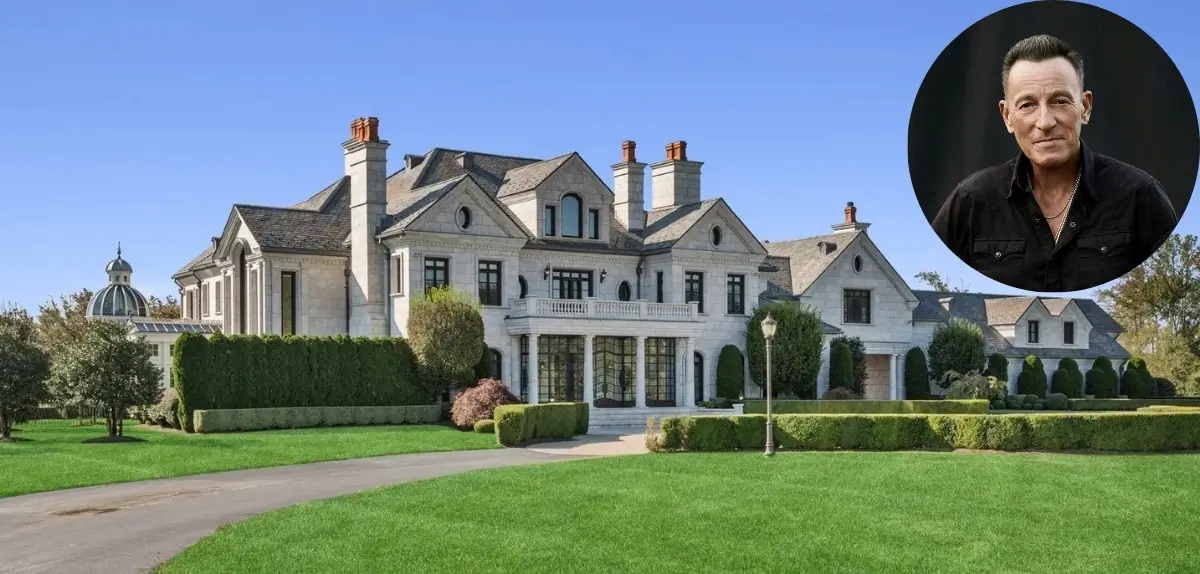
Bruce Springsteen has always been a public figure who guards his private life carefully. Fans know the songs by heart, recognize the voice instantly, and can map out the arc of his career without blinking. But the place where much of his later life and work actually happens—his longtime home in Colts Neck, New Jersey—tells a quieter, more revealing story.
This isn’t a celebrity mansion in the usual sense. Stone Hill Farm is less about flash and more about function, family, and focus. It’s a working horse farm, a creative compound, and a deeply personal refuge that has shaped Springsteen’s music for decades.
Stone Hill Farm: More Than a House
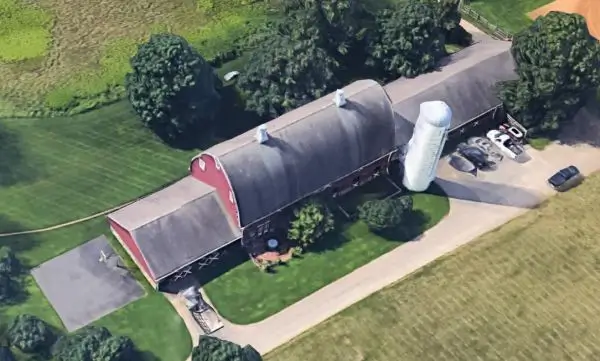
Stone Hill Farm is the primary name associated with Bruce Springsteen’s estate in Colts Neck Township, Monmouth County. He began assembling the property in the mid-1990s, gradually expanding it by purchasing adjacent parcels over time. Today, estimates put the acreage somewhere between 368 and 400 acres, depending on how boundaries are counted.
That size matters, but not because it’s impressive. It matters because it allows for isolation, privacy, and routine—three things Springsteen clearly values.
The farm isn’t just land surrounding a house. It’s an operational equestrian facility, a recording campus, and a lived-in home where daily life still looks surprisingly normal given who owns it.
Where It’s Located (Without the Drama)
The main entrance to the estate is commonly associated with 145 Muhlenbrink Road, within Colts Neck Township. Colts Neck itself is known for its rural zoning, horse farms, and large properties tucked behind long driveways and tree lines.
This is classic Monmouth County: close enough to the Jersey Shore and New York City to stay connected, but far enough removed to disappear when needed.
Thrill Hill Recording: The Heart of His Later Work
If Stone Hill Farm is the body, Thrill Hill Recording is the heartbeat.
Springsteen’s private recording studio sits on the property and has been the primary creative space for much of his output since the late 1990s. Unlike commercial studios with rigid schedules and outside pressure, Thrill Hill allows him to work slowly, revisit ideas, and record when inspiration hits—sometimes late at night, sometimes after weeks of silence.
Albums recorded or developed here include:
- The Rising
- Western Stars
- Letter to You
The studio is state-of-the-art, but not flashy. By most accounts, it’s practical, comfortable, and built for long sessions rather than spectacle. That tone matches Springsteen’s approach at this stage of his career: less about chasing hits, more about saying something that lasts.
The People Behind the Sessions
Several longtime collaborators are closely associated with the Colts Neck studio years:
- Ron Aniello, producer and musical partner on many modern Springsteen records, has spent extended time working on-site.
- Kevin Buell, Springsteen’s longtime guitar technician and unofficial archivist, manages the massive collection of instruments housed on the property.
These aren’t casual visitors. They’re part of a trusted inner circle that understands both the music and the man.
A Family Property, Not a Solo Retreat
Stone Hill Farm isn’t just Bruce’s domain. It’s shared, actively and meaningfully, with his family.
Patti Scialfa
Patti Scialfa, Springsteen’s wife and E Street Band member, is a co-owner of the farm and deeply involved in its equestrian side. She’s an accomplished rider herself, and the farm’s layout reflects serious commitment rather than hobby-level interest.
Jessica Springsteen
Their daughter, Jessica Springsteen, is an Olympic silver-medalist show jumper, and the property doubles as a high-level training ground for her career. The stables, riding areas, and surrounding land aren’t decorative—they’re working facilities used by a world-class athlete.
That detail matters. Stone Hill Farm isn’t frozen in time as a monument to Springsteen’s past. It’s active, evolving, and built around the lives of the people who live there now.
The Barn That Became a Stage
One of the most culturally significant structures on the property is the century-old barn, originally built in the 18th century. Instead of restoring it as a museum piece, Springsteen converted it into something deeply personal: a performance space.
The barn includes:
- A stage area
- Loft seating
- A bar
- Warm, intimate acoustics
This space became globally visible with Western Stars (2019), the concert film shot largely inside the barn. The setting wasn’t chosen for aesthetics alone. It fit the album’s reflective, cinematic mood and reinforced the sense that Springsteen was performing inside his own life, not just for an audience.
Clearing Up the Nebraska Confusion
One detail that often gets mixed up in Springsteen lore is the Nebraska recording location.
The stark, home-recorded album Nebraska was not made at Stone Hill Farm. At the time (1981–1982), Springsteen was living in a much smaller rental house near the Swimming River Reservoir, also in Colts Neck.
That house was temporary, modest, and very different in spirit from his current estate. The confusion makes sense—same town, same artist—but they represent completely different phases of his life.
From Reality to Film: Deliver Me From Nowhere
The upcoming biopic Deliver Me From Nowhere (expected 2025–2026), starring Jeremy Allen White, focuses on Springsteen during the early 1980s Colts Neck period.
Interestingly, the production did not film at Stone Hill Farm or the original Nebraska-era house. Instead, locations in Mountain Lakes, New Jersey, were used as stand-ins. That choice underscores how protective Springsteen remains of his actual home, even decades later.
Why Monmouth County Still Matters
Stone Hill Farm sits within a broader geographic identity that has always shaped Springsteen’s public image.
Monmouth County includes:
- Freehold, where he grew up
- Rumson, where he previously lived
- Colts Neck, where he settled long-term
This isn’t accidental. Staying rooted in the same region reinforces the authenticity people associate with him. He didn’t trade New Jersey for Hollywood hills. He just went quieter.
Property Snapshot
| Feature | Detail |
|---|---|
| Estate Name | Stone Hill Farm |
| Location | Colts Neck Township, Monmouth County, NJ |
| Acreage | ~368–400 acres |
| Primary Uses | Residence, horse farm, recording facility |
| Key Structures | Main house, performance barn, stables, Thrill Hill studio |
A Place That Explains the Music
In the end, Bruce Springsteen’s Colts Neck home isn’t interesting because it’s large or private or expensive. It’s interesting because it aligns so perfectly with who he is now.
Stone Hill Farm is where family life, artistic control, physical space, and creative freedom intersect. It explains why his later work sounds the way it does—measured, reflective, grounded. No rush. No noise. Just room to think, write, and live.
And for an artist who’s spent a lifetime singing about places, that feels exactly right.