

Gray and white remains one of the most requested bedroom color combinations in interior design, and for good reason. According to Grand View Research, the global interior design market was valued at $137.93 billion in 2024 and is projected to reach $175.74 billion by 2030, with residential bedroom design representing a significant share of that spending. The pairing delivers a calming, sophisticated backdrop that adapts to virtually any style, from crisp modern minimalism to layered cozy retreats. Yet many homeowners struggle with the same concern: how do you keep a gray and white bedroom from feeling cold, flat, or sterile?
The answer lies in understanding the difference between warm gray and cool gray, mastering texture layering, and knowing exactly when to introduce accent colors, natural materials, and strategic lighting. According to designers at leading studios, the most successful gray and white bedrooms balance visual contrast with tactile warmth, creating spaces that feel both serene and inviting.
This guide presents 40 distinct gray-and-white bedroom ideas, each with specific styling guidance, material recommendations, and color psychology insights. Whether you are designing a master suite, upgrading a small guest room, or seeking luxury hotel-inspired bedding, these ideas cover every shade, style, and spatial challenge you might face.
Quick Facts: Gray-and-White Bedroom Design at a Glance
| Topic | Gray-and-White Bedroom Design |
| Styles Covered | Modern, Cozy, Luxury, Minimalist, Scandinavian, Farmhouse, Industrial, Hotel-Style |
| Accent Colors | Gold, Blue, Green, Blush Pink, Beige, Black, Silver, Yellow |
| Key Materials | Velvet, Linen, Boucle, Oak, Walnut, Rattan, Marble, Brass, Matte Black Metal |
| Room Types | Master Bedroom, Small Bedroom, Guest Room |
| Paint Focus | Greige, Charcoal, Dove Gray, Warm Gray, Cool Gray |
Modern Gray-and-White Bedroom Ideas
Modern gray bedrooms thrive on clean lines, purposeful restraint, and high-contrast accents. The key is selecting the right shade of gray as your foundation, then layering contemporary furniture and minimalist decor with precision. Each idea below combines a specific style name, visual description, key colors, materials, furniture suggestions, and a practical styling tip.
1. Charcoal Platform Bed With Matte Black Fixtures
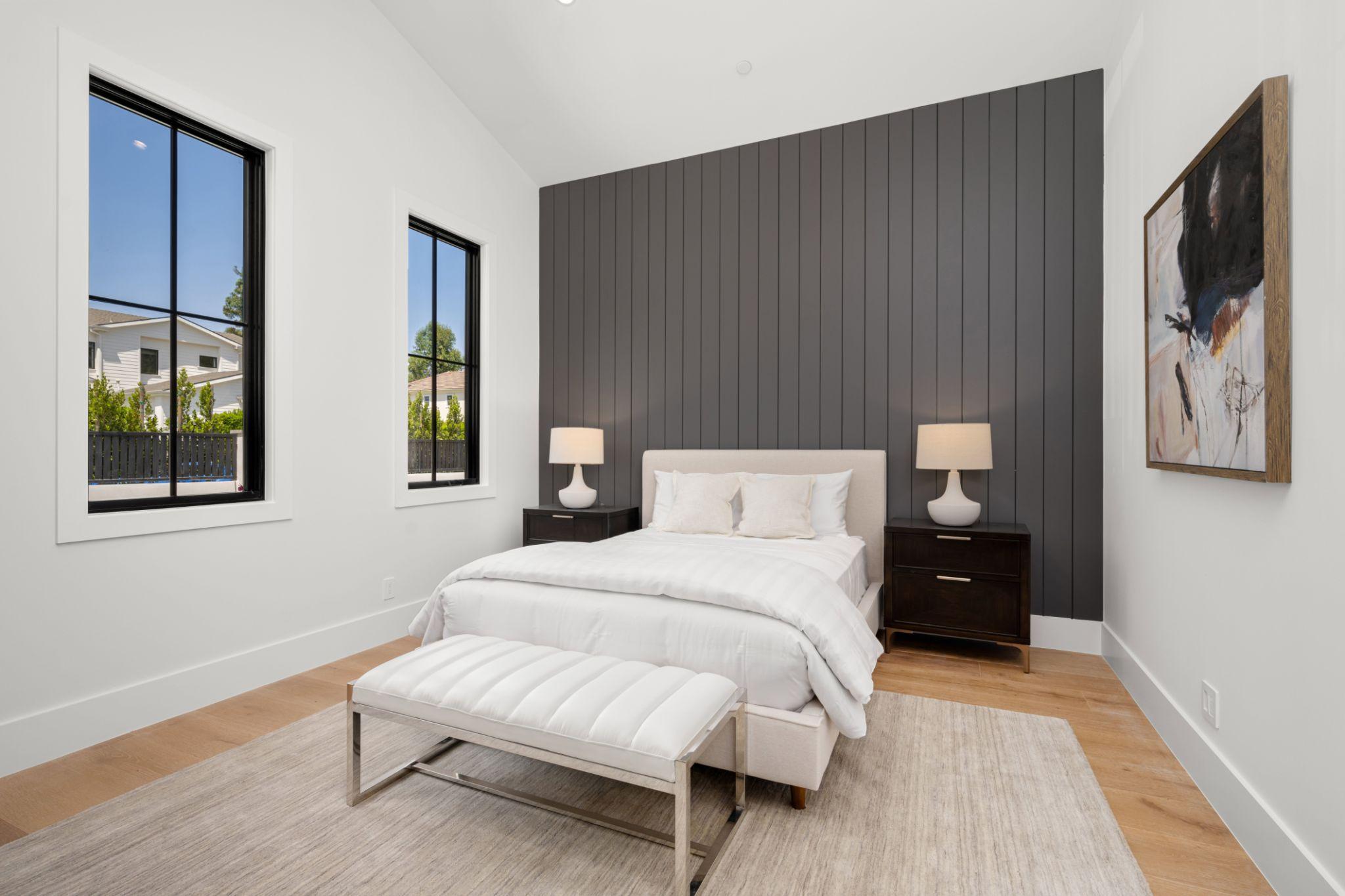
A charcoal accent wall behind a low-profile platform bed sets a dramatic tone. Matte black sconces and drawer pulls provide sharp contrast against soft dove gray walls on the remaining three sides. White linen bedding keeps the room from feeling heavy.
Key Colors: Charcoal, dove gray, crisp white, matte black.
Materials: Brushed cotton bedding, matte black metal, concrete-finish nightstand.
Why It Works: High contrast between dark and light surfaces creates visual depth, while the platform bed maintains clean horizontal lines that define modern interiors.
Styling Tip: Choose one statement piece, like a sculptural black pendant light, rather than cluttering surfaces with small accessories.
2. Light Gray Walls With Floating Nightstands
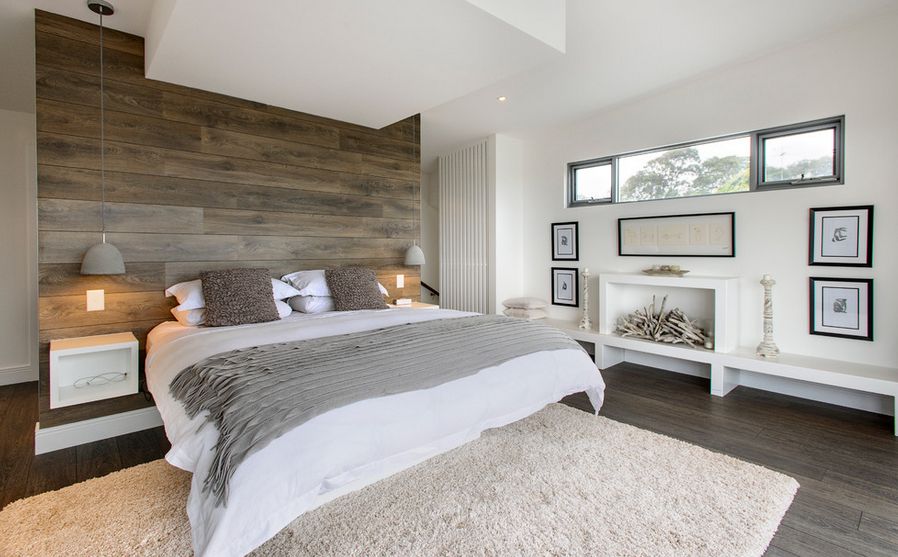
Soft light gray walls (like Benjamin Moore Classic Gray) paired with wall-mounted floating nightstands create an airy, grounded aesthetic. White quartz surfaces on the nightstands reflect light upward, enhancing the sense of openness. A frameless round mirror above each nightstand adds subtle geometry.
Key Colors: Light gray, bright white, warm beige undertones.
Materials: Lacquer-finish nightstands, quartz, brushed brass hardware.
Why It Works: Floating furniture eliminates visual weight at floor level, making the room feel larger and more contemporary.
Styling Tip: Keep only one or two objects on each nightstand to preserve the minimalist intent.
3. Cool Gray and White With Geometric Patterns
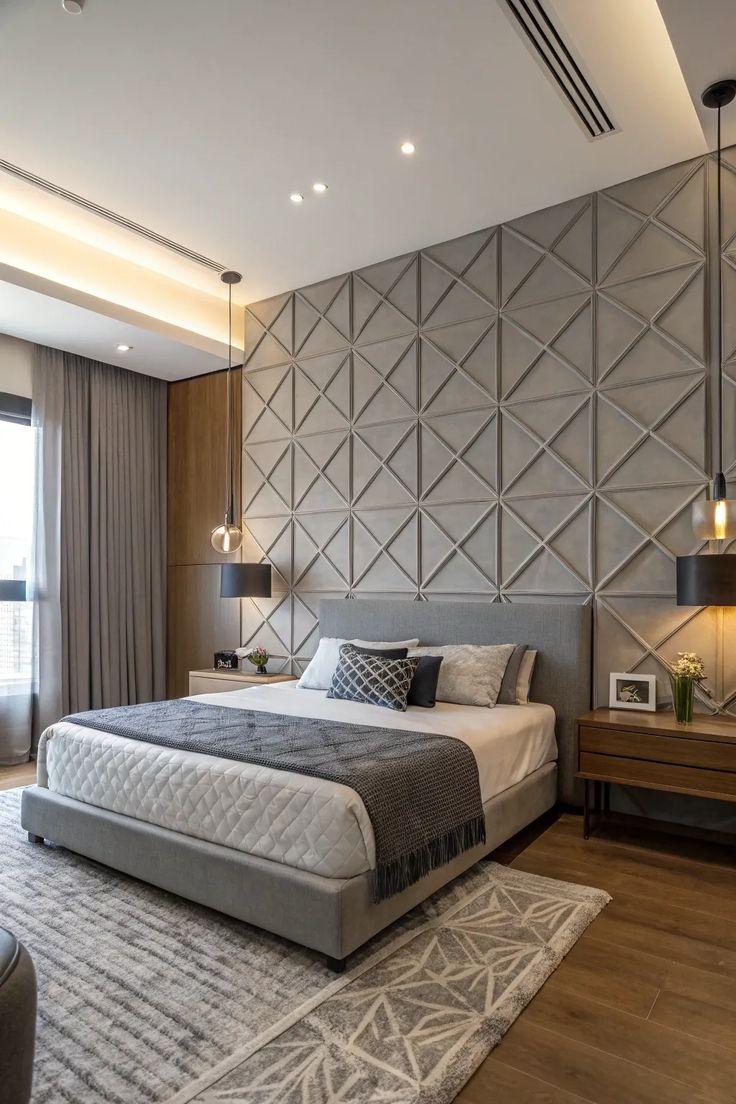
A cool gray-and-white palette gains energy through geometric patterned throw pillows and a subtle herringbone area rug. The patterns break the monotony of solid surfaces without introducing additional colors. White walls with cool gray trim create architectural definition.
Key Colors: Cool gray, pure white, silver accents.
Materials: Wool-blend rug, cotton-linen pillow covers, painted MDF trim.
Why It Works: Pattern within a restricted palette maintains modern discipline while adding visual interest and tactile variety.
Styling Tip: Limit geometric patterns to two or three surfaces to avoid visual overload.
4. Monochrome Gray Bedroom With Textured White Bedding
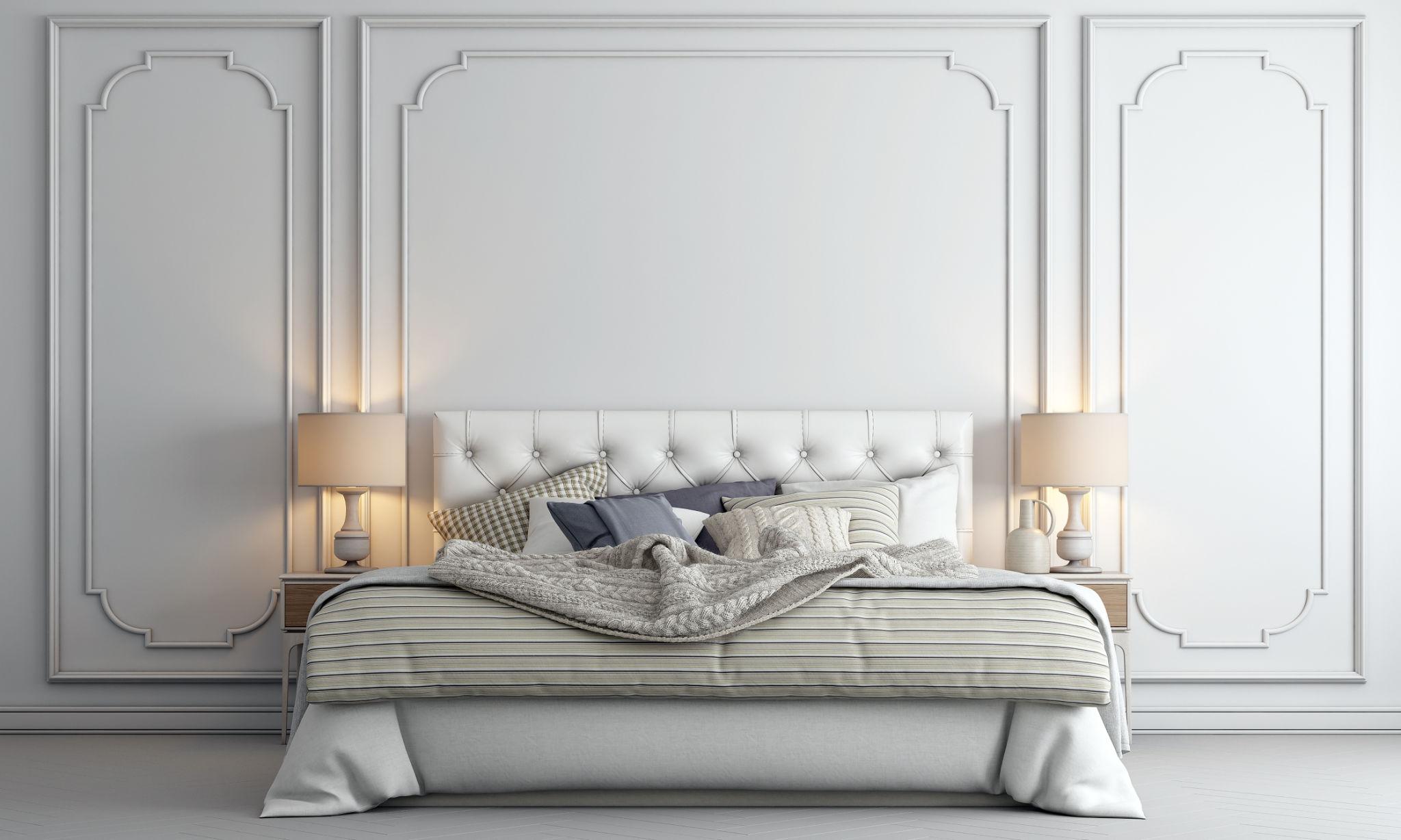
An all-gray room, from slate walls to graphite drapes, feels instantly sophisticated when the bed is dressed in heavily textured white bedding. Think matelasse coverlets, waffle-knit throws, and pleated pillow shams. The tonal gray envelope becomes a gallery-like setting for the white bed as focal point.
Key Colors: Slate gray, graphite, ivory, cream.
Materials: Matelasse cotton, waffle weave, pleated linen.
Why It Works: Monochromatic schemes rely on texture variation to prevent flatness, making tactile bedding the hero element.
Styling Tip: Add a single brass table lamp to introduce warmth and break the monochrome gently.
5. Gray-and-White Scandinavian Minimalism
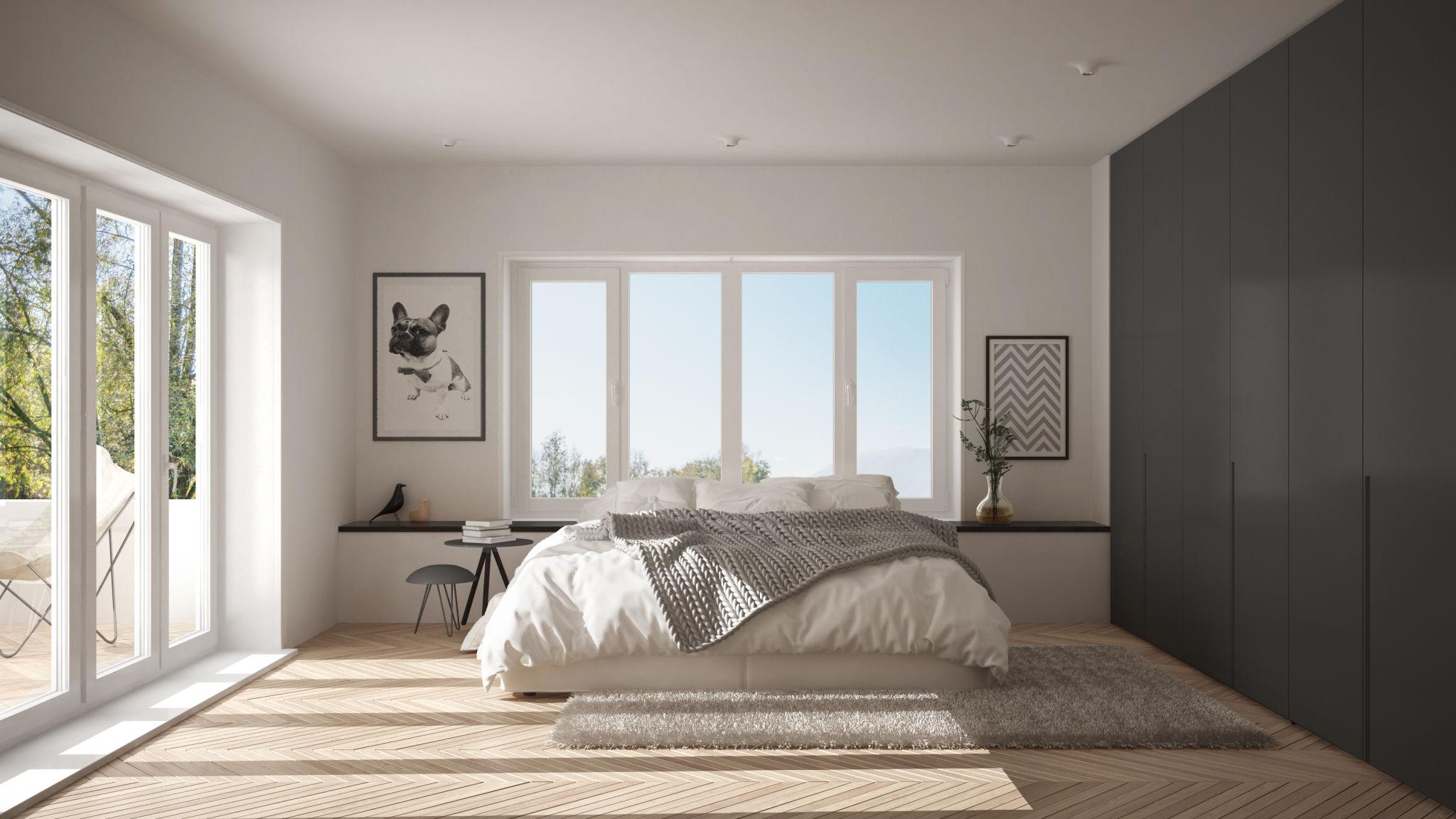
Scandinavian gray bedrooms favor warm gray walls (think Farrow and Ball Pavilion Gray), pale oak furniture, and white sheepskin throws draped casually over the bed edge. The result is effortlessly livable. Light wood tones prevent the gray from feeling cold, while white bedding maintains brightness.
Key Colors: Warm gray, white, natural oak, soft taupe.
Materials: Pale oak, sheepskin, linen, ceramic.
Why It Works: Scandinavian design prioritizes hygge (coziness), using warm materials and organic shapes to soften gray’s cool reputation.
Styling Tip: Layer a sheepskin or boucle throw at the foot of the bed for instant Scandi warmth.
6. Industrial Gray With Exposed Elements
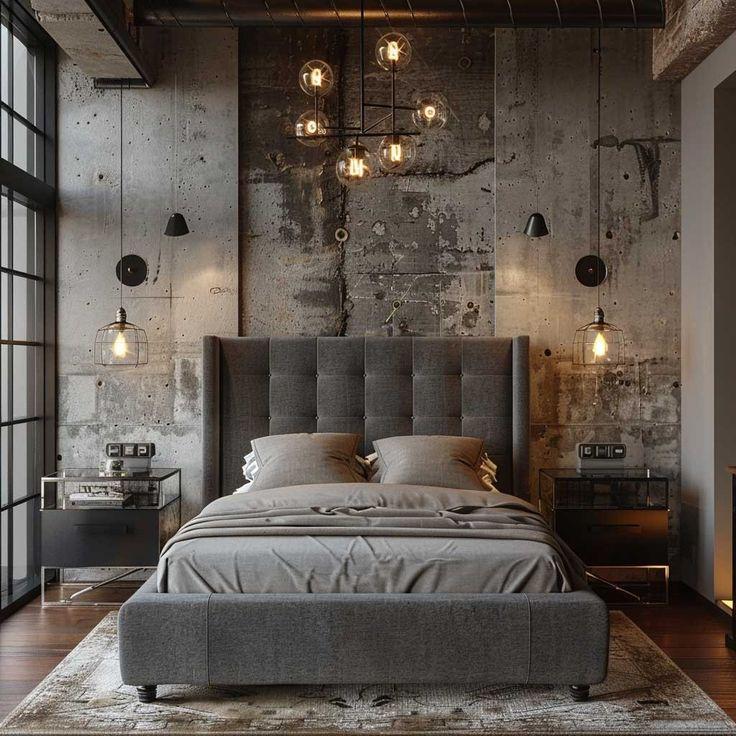
Concrete-look gray walls, an iron-frame bed, and exposed ductwork or pipe shelving define the industrial gray bedroom. White canvas storage bins and a cotton duvet soften the hardness of metal and concrete. A vintage filament bulb pendant adds warmth and character.
Key Colors: Concrete gray, iron black, off-white, warm amber lighting.
Materials: Concrete, iron, canvas, reclaimed wood, filament glass.
Why It Works: Industrial spaces need softening elements, and white textiles provide that balance without competing with the raw aesthetic.
Styling Tip: Use warm Edison-style bulbs (2700K) to prevent the industrial palette from feeling too stark.
Cozy Gray Bedrooms With Warm Textures
The most common mistake with gray bedrooms is relying on gray alone without introducing warmth through texture, material, and lighting. Cozy gray rooms achieve their inviting feel through layered textiles, wood tones, warm lighting, and organic materials. These ideas show you exactly how.
7. Warm Gray Walls With Chunky Knit Throws
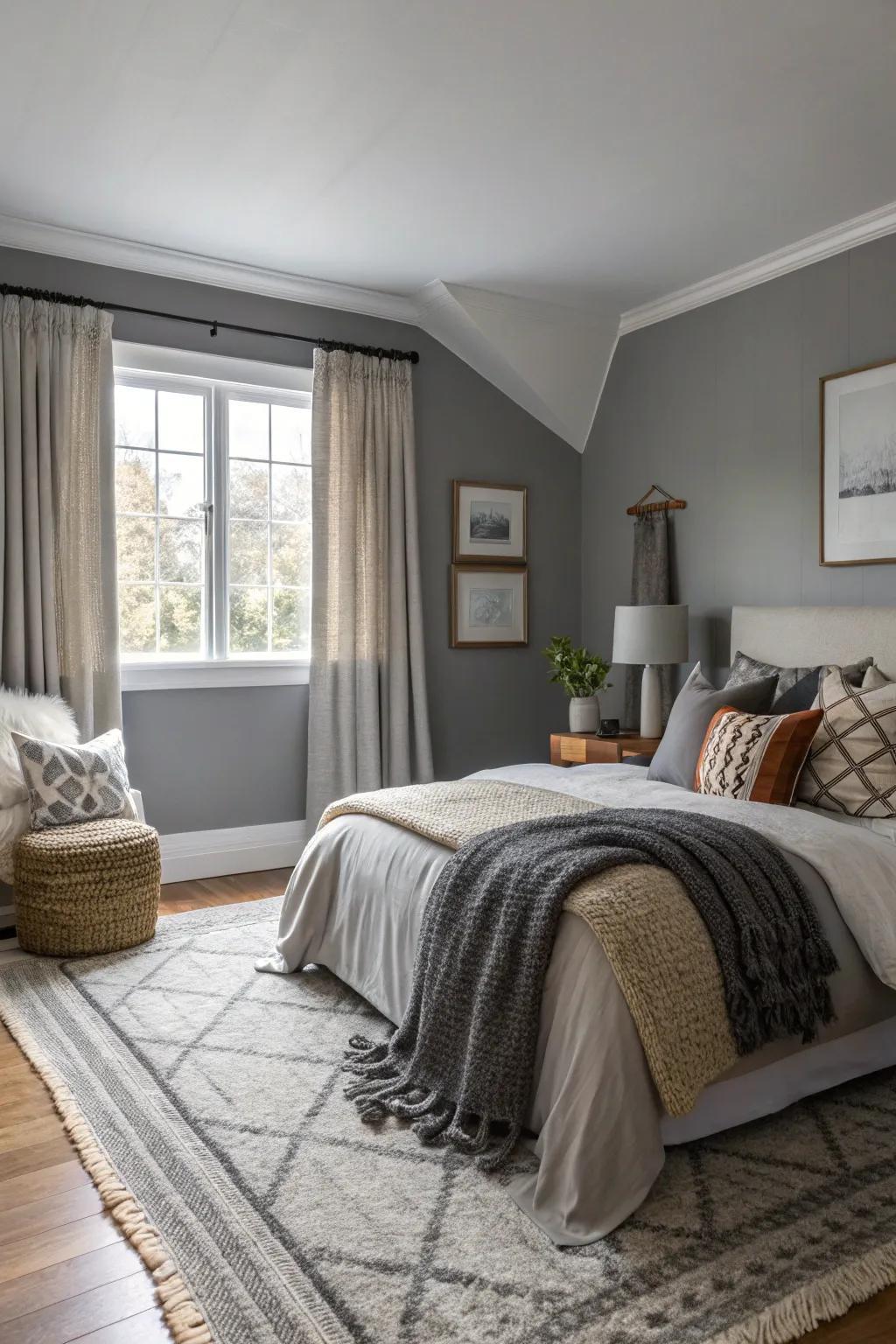
Warm gray walls (like Sherwin-Williams Pavestone) create a nurturing envelope. A chunky knit throw blanket in cream draped over the foot of the bed adds immediate tactile warmth. Pair with a walnut bed frame and cream boucle accent chair for layered softness.
Key Colors: Warm gray, cream, walnut brown, soft beige.
Materials: Chunky wool knit, boucle upholstery, walnut wood, brushed cotton.
Why It Works: Chunky knit textures trigger a psychological warmth response, making the room feel physically warmer than it is.
Styling Tip: Drape the throw casually rather than folding it perfectly; imperfection signals comfort.
8. Gray and White With Natural Wood Tones
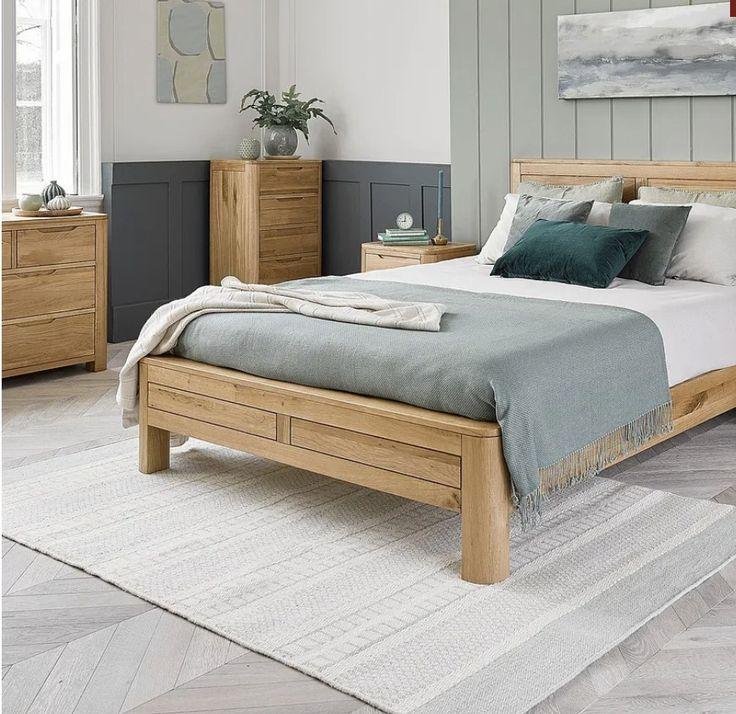
Light gray walls paired with honey-toned oak furniture create a balanced, inviting atmosphere. The wood introduces warmth organically, while white bedding and curtains maintain freshness. A jute area rug grounds the space with earthy texture.
Key Colors: Light gray, honey oak, white, natural tan.
Materials: Solid oak, jute, cotton, ceramic table lamps.
Why It Works: Wood grain adds visual warmth and organic pattern, preventing gray walls from reading as sterile or clinical.
Styling Tip: Mix wood tones sparingly. One dominant warm wood plus one accent tone keeps the palette cohesive.
9. Layered Lighting in a Cozy Gray Retreat
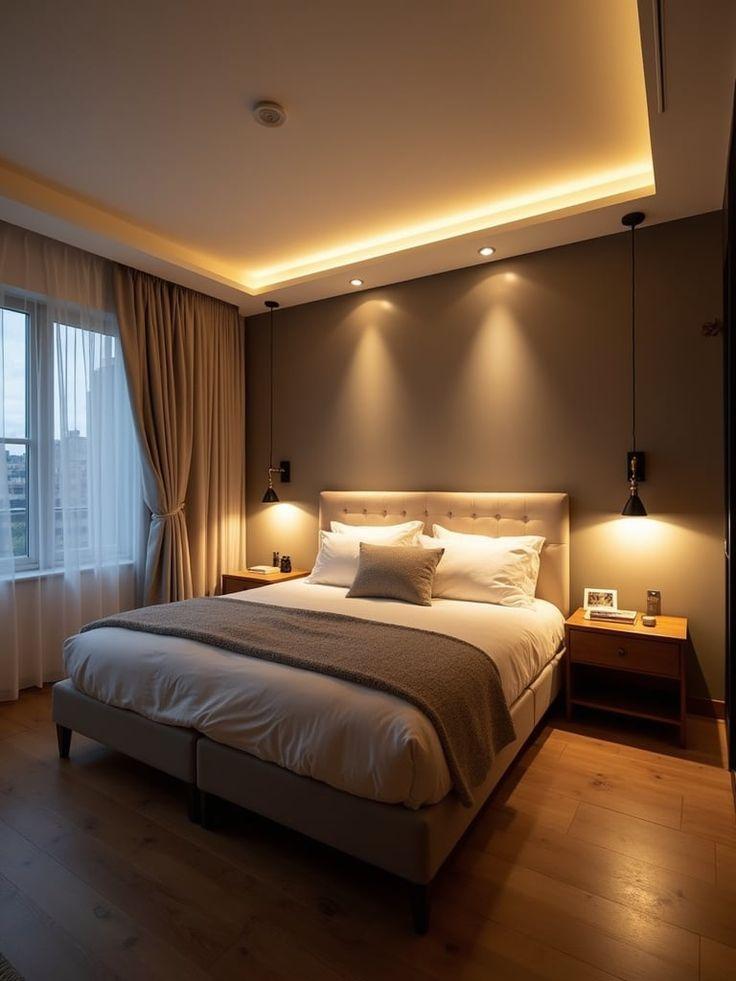
Replace a single overhead light with three or more warm-toned sources: a bedside sconce, a floor lamp in the reading corner, and recessed dimmable LEDs. Warm gray walls absorb and diffuse the light beautifully. Set all bulbs to 2700K for a golden glow that transforms cool gray into cozy gray.
Key Colors: Warm gray, soft white, amber light, brass.
Materials: Brass fixtures, linen shades, dimmable LEDs.
Why It Works: Layered lighting creates zones of warmth and shadow, adding depth and intimacy to a gray room that a single overhead cannot achieve.
Styling Tip: Install dimmer switches on every light source. Control over brightness is the single most impactful cozy-bedroom upgrade. The National Sleep Foundation recommends keeping the bedroom between 60 and 67 degrees Fahrenheit for optimal sleep, and warm, dimmable lighting helps your body transition toward that restful state.
10. Boucle Accent Chair in a Gray Bedroom
A cream boucle accent chair beside a warm gray bed introduces a furniture piece that is both sculptural and tactile. The nubby, cloud-like texture of boucle fabric contrasts beautifully with smooth gray walls and crisp white bedding. Add a small walnut side table to complete the vignette.
Key Colors: Warm gray, cream, walnut, soft white.
Materials: Boucle upholstery, walnut, cotton, wool.
Why It Works: Boucle is one of the most sought-after textures in current interior design. Its inviting, tactile quality instantly warms a neutral room.
Styling Tip: Position the chair near a window with a small rug underneath to create a defined reading nook.
11. Farmhouse Gray With Shiplap and Rustic Wood
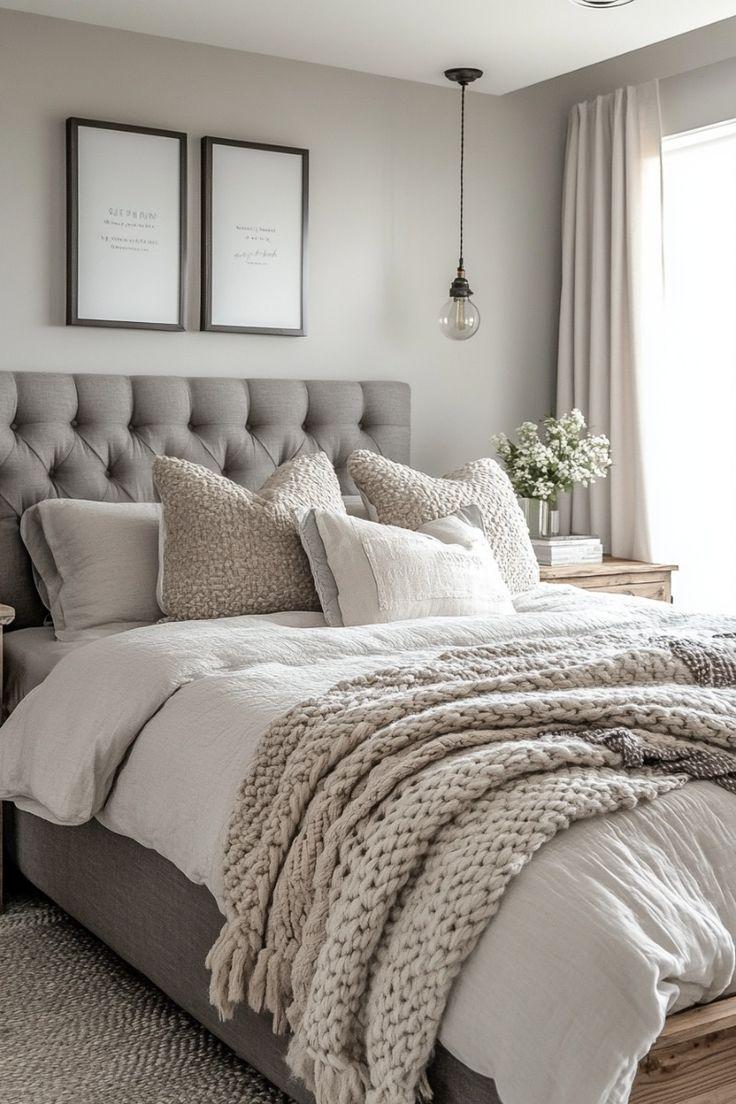
A modern farmhouse gray bedroom combines pale gray shiplap walls with a reclaimed wood headboard and white cotton quilting. Open floating shelves in distressed wood display curated ceramics and vintage books. The contrast between the refined gray and rustic wood creates a lived-in elegance.
Key Colors: Pale gray, weathered wood, quilt white, muted sage.
Materials: Shiplap, reclaimed wood, cotton quilt, stoneware, galvanized metal.
Why It Works: Farmhouse style bridges the gap between casual and curated, making gray feel approachable rather than aloof.
Styling Tip: Use vintage or antique accessories rather than new items to reinforce the authentic farmhouse character.
12. Woven Textures and Rattan in a Gray Bedroom
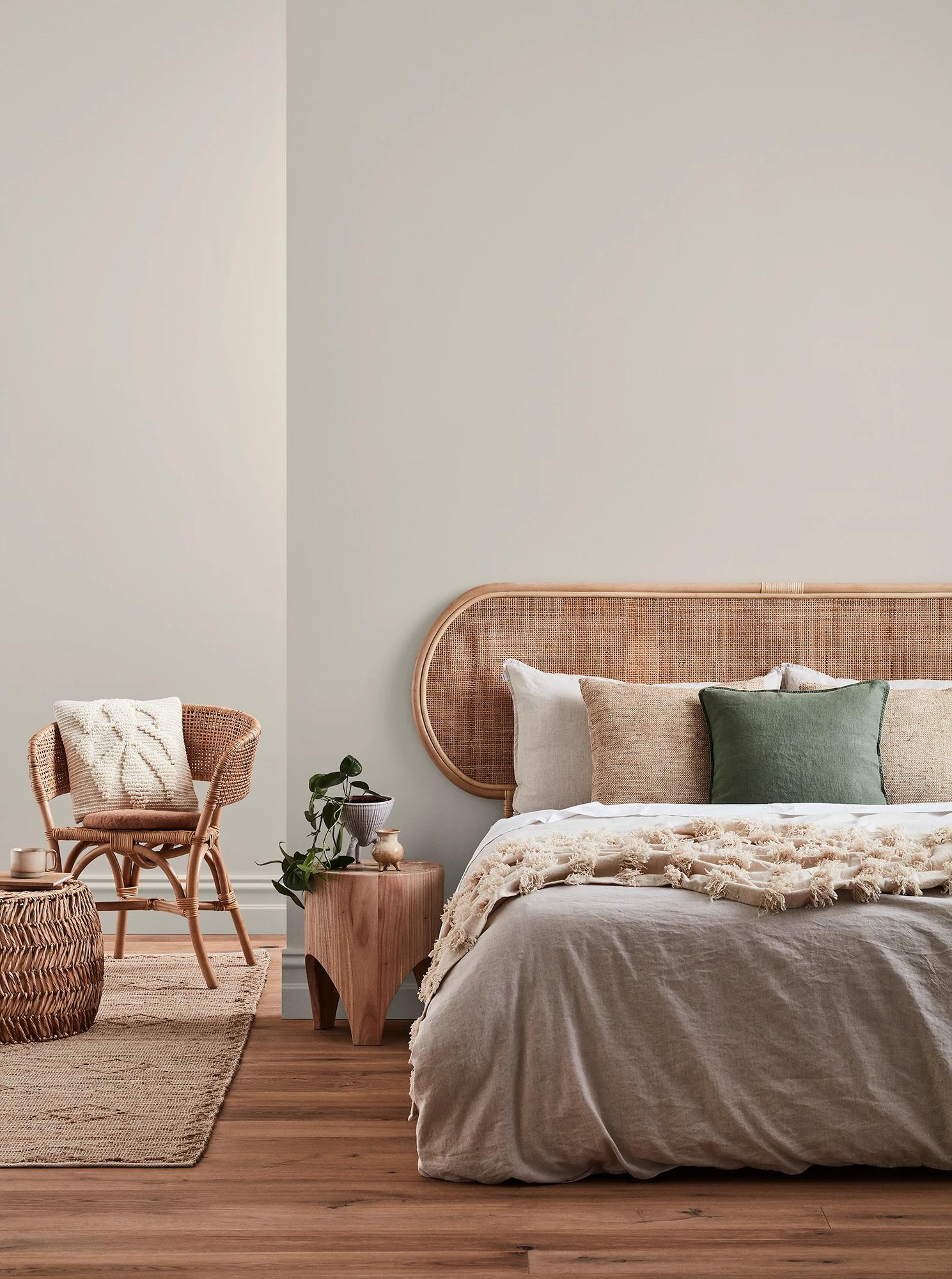
Rattan furniture and woven baskets introduce organic shapes and warm undertones to a gray and white bedroom. A rattan accent chair, a seagrass storage basket, and a woven pendant light create a cohesive natural texture story. White bedding with a linen texture keeps the palette calm.
Key Colors: Warm gray, natural rattan, white, sandy beige.
Materials: Rattan, seagrass, linen, woven cotton, ceramic.
Why It Works: Woven materials add both visual pattern and tactile interest without introducing competing colors, keeping the gray-and-white scheme intact.
Styling Tip: Group woven elements in odd numbers (three baskets, one chair, one pendant) for a natural, unstudied arrangement.
Luxury Gray-and-White Bedrooms With Hotel Vibes
Luxury gray bedrooms borrow heavily from high-end hotel design: impeccable bedding, statement headboards, metallic accents, and a restrained color palette executed with premium materials. These ideas show how to achieve that polished, curated aesthetic at home.
13. Tufted Velvet Headboard With Gold Accents
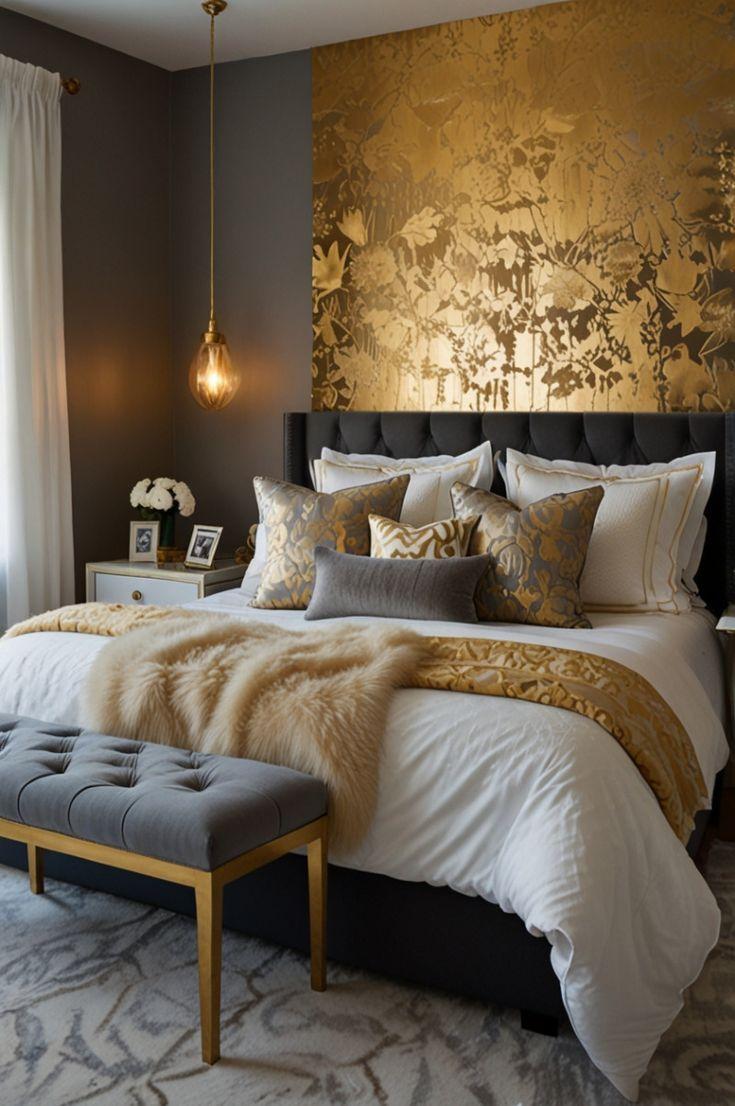
A deep charcoal tufted velvet headboard anchors the room with immediate luxury. Gold picture frames, brass table lamps, and a gilded mirror introduce metallic warmth. Crisp white hotel-style bedding with a high-thread-count duvet and European shams completes the look.
Key Colors: Charcoal, white, brass gold, warm ivory.
Materials: Velvet, brass, Egyptian cotton, gilded wood.
Why It Works: Gold and gray is a classic luxury combination. The warmth of brass prevents the gray from feeling cold, while velvet adds tactile richness.
Styling Tip: Invest in the best duvet cover you can afford. Luxury bedrooms are judged by bedding quality above all else.
14. Hotel-Style Layered White Bedding on Gray Walls
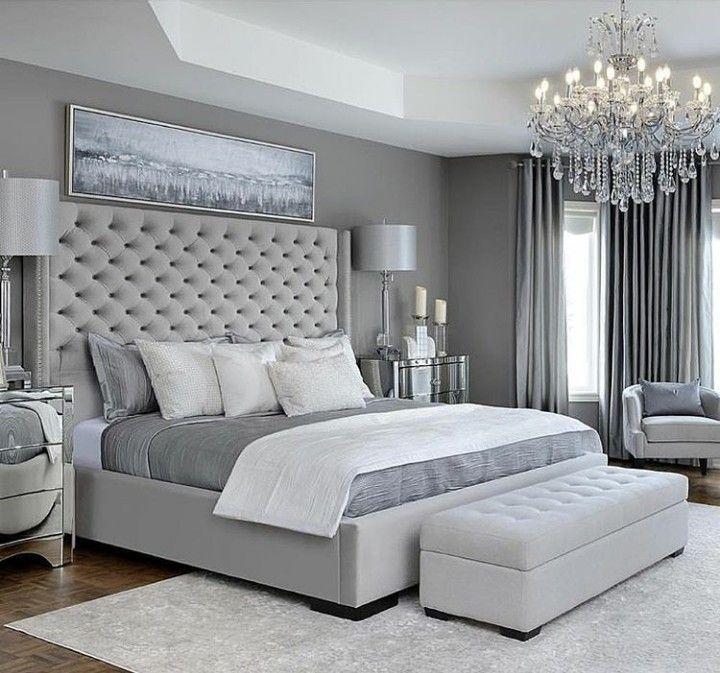
Recreate the luxury hotel bed: start with crisp white fitted sheets, add a white quilted coverlet, layer a plush white duvet folded at the foot, and finish with three rows of pillows (sleeping, Euro shams, decorative). Dove gray walls provide the perfect neutral backdrop. A bench at the foot of the bed adds the hotel finishing touch.
Key Colors: Dove gray, bright white, warm ivory, silver.
Materials: Egyptian cotton, quilted matelasse, down duvet, linen bench.
Why It Works: Hotel bedding follows a specific layering formula that signals luxury through abundance and precision.
Styling Tip: Size up your pillow inserts by two inches from the cover dimension for that full, plush hotel look.
15. Silver and Gray Bedroom With Mirrored Furniture
Mirrored nightstands and a silver-leaf dresser amplify light in a medium gray bedroom. The reflective surfaces create sparkle and depth. Pair with a silver silk duvet and crystal drawer pulls for full glamour. Soft gray walls (like Benjamin Moore Silver Satin) provide the ideal backdrop.
Key Colors: Silver, medium gray, crystal white, pale lavender.
Materials: Mirrored glass, silk, crystal, silver leaf.
Why It Works: Mirrored surfaces bounce light around the room, adding dimension and a sense of expanded space while reinforcing the cool, elegant palette.
Styling Tip: Keep mirrored surfaces clean and uncluttered. One statement object per surface maintains the luxury feel.
16. Marble and Brass Details in a Gray Suite
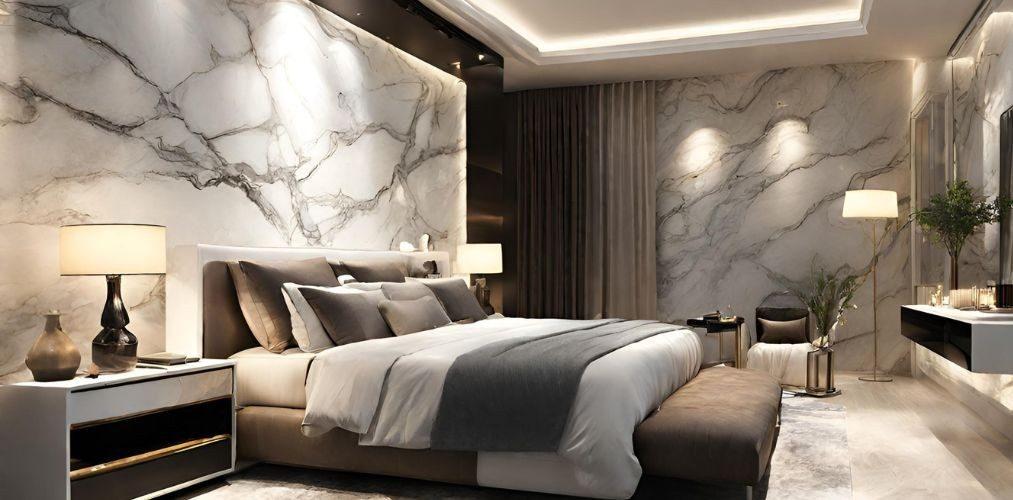
A gray bedroom reaches maximum sophistication when you introduce a marble-top console table and brass accents. White Carrara marble paired with brushed brass legs creates a material contrast that feels both timeless and current. Gray walls, white bedding, and a brass pendant light complete the composition.
Key Colors: Cool gray, Carrara white, brushed brass, charcoal.
Materials: Carrara marble, brushed brass, velvet, cotton.
Why It Works: Marble and brass are signature materials in luxury interiors. Together they add permanence and refinement to a gray bedroom.
Styling Tip: Use marble sparingly, as one statement surface rather than throughout, to maintain elegance without excess.
17. Oversized Mirror and Symmetrical Layout
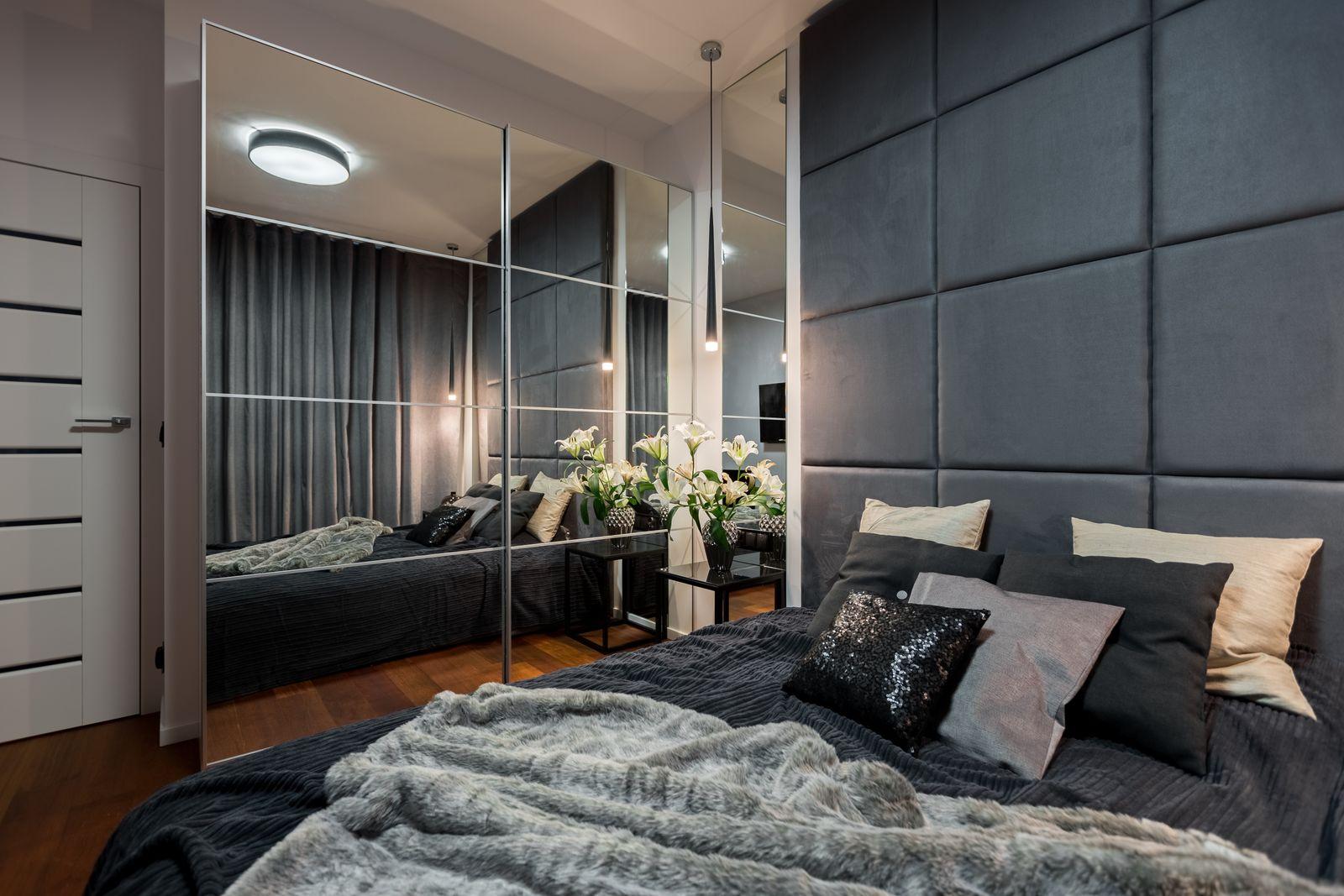
A floor-to-ceiling oversized mirror leaning against a charcoal accent wall doubles the visual space and adds instant drama. Flank the bed with matching white lacquer nightstands, identical brass lamps, and symmetrical art for a curated, high-end look. This symmetry mimics the deliberate styling of luxury hotel rooms.
Key Colors: Charcoal, white, brass, dove gray.
Materials: Plate glass mirror, lacquer, brass, cotton.
Why It Works: Symmetry creates visual order and perceived intentionality, two hallmarks of luxury design.
Styling Tip: Ensure the mirror reflects something attractive, such as a window or art piece, rather than a blank wall or closet door.
18. Canopy Bed With Sheer White Drapes on Gray Walls
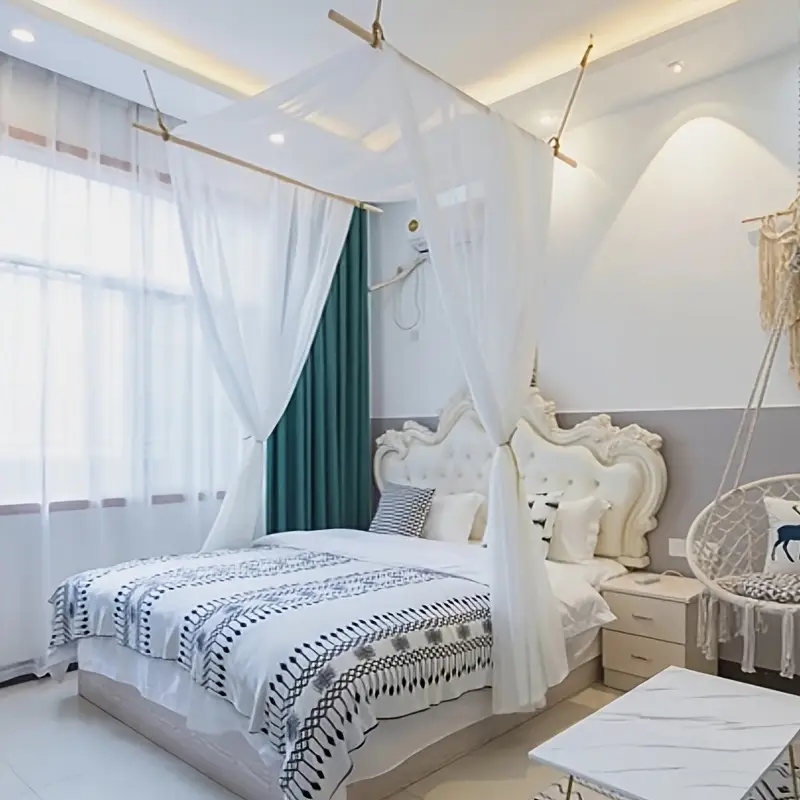
A four-poster canopy bed draped in sheer white curtains against warm gray walls creates a dreamy, enveloping retreat. The canopy adds vertical drama while the sheers filter light softly. This look translates the hotel-luxury aesthetic into something more personal and romantic.
Key Colors: Warm gray, sheer white, ivory, champagne.
Materials: Sheer voile, solid wood canopy frame, linen, silk accents.
Why It Works: Canopy beds create a room-within-a-room effect that feels protective and luxurious simultaneously.
Styling Tip: Choose sheer fabric rather than heavy drapes for the canopy to keep the look airy, not heavy.
Small Gray-and-White Bedroom Ideas That Still Feel Bright
Small bedrooms benefit enormously from the gray-and-white palette because both colors reflect and manage light effectively. The trick is choosing the right shade of gray, maximizing vertical space, and using strategic mirrors and lighting to expand the perceived dimensions of the room.
19. Light Gray Walls and Mirrors Behind Nightstands
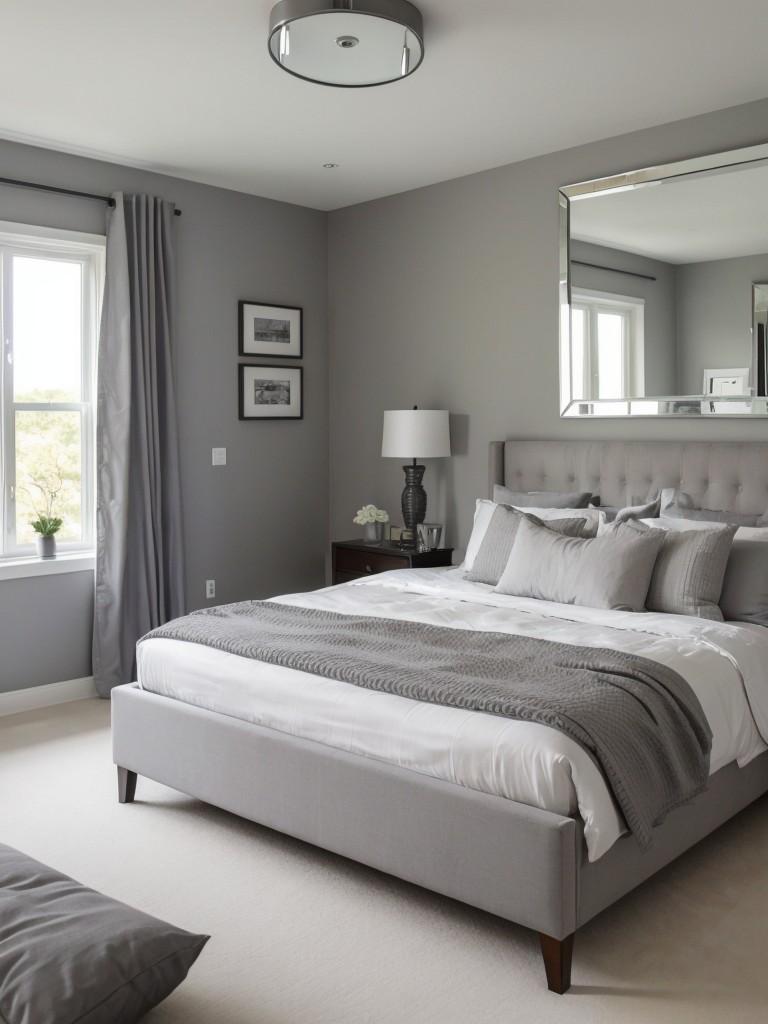
Light gray walls (like Benjamin Moore Edgecomb Gray) combined with mirrors placed behind each nightstand bounce natural light deep into the room. This trick, used frequently by Restoration Hardware designers, creates the illusion of additional windows and expanded depth. Zillow’s 2025 Paint Color Analysis, which surveyed more than 4,200 recent and prospective homebuyers, found that bedrooms painted in dark, dramatic tones like navy blue could increase a home’s sale price by an estimated $1,815, reinforcing the financial value of thoughtful bedroom color choices.
Key Colors: Light gray, white, silver, pale beige.
Materials: Plate glass mirror, painted MDF, cotton, linen.
Why It Works: Mirrors reflect both natural and artificial light, making small rooms appear significantly larger and brighter.
Styling Tip: Position mirrors directly opposite or adjacent to windows for maximum light reflection.
20. Vertical Storage and Floating Shelves
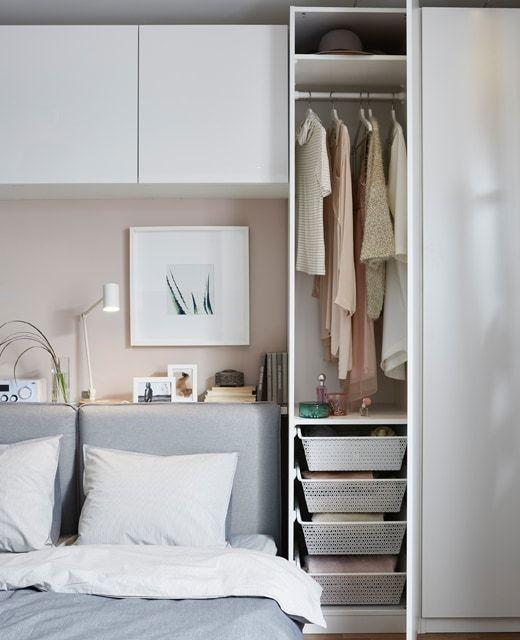
In a small gray bedroom, every inch counts. Install white floating shelves above the bed for books and decor instead of using bulky nightstands. A wall-mounted reading sconce frees the shelf surface. Light gray walls ensure the shelves blend rather than create visual clutter.
Key Colors: Light gray, white, natural wood accent.
Materials: White lacquer shelves, brass sconce, cotton bedding.
Why It Works: Vertical storage draws the eye upward, making ceilings appear higher and the room more spacious.
Styling Tip: Limit shelf items to three to five curated pieces to prevent visual crowding.
21. All-White Bedding to Maximize Brightness
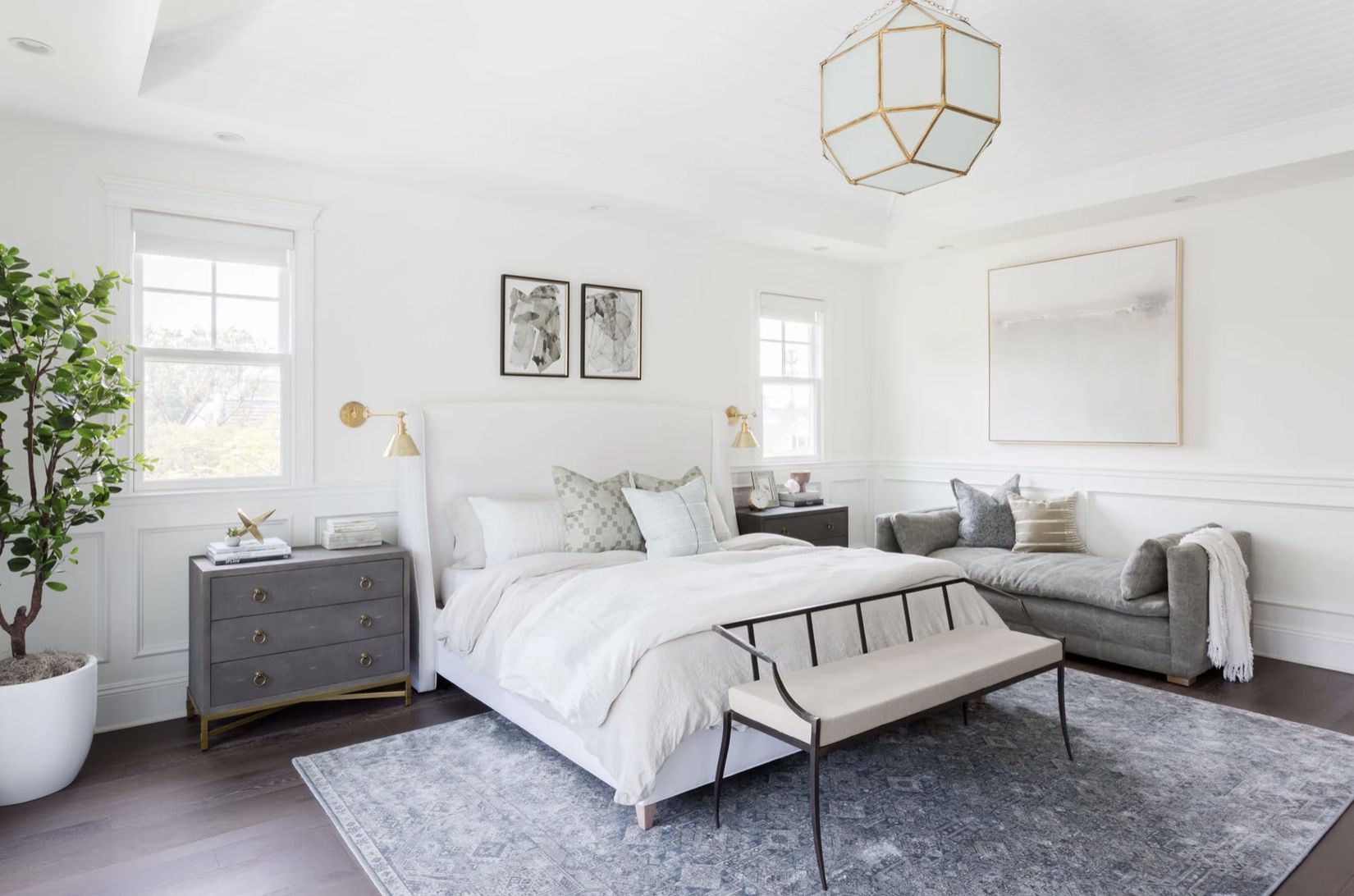
In a compact gray bedroom, all-white bedding acts as a light reflector. White duvet, white sheets, and white pillows create a bright focal point that draws the eye and makes the space feel open. Pair with the palest gray walls you can find for a seamless, airy look.
Key Colors: Pale gray, bright white, ivory.
Materials: Egyptian cotton, linen, percale.
Why It Works: White surfaces have a Light Reflectance Value (LRV) of approximately 85 to 90 percent, meaning they reflect the vast majority of visible light, according to paint industry standards published by Benjamin Moore. Gray walls, by contrast, absorb a significant portion of light depending on their depth. This contrast creates brightness at the center of the room.
Styling Tip: Use varying shades of white (ivory, cream, pure white) to add depth without introducing color.
22. Gray Accent Wall With Three White Walls
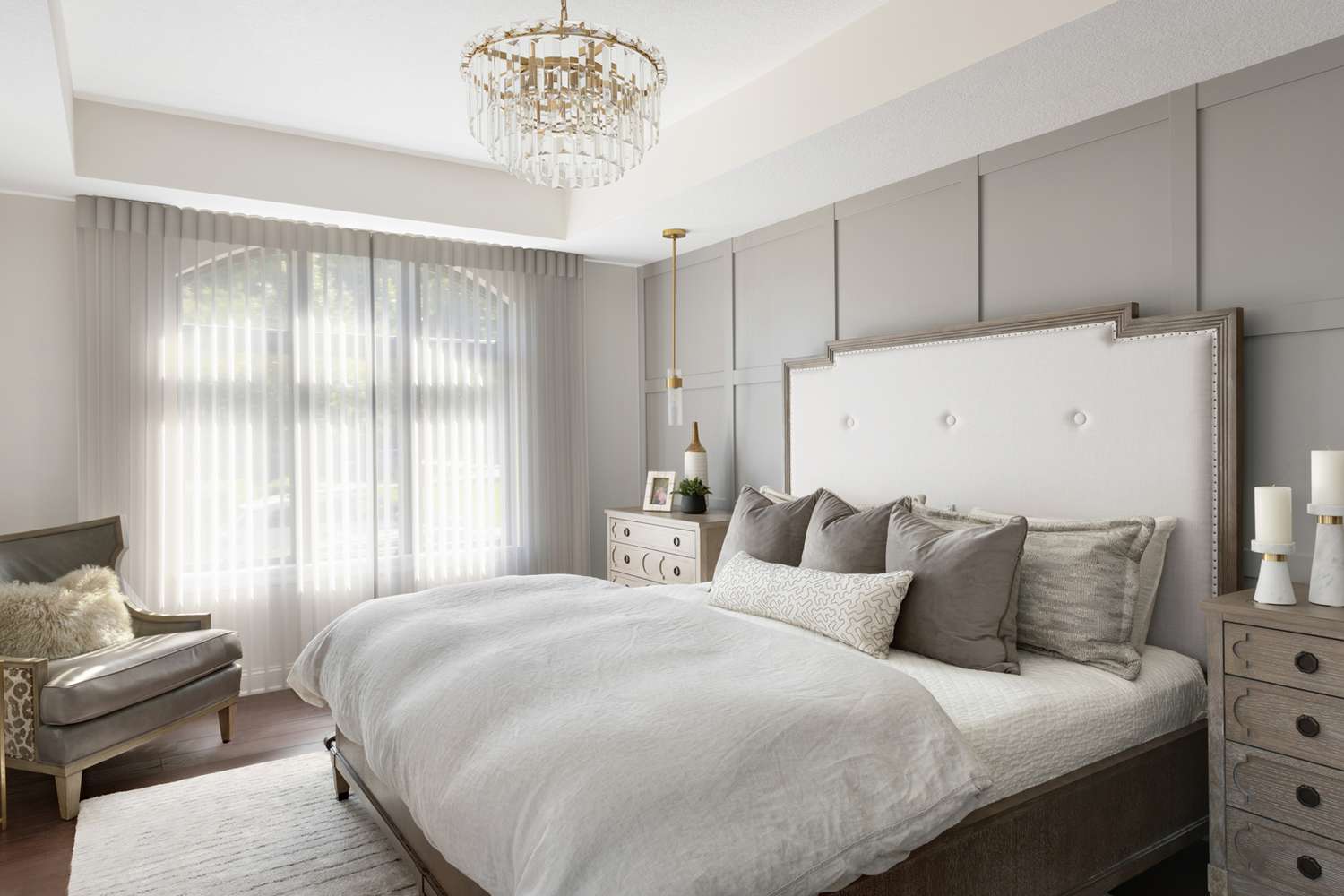
Painting just one wall in a darker gray creates a focal point without overwhelming a small room. The remaining three white walls maintain brightness. This approach delivers the sophistication of gray without the cave effect that four dark walls can create in compact spaces.
Key Colors: Charcoal accent, white, light gray.
Materials: Matte paint, white trim, cotton.
Why It Works: A single accent wall provides depth and drama while the white walls preserve the light, open feel that small bedrooms need.
Styling Tip: Place the accent wall behind the bed so it serves as a natural headboard backdrop.
23. Multi-Functional Furniture in Gray and White
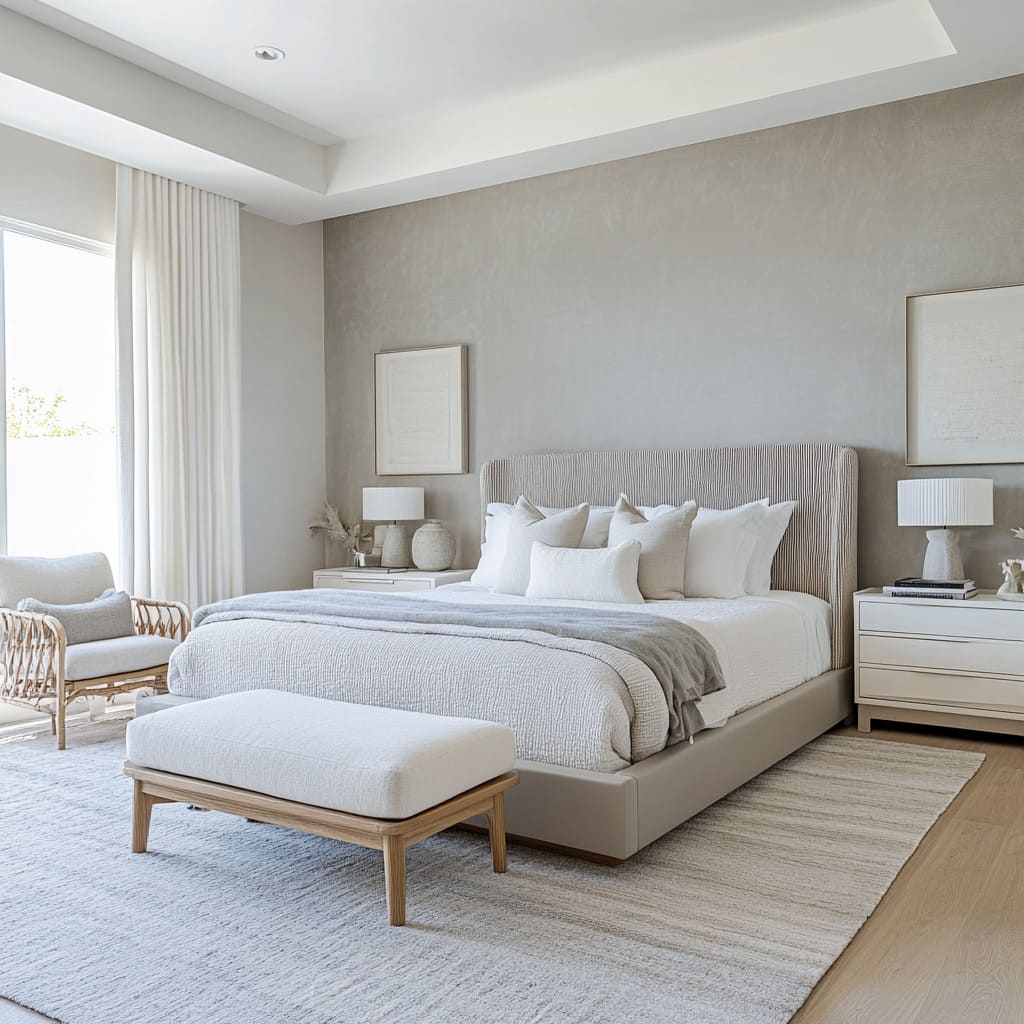
A storage bed in light gray upholstery with built-in drawers eliminates the need for a separate dresser. A white desk doubles as a nightstand. Wall-mounted lamps free surface space. This approach maximizes function while maintaining the clean gray-and-white aesthetic.
Key Colors: Light gray upholstery, white, chrome.
Materials: Upholstered storage bed, painted wood, chrome hardware.
Why It Works: Multi-functional pieces reduce furniture count, which reduces visual clutter and increases floor space in tight rooms.
Styling Tip: Measure your room and choose furniture scaled to two-thirds of what you think fits. Over-scaled pieces shrink small rooms dramatically.
24. Glass and Lucite Elements for Visual Lightness
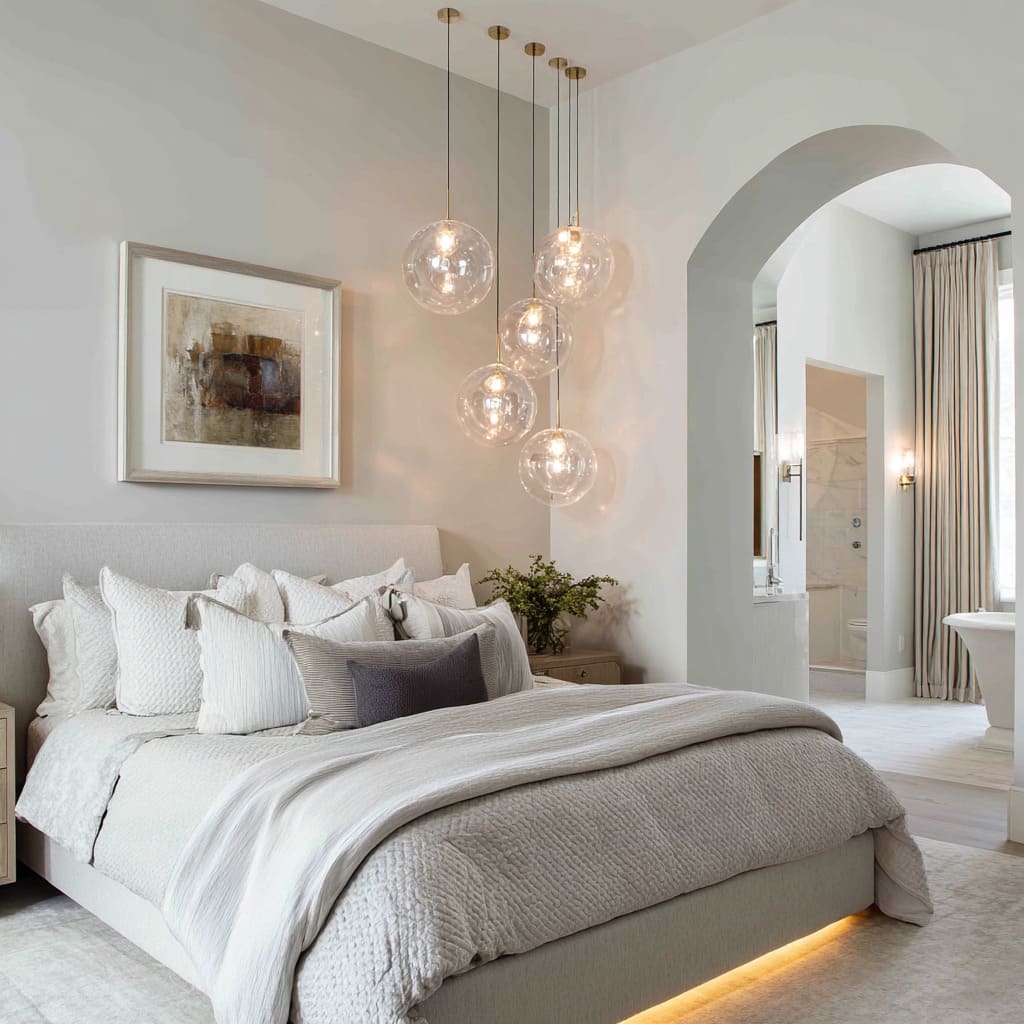
Clear glass or lucite nightstands and a ghost chair disappear visually in a small gray bedroom, maintaining the color scheme without adding visual weight. A white lacquer bed frame and pale gray walls complete the look with maximum lightness.
Key Colors: Pale gray, white, transparent.
Materials: Lucite, glass, lacquer, cotton.
Why It Works: Transparent furniture maintains function while eliminating visual bulk, a crucial advantage in rooms under 120 square feet.
Styling Tip: Add one opaque element, like a textured white throw, to prevent the room from feeling too clinical.
Gray Bedrooms With Accent Colors That Elevate the Palette
Gray and white forms a versatile foundation that pairs beautifully with nearly any accent color. The key is choosing accent hues that complement the undertone of your gray. Cool grays pair naturally with blue, green, and silver, while warm grays and greiges work best with gold, beige, and blush. These ideas demonstrate the most impactful accent color pairings.
25. Gray and White With Gold Accents
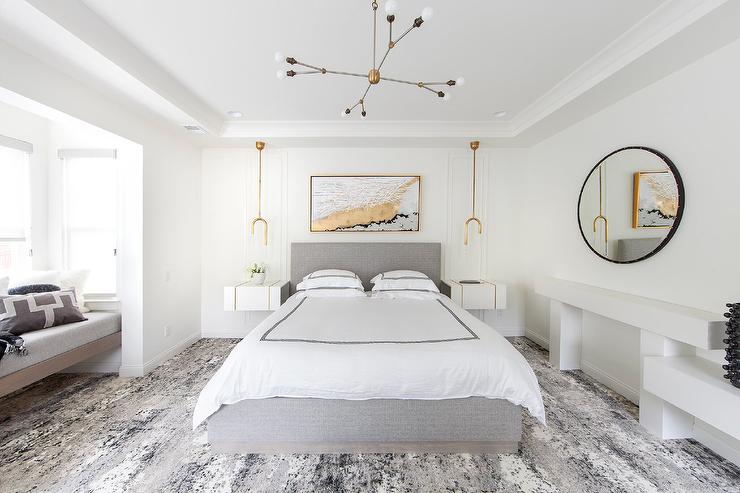
Gold accents elevate a gray-and-white bedroom from simple to sophisticated. A gold-framed mirror, brass table lamps, and a few gilded accessories introduce warmth and luxury without overwhelming the neutral palette. Gray walls with gold accents create a look associated with high-end hotel design and curated interiors.
Key Colors: Charcoal gray, white, brass gold, warm ivory.
Materials: Brass, gilded wood, velvet, cotton.
Why It Works: Gold adds warmth to cool gray, creating a complementary temperature contrast that feels intentional and luxurious.
Styling Tip: Use gold in three places minimum for cohesion: lamps, hardware, and one decorative object.
26. Blue-Gray and White Coastal Palette
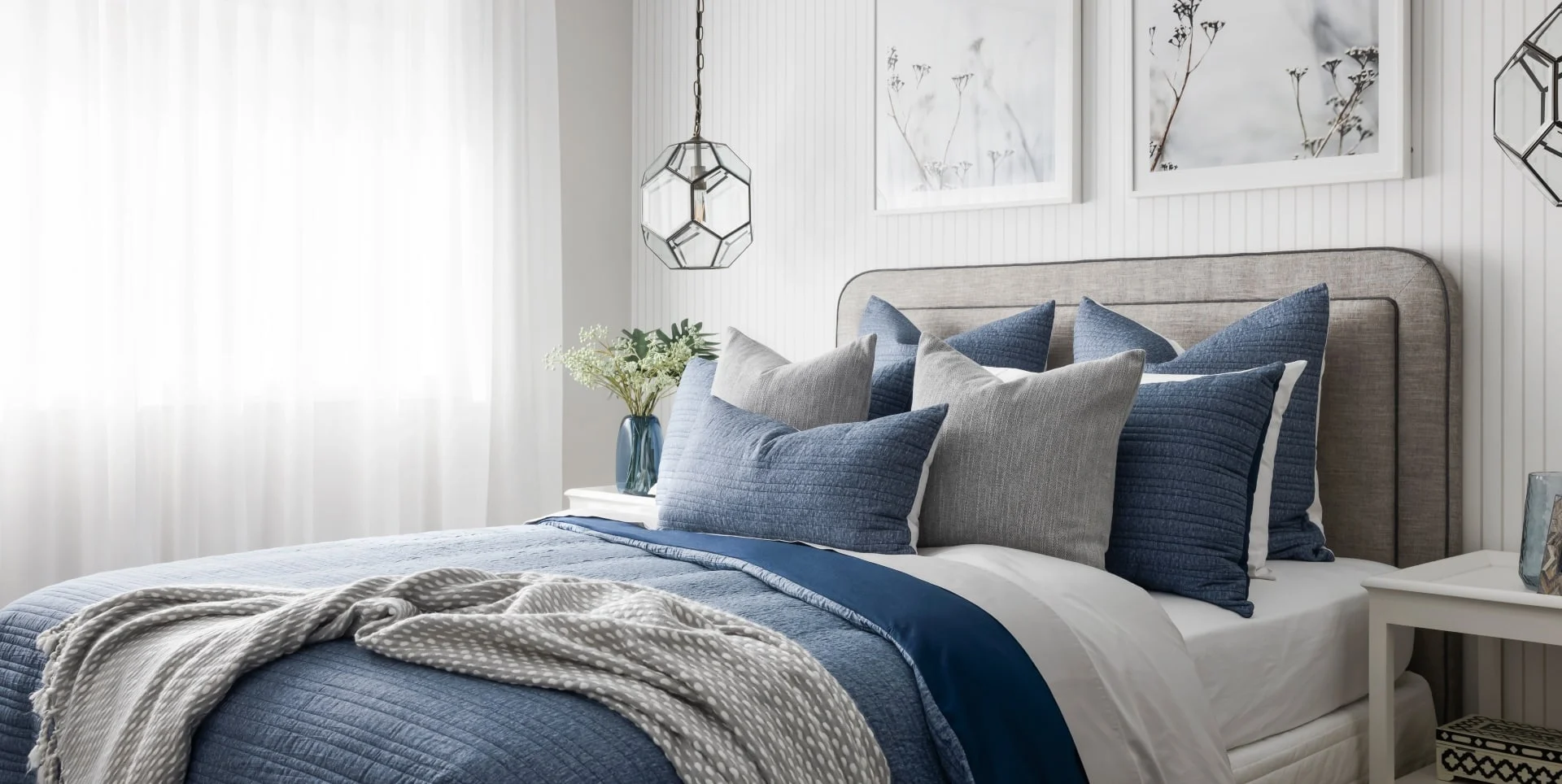
Blue-gray walls (like Sherwin-Williams Passive) naturally evoke a coastal, serene atmosphere. White bedding, a navy accent pillow, and driftwood-finish furniture complete the seaside look. The blue undertone in the gray connects the space to sky and water associations, promoting relaxation.
Key Colors: Blue-gray, navy, white, driftwood tan.
Materials: Driftwood, linen, cotton, rope accents.
Why It Works: Blue is consistently rated the most calming color in psychological studies. A Travelodge survey of 2,000 UK homes found that people sleeping in blue bedrooms averaged 7 hours and 52 minutes of sleep per night, nearly two hours more than those in warmer-toned rooms. When embedded in gray, blue creates subtle serenity rather than bold color, delivering the sleep benefits without a saturated look.
Styling Tip: Keep the blue accent to one or two elements to avoid turning the room into a literal beach theme.
27. Sage Green Accents in a Gray Bedroom
Sage green throw pillows, a potted fiddle-leaf fig, and green-tinted glass vases bring life to a gray bedroom. Green is nature’s neutral and pairs effortlessly with both warm and cool grays. Sherwin-Williams Evergreen Fog, a green-gray, was one of the most popular paint colors of recent years and continues to resonate.
Key Colors: Warm gray, sage green, white, natural wood.
Materials: Cotton, ceramic, live plants, wood.
Why It Works: Green connects the interior to the natural world, reducing stress and creating a restorative atmosphere ideal for bedrooms.
Styling Tip: Use real plants rather than artificial ones. The US Environmental Protection Agency reports that Americans spend approximately 90 percent of their time indoors, where pollutant concentrations can be two to five times higher than outdoor levels. Living greenery helps filter indoor air naturally and provides authentic texture.
28. Blush Pink and Gray Soft Romantic Palette
Blush pink accents soften a gray bedroom with a romantic, feminine quality. A blush throw blanket, rose-tinted art prints, and a dusty pink accent chair create warmth without sweetness. Cool gray walls provide the necessary contrast to keep the pink sophisticated rather than juvenile.
Key Colors: Cool gray, blush pink, white, mauve.
Materials: Velvet, linen, wool, ceramic.
Why It Works: Pink and gray is a complementary pairing where the warmth of pink balances the coolness of gray, creating emotional equilibrium.
Styling Tip: Choose dusty or blush pinks rather than bright pinks to maintain the mature, sophisticated quality of the room.
29. Mustard Yellow Accents for Energy
Mustard yellow injects energy and personality into a gray-and-white bedroom. A mustard accent chair, a yellow-toned abstract painting, or ochre throw pillows create a striking focal point. The warm yellow contrasts powerfully with cool gray, making each color appear more vibrant.
Key Colors: Cool gray, mustard yellow, white, charcoal.
Materials: Wool, cotton, linen, painted canvas.
Why It Works: Yellow and gray is a high-contrast complementary pairing. Yellow activates the space while gray provides a restful counterpoint.
Styling Tip: Limit yellow to one statement piece and one or two small accents. Too much yellow in a bedroom can feel stimulating rather than relaxing.
30. Black Accents for Modern Contrast
Black fixtures, a black bed frame, and matte black drawer pulls add sharp, modern contrast to a light gray bedroom. The black elements create graphic definition and visual structure. This approach works particularly well in contemporary and transitional gray bedrooms where clean lines are prioritized.
Key Colors: Light gray, white, matte black, charcoal.
Materials: Matte black metal, painted wood, cotton, glass.
Why It Works: Black creates the strongest possible contrast against gray and white, adding visual weight and anchoring the design.
Styling Tip: Repeat black in at least three elements throughout the room to make the accent feel deliberate rather than random.
Best Paint Colors for Gray-and-White Bedrooms
Choosing the right gray paint is the most consequential decision in your bedroom design. The wrong shade can read as purple, green, or blue under different lighting conditions. Understanding undertones, warm versus cool grays, and how paint interacts with natural and artificial light is essential. According to the 2025 Houzz and Home Study, which surveyed 21,889 homeowners, 54 percent undertook renovation projects in 2024, and among those updating bedrooms, approximately 95 percent upgraded their wall finish with paint, making color selection the single most common bedroom design decision.
Understanding Warm Gray vs. Cool Gray
Warm grays (often called greige) contain red, yellow, or brown undertones. They feel inviting, cozy, and pair well with gold, beige, and wood tones. Cool grays contain blue, green, or violet undertones. They feel crisp, modern, and pair well with silver, blue, and black. Before selecting a paint color, test a large sample on your wall and observe it at different times of day.
Benjamin Moore Classic Gray (OC-23) is a warm, almost off-white gray that works beautifully in bedrooms with limited natural light. Edgecomb Gray (HC-173) sits between gray and beige, making it one of the most versatile greige options available. For a cooler direction, Sherwin-Williams Passive (SW 7064) delivers a light cool gray with subtle blue undertones.
Top Gray Paint Colors for Bedrooms
31. Greige: The Warm Neutral That Bridges Gray and Beige
Greige paints like Benjamin Moore Edgecomb Gray and Sherwin-Williams Pavestone combine gray’s sophistication with beige’s warmth. They work in almost any lighting condition and complement both warm and cool accent colors. Sherwin-Williams Agreeable Gray (SW 7029), a greige with an LRV of 60, has ranked as one of the brand’s best-selling paint colors for several consecutive years, according to multiple industry sources. Greige is particularly effective in north-facing bedrooms where cool light can make pure grays appear blue.
Best For: Bedrooms with uncertain lighting conditions, transitional style rooms.
Undertone: Warm (beige, yellow, brown).
Pair With: Gold accents, warm wood tones, cream bedding.
32. Charcoal Gray: Bold Drama for Accent Walls
Charcoal gray (like Benjamin Moore Kendall Charcoal or Sherwin-Williams Peppercorn) creates dramatic accent walls that add depth and focus. Use behind the bed as a faux headboard effect. Pair with crisp white trim and light bedding to prevent the room from feeling enclosed. Charcoal reads as sophisticated, not heavy, when balanced with sufficient white.
Best For: Accent walls, large bedrooms with good natural light.
Undertone: Neutral to slightly warm.
Pair With: White trim, gold or brass accents, light gray bedding.
33. Dove Gray: Soft and Timeless
Dove gray (like Benjamin Moore Gray Owl or Sherwin-Williams Dorian Gray) offers a soft, barely-there gray that works as a whole-room color. It reads differently throughout the day, shifting between warm and cool depending on the light. This chameleon quality makes it endlessly adaptable and one of the most popular bedroom paint choices.
Best For: Whole-room paint, bedrooms seeking a calm, understated atmosphere.
Undertone: Neutral, can shift warm or cool.
Pair With: White bedding, natural wood, soft blue or green accents.
34. Warm Gray Paint for Cozy Contrast
Warm gray paints like Sherwin-Williams Amazing Gray or Benjamin Moore Balboa Mist have enough yellow-brown undertone to feel cozy rather than cool. They create a natural pairing with cream, ivory, and warm wood tones. These shades work particularly well in bedrooms where the goal is a restful, nurturing atmosphere rather than a sharp, modern edge.
Best For: Cozy, traditional, or farmhouse-style bedrooms.
Undertone: Warm (yellow, brown, taupe).
Pair With: Cream textiles, oak or walnut furniture, warm metallics.
35. Cool Gray for a Crisp, Modern Look
Cool gray paints (like Benjamin Moore Stonington Gray or Sherwin-Williams Mindful Gray) carry blue or green undertones that read as crisp and contemporary. They pair naturally with silver, glass, and cool white elements. Avoid cool grays in north-facing rooms with limited sunlight, as they can appear flat or cold. Test before committing.
Best For: Modern, minimalist, or industrial bedrooms with good natural light.
Undertone: Cool (blue, green, violet).
Pair With: Silver or chrome, black accents, pure white trim.
Gray-and-White Bedding Ideas for Every Style
Bedding is the most visually dominant element in any bedroom, often occupying 30 to 40 percent of the visible space. In a gray-and-white bedroom, your bedding choices define the entire atmosphere. Material, texture, layering, and pattern all contribute to the final impression. The US bedsheets market alone was valued at $7.75 billion in 2024 and is projected to reach $11.55 billion by 2032, according to Fortune Business Insights, underscoring how heavily consumers invest in bedroom textiles.
36. Hotel-Inspired Layered White Bedding
The hotel bedding formula is reliable and universally flattering. Start with crisp white percale or sateen sheets. Add a white quilted coverlet pulled up to the pillows. Fold a white down duvet at the foot of the bed. Arrange three pillow rows: sleeping pillows, Euro shams in white, and two decorative pillows in gray or textured white. This method creates the signature plush, inviting bed associated with five-star hotels.
Key Materials: Egyptian cotton percale, matelasse quilt, down duvet, linen Euro shams.
Styling Tip: Iron pillowcases and the duvet cover for a truly hotel-crisp presentation.
37. Linen Bedding in Natural Gray Tones
Linen bedding in natural gray tones offers a relaxed, effortlessly beautiful aesthetic. The slightly rumpled texture of linen is part of its charm, creating a lived-in elegance that contrasts with the formality of hotel-style bedding. Pair gray linen sheets with white linen pillowcases for a tonal, organic look. Linen softens with every wash, making it an investment that improves over time.
Key Materials: Stonewashed linen, Belgian flax linen, cotton-linen blend.
Styling Tip: Embrace the natural wrinkle of linen rather than ironing it. The texture is the point.
38. Gray Duvet With White Trim Detailing
A gray duvet cover with white piping or flange edges introduces pattern through detail rather than print. The contrast stitching adds a tailored, bespoke quality to the bedding. Pair with white sheets and gray accent pillows for a cohesive look. This approach suits both modern and transitional bedrooms.
Key Materials: Cotton sateen duvet, white linen trim, down alternative insert.
Styling Tip: Match the trim color to your wall color for a sophisticated, pulled-together effect.
39. Quilted Bedding With Texture Patterns
Quilted bedding in white or light gray adds dimension through stitched texture. Channel quilting, diamond patterns, and geometric stitch designs create visual interest without introducing color. A white quilted coverlet over gray sheets, or vice versa, delivers a clean, layered look. The quilting adds weight and warmth, making it ideal for cooler climates.
Key Materials: Matelasse cotton, channel-quilted linen, cotton voile.
Styling Tip: Choose one quilting pattern and repeat it in the Euro shams for a unified look.
How to Warm Up a Gray Bedroom Without Repainting
If your gray bedroom feels cold or clinical, you do not need to repaint. Strategic additions of warm materials, soft lighting, and textured accessories can transform the atmosphere entirely. Designers consistently recommend the following approaches, each of which adds measurable warmth without altering your wall color.
40. Wood Textures, Warm Lighting, and Woven Materials
The single most effective way to warm a gray bedroom is through a three-part strategy: introduce wood furniture or accessories, switch all bulbs to warm white (2700K), and add woven or natural-fiber textiles. A walnut nightstand, a warm LED table lamp, and a jute or wool area rug collectively shift the room’s temperature perception from cool to cozy. Wood grain introduces organic warmth, warm lighting casts a golden tone on gray walls, and woven materials add tactile richness that flat surfaces lack.
Key Additions: Walnut or oak furniture, 2700K LED bulbs, jute or wool rug, boucle or chunky knit throw.
Why This Works: These three elements address warmth through three different senses: visual (wood grain), ambient (warm light), and tactile (woven textures). The combined effect is significantly greater than any single intervention.
Styling Tip: Start with lighting, which is the fastest and least expensive change. If the room still feels cool, add one wood piece. If needed, layer the textile last.
Additional Warmth Strategies
Beyond the three-part approach, consider these supplementary techniques to warm a gray bedroom:
- Install draperies in a warm fabric like linen or velvet to soften hard edges and add insulation.
- Add a brass or gold-framed mirror to introduce warm metallic reflections.
- Layer a warm-toned area rug (cream, taupe, or rust) over existing flooring.
- Display original art with warm-toned frames rather than cool black frames.
- Introduce one or two living plants, which add organic warmth and improve air quality.
- Replace cool gray accessories with warm gray or greige alternatives.
Design and Architecture Insights for Gray-and-White Bedrooms
Beyond specific ideas, understanding the design principles that make gray-and-white bedrooms successful will help you make confident decisions for your own space.
The Psychology of Gray in Bedrooms
Gray is psychologically associated with balance, neutrality, and calm. In bedroom design, these qualities support rest and relaxation. However, gray can also evoke feelings of detachment or coldness if used without warmth. The most successful gray bedrooms introduce warm counterpoints through material choices, lighting temperature, and accent colors.
The American Society of Interior Designers (ASID) noted in its 2026 Trends Outlook report that wellness-focused design, including calming color palettes and material warmth, is a dominant trend shaping the $26.5 billion US interior design industry. Designers recommend treating gray as a backdrop rather than a feature, allowing textures and accent elements to provide the emotional warmth that gray alone cannot deliver.
Creating a Tonal Palette That Works
A tonal palette uses variations of a single hue at different lightness levels. In gray-and-white bedrooms, this means layering three to five shades ranging from near-white to deep charcoal.
The key principle is maintaining sufficient contrast between adjacent layers so each reads as distinct rather than muddy. A room with light gray walls, medium gray bedding, and a charcoal accent pillow creates a clear tonal hierarchy that feels intentional and sophisticated.
Texture Contrast as a Design Tool
In monochromatic and near-monochromatic rooms, texture serves the role that color plays in multi-hue spaces.
Pairing smooth surfaces (lacquer, glass, silk) with rough ones (boucle, linen, raw wood) creates visual and tactile contrast that prevents the room from feeling flat. The design principle is straightforward: every surface should have a textural counterpoint nearby.
A smooth velvet headboard needs a nubby throw pillow. A glossy nightstand needs a matte ceramic vase. This interplay keeps the eye engaged and the hand curious.
Balancing Negative Space and Visual Weight
Gray-and-white bedrooms benefit from generous negative space. Overfilling the room with furniture and accessories negates the calming quality that the palette naturally provides.
A useful guideline is to leave at least 30 percent of visible surfaces empty. This includes walls, tabletops, and floor space. The breathing room between objects allows each piece to be appreciated individually and maintains the serene, uncluttered atmosphere that makes gray-and-white bedrooms so appealing.
Frequently Asked Questions About Gray-and-White Bedrooms
Q: How do you make a gray-and-white bedroom feel warm?
Add wood furniture, warm lighting (2700K bulbs), and textured textiles like boucle throws or wool rugs. Brass or gold accents also introduce warmth. Avoid relying on gray alone without these warming elements.
Q: What accent color goes best with gray and white?
Gold and brass are the most versatile accent colors for gray-and-white bedrooms, adding warmth and luxury. Blue pairs well with cool grays, while blush pink complements warm grays. Choose based on your gray’s undertone.
Q: Is gray still a good bedroom color?
Gray remains one of the most popular bedroom colors because of its versatility and calming quality. While some design trends are shifting toward warmer neutrals, gray bedrooms that incorporate warm materials and accent colors feel current and timeless.
Q: What shade of gray works best in small bedrooms?
Light gray or greige shades like Benjamin Moore Edgecomb Gray or Classic Gray work best in small bedrooms. They reflect light and create a sense of openness. Avoid dark charcoals in compact spaces unless used on a single accent wall.
Q: How do you decorate a modern gray bedroom?
Focus on clean lines, minimal accessories, and high-contrast accents like matte black fixtures or brass hardware. Use textured white bedding and limit decorative objects to maintain the modern, uncluttered aesthetic.
Q: What bedding goes with gray walls?
White or ivory bedding is the safest and most versatile choice for gray walls. For added interest, choose textured white bedding (matelasse, linen, waffle knit) or introduce a gray duvet with white trim for a tonal look.
Q: How can I make a gray bedroom look luxurious?
Invest in high-quality bedding, add a tufted or velvet headboard, introduce metallic accents (gold, brass, or silver), and ensure the room has layered lighting with dimmer switches. Symmetry in layout also signals luxury.
