

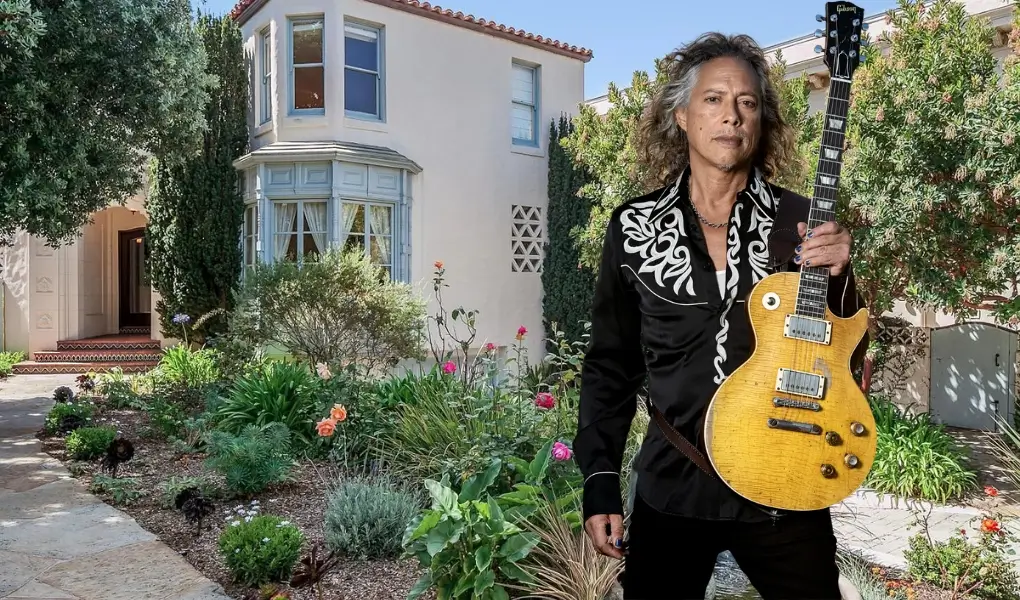
Kirk Hammett, the legendary lead guitarist of Metallica, built an impressive real estate portfolio anchored by three architecturally significant San Francisco properties: two adjacent cliffside mansions in Sea Cliff at 308 and 320 Sea Cliff Avenue, and a stately Georgian estate at 2505 Divisadero Street in Pacific Heights.
These were not flashy celebrity impulse buys. They were carefully selected residences in elite micro-neighborhoods overlooking China Beach, Lands’ End, and the Marin Headlands. Each property carried historical weight, distinctive architectural pedigree, and long-term investment strength. From Spanish Colonial drama perched above the Pacific Ocean to dignified Georgian symmetry on High Society Row, Hammett’s housing history reveals a disciplined collector’s mindset applied to real estate.
This is not simply a story about where a rock star lived. It is a case study in prime San Francisco luxury property, architectural identity, and strategic timing in one of the most competitive real estate markets in the United States.
Kirk Hammett – San Francisco Real Estate Portfolio Overview
| Address | Neighborhood | Style | Size | Bought | Sold |
|---|---|---|---|---|---|
| 320 Sea Cliff Ave | Sea Cliff | Spanish Colonial | 5,200 sq ft | $8M (2010) | $11.7M (2019) |
| 308 Sea Cliff Ave | Sea Cliff | Neo-Classical | 4,180 sq ft | — | $12.8M (2018) |
| 2505 Divisadero St | Pacific Heights | Georgian | ~9,057 sq ft | $2.56M (1993) | ~$7.6M (2010) |
The Sea Cliff Era: 308 and 320 Sea Cliff Avenue
Sea Cliff is one of San Francisco’s most exclusive enclaves. It sits above China Beach, with unobstructed views of Lands End and the Marin Headlands. Homes here are rare, private, and architecturally significant. Hammett owned not one but two adjacent properties in this coveted neighborhood.
320 Sea Cliff Avenue: Spanish Colonial Drama Above the Pacific
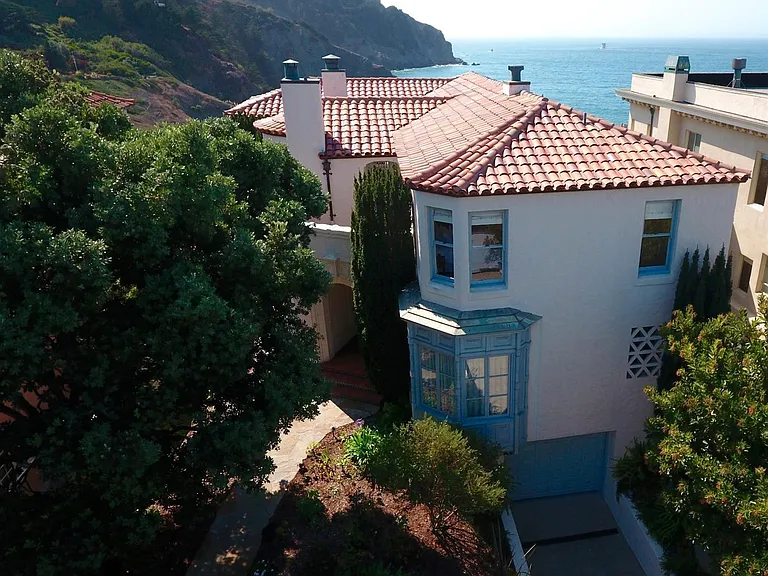
Built in 1926, 320 Sea Cliff Avenue is a 5,200 square foot Spanish Colonial estate. This architectural style is defined by red-tiled rooflines, curved walls, arched openings, and vintage tile work. It is romantic, theatrical, and deeply rooted in California design history.
- 5,200 square feet
- Ocean-view terrace overlooking China Beach
- Lower-level media room
- Extensive original detailing
Hammett purchased the property in 2010 for $8 million. He later sold it for $11.7 million in early 2019. The home’s terrace was often described as exquisite, with sweeping Pacific views that capture sunsets over the Marin Headlands.
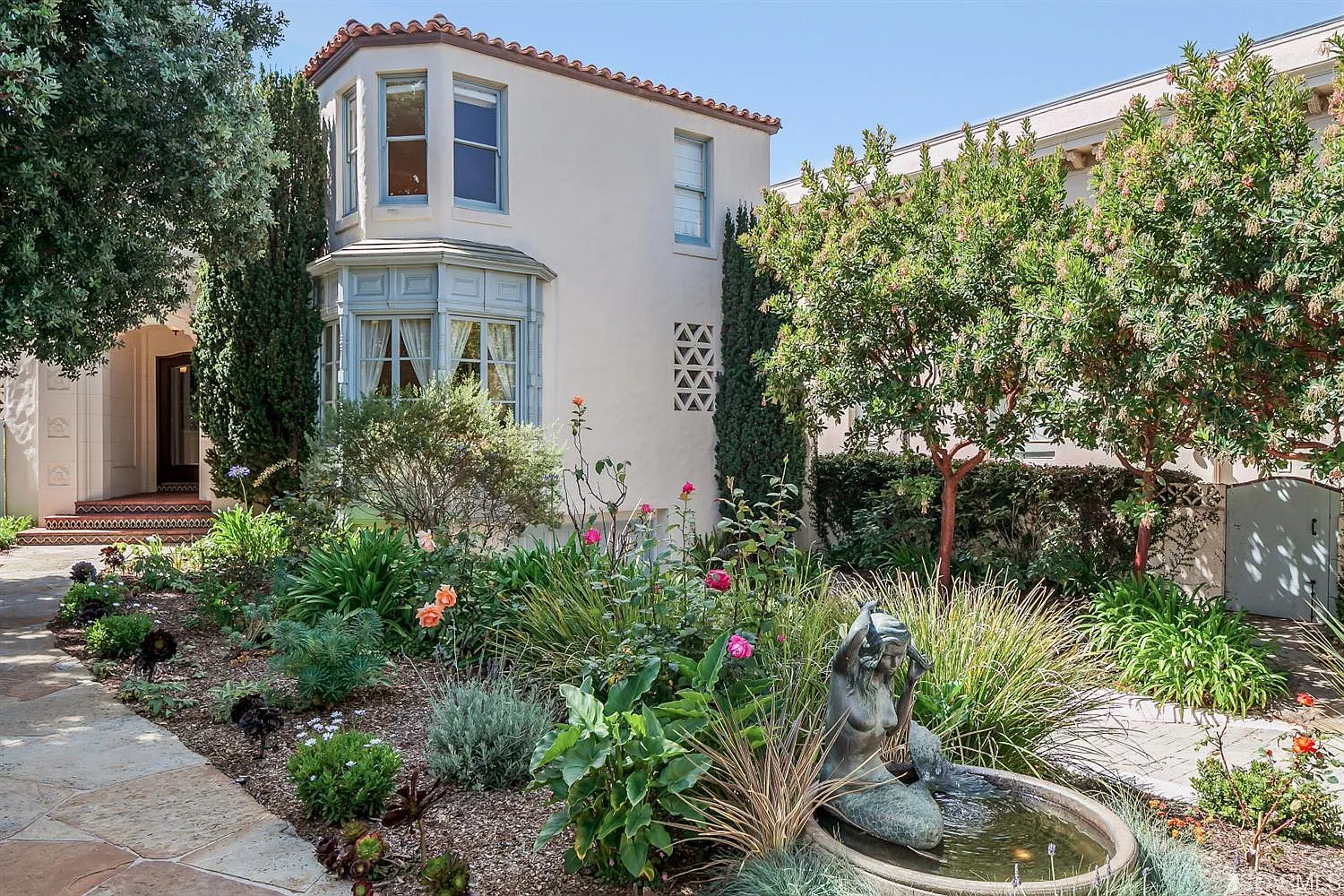
This was the more “Kirk” of the two Sea Cliff homes. He stored part of his world-class horror movie poster collection there. In fact, he famously kept a guitar and amplifier in every room that displayed horror art. The macabre imagery fueled his songwriting. That creative ritual transformed the mansion from a luxury residence into a private artistic laboratory.
Listings for both Sea Cliff homes were handled by Mark Levinson of Pacific Union, adding high-level brokerage credibility to the transactions.
308 Sea Cliff Avenue: Neo-Classical Precision
Next door stood 308 Sea Cliff Avenue, a 4,180 square foot Neo-Classical mansion built in 1922. Neo-Classical architecture emphasizes symmetry, grand staircases, classical columns, and refined ornamentation.
- 4,180 square feet
- Four bedrooms and four bathrooms
- Grand spiral staircase
- Custom ironwork front door
Hammett originally listed this property for $16 million in 2017. It ultimately sold in 2018 for $12.8 million. Property records listed Metallica’s attorney, Howard E. King, on the deed in trust. That technical detail underscores the level of asset protection common in celebrity real estate holdings.
Interior design here blended old and new. Crown moldings and original fireplaces sat alongside a remodeled kitchen and breakfast nook. The aesthetic was refined rather than rock and roll, which surprises many observers. These homes did not scream heavy metal. They reflected heritage and restraint.
Pacific Heights: 2505 Divisadero Street
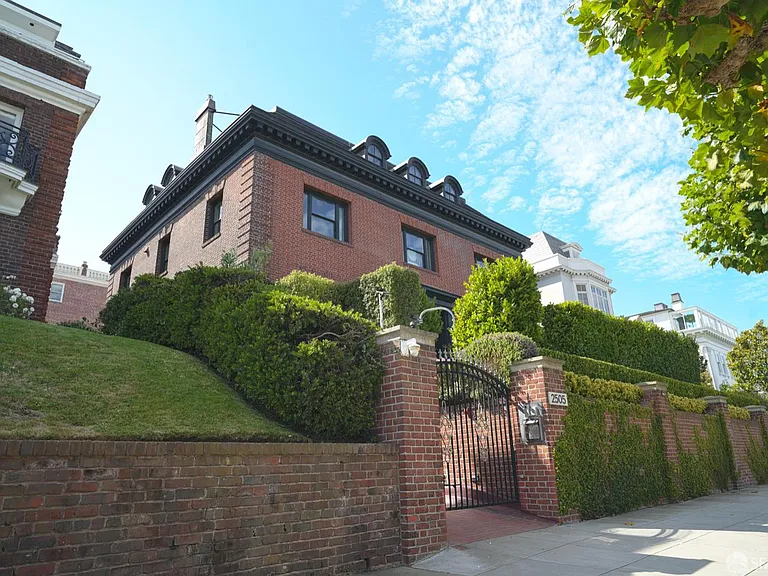
Before Sea Cliff, Hammett’s primary San Francisco residence was 2505 Divisadero Street in Pacific Heights. This is known locally as High Society Row. The neighborhood is synonymous with dignified mansions and long-established wealth.
The home was built in 1899 in the Georgian architectural style. Georgian homes emphasize proportion, brick or symmetrical facades, and formal interior layouts.
- Approximately 9,057 square feet
- Four levels
- Eight to nine bedrooms
- Professional music studio
- Billiards room with full bar
Hammett purchased the mansion in 1993 for roughly $2.56 million. He sold it in 2010 for approximately $7.6 million. During his 16 years there, the property became a hybrid between dignitary estate and rock sanctuary.
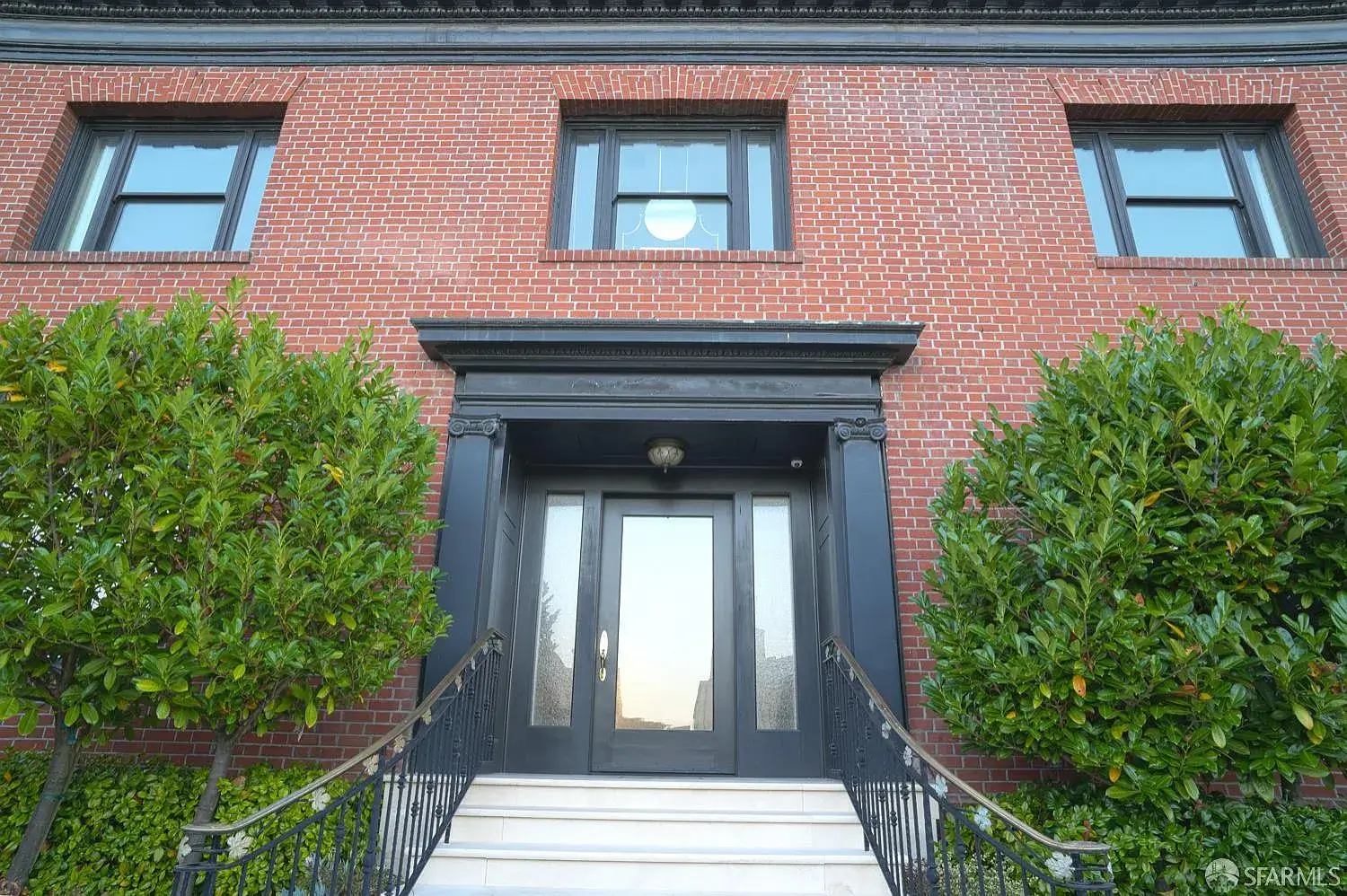
According to reporting by the San Francisco Examiner, the home resembled the residence of a statesman rather than a musician. It featured box-beam ceilings, wide mahogany staircases, and preserved woodwork. Thick ivy once covered the facade. You can read more in the original coverage here: San Francisco Examiner feature on the Divisadero mansion.
Before it sold successfully, the property was redesigned by noted San Francisco interior designer Arthur McLaughlin. He gave the historic mansion a contemporary face-lift that made it more marketable. The final sale was handled by Nina Hatvany of TRI-Coldwell Banker.
From an investment perspective, this was a strong appreciation play. Buying in Pacific Heights in the early 1990s positioned Hammett ahead of the city’s major tech-driven housing surge.
Architectural Contrast and Personal Identity
One of the most fascinating aspects of Hammett’s portfolio is the architectural diversity.
- Georgian formality in Pacific Heights
- Neo-Classical elegance at 308 Sea Cliff
- Spanish Colonial romance at 320 Sea Cliff
This range suggests intentionality. He did not simply buy large homes. He selected properties with architectural pedigree and strong neighborhood positioning. Each location had distinct prestige. Pacific Heights signaled establishment credibility. Sea Cliff signaled privacy and dramatic coastal luxury.
Sea Cliff in particular is a micro-market. Homes overlook China Beach and Lands End. The Marin Headlands form the horizon line. Inventory is limited. When adjacent properties come available, acquiring both is rare. That consolidation move indicates serious capital and strategic thinking.
Life After San Francisco: Sonoma and Hawaii
After selling the Sea Cliff mansions in 2018 and 2019, Hammett shifted his primary focus away from dense urban San Francisco living.
Sonoma Ranch
His secluded ranch in Sonoma County now serves as his main creative base. The property was featured in the Metallica documentary Some Kind of Monster. The architecture blends contemporary design with the rolling hills of Northern California wine country.
- Indoor-outdoor layout
- Large glass expanses
- Multiple patios
- Dedicated creative spaces
The peaceful setting contrasts sharply with Metallica’s touring intensity. He has described the ranch as a place to reset and create.
Hawaii Residence
Hammett also maintains a residence in Hawaii. He is an avid surfer and is often spotted near Waikiki Beach. For him, surfing is not recreational fluff. It is central to his mental well-being and sobriety.
The Hawaiian property functions as a physical and psychological escape. The ocean environment provides a different rhythm from California’s business pace.
Does Kirk Hammett Still Own Property in San Francisco?
Reports suggest he maintains a smaller footprint in the city, possibly a 5,900 square foot mansion valued around $7.2 million. However, he has kept details of this property far more private than his earlier listings.
That discretion aligns with a broader trend among high-net-worth individuals. As visibility increases, privacy becomes a primary asset.
Expert Analysis: What His Portfolio Reveals
Hammett’s real estate strategy reflects three clear principles:
- Architectural quality matters. Every home carried historical or stylistic weight.
- Location within micro-markets is critical. Sea Cliff and Pacific Heights are not generic neighborhoods. They are elite nodes within San Francisco.
- Timing drives appreciation. His Pacific Heights purchase in 1993 positioned him for significant gains.
He did not chase trends. He acquired properties in areas with long-standing prestige. That approach protects value even during market fluctuations.
In short, Kirk Hammett’s house history is not a story about celebrity excess. It is a case study in prime-location investing combined with architectural discernment. From Georgian grandeur on Divisadero Street to Spanish Colonial drama above China Beach, his homes reflect both discipline and personality.
And while he may now prefer Sonoma vineyards and Hawaiian surf breaks, his San Francisco legacy remains etched into some of the city’s most exclusive addresses.