

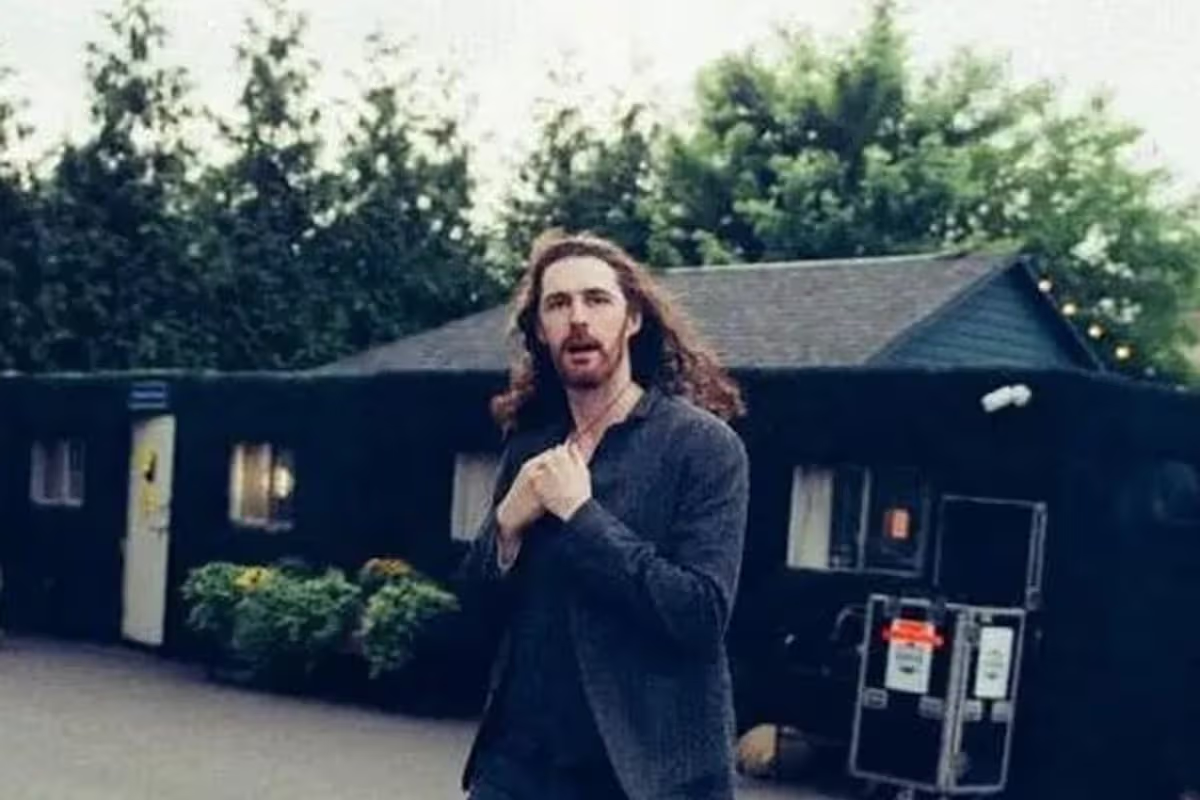
What does the home of one of Ireland’s most private musicians look like? Andrew Hozier-Byrne, the voice behind the global anthem “Take Me to Church,” has always let his music speak louder than his personal life. But the places he calls home tell a story just as rich as his lyrics. Hozier lives in an 18th-century house in County Wicklow, Ireland, surrounded by the same rugged landscape that fuels his soulful, folk-driven sound.
From his childhood attic in Bray where he recorded his breakout hit, to the quiet countryside estate he calls home today, every space he inhabits is steeped in Irish character and creative intention.
Here is a closer look at where Hozier lives, how his roots shaped him, and the unmistakable aesthetic that fans have come to call the “Hozier house” vibe.
Quick Facts About Hozier’s Home
| Location | Oldfort, Newcastle, County Wicklow, Ireland |
| Property Type | 18th-century four-bedroom period home |
| Purchase Year | 2015 |
| Reported Purchase Price | Nearly €800,000 |
| Estimated Current Value | $900,000 to $1.2 million |
| Notable Feature | Planning approved for guest lodge and gym (2024) |
| Childhood Home | Bray, County Wicklow, Ireland |
Where Does Hozier Live?
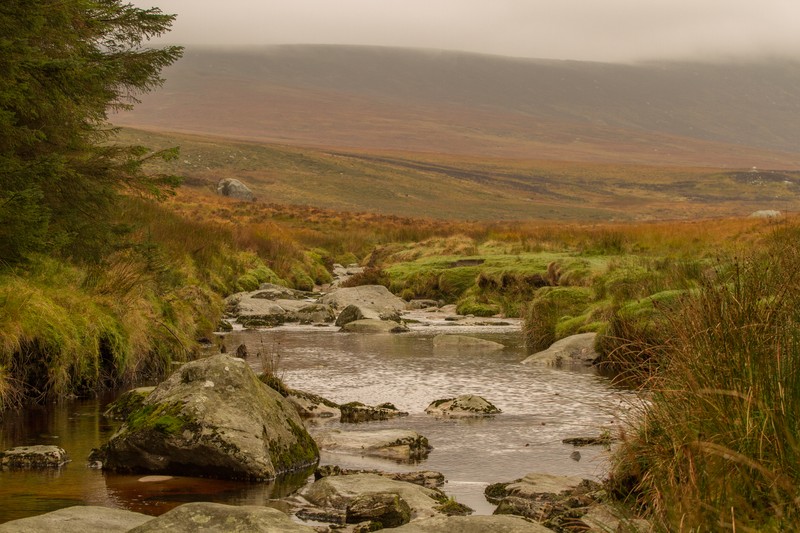
The County Wicklow countryside near Hozier’s home. Photo: Tony Webster / CC BY 2.0, via Wikimedia Commons
Hozier resides at Oldfort, near the town of Newcastle in County Wicklow, often called the “Garden of Ireland.” He purchased the historic property in 2015 for nearly €800,000. The four-bedroom home dates back to the 18th century and sits on spacious grounds surrounded by the rolling hills and woodlands that define this part of eastern Ireland.
Unlike many global musicians who gravitate toward London, Los Angeles, or New York, Hozier chose to remain rooted in the Irish countryside. His decision reflects a deep personal philosophy: that proximity to nature, silence, and the rhythms of rural life are essential to his art. County Wicklow provides all three in abundance. The Wicklow Mountains rise just outside his door, offering the kind of solitude that shaped poets and musicians for centuries.
As of recent reports, Hozier has been expanding the property. In 2024, Wicklow County Council granted planning permission for a new guest lodge and gym on the grounds of his Oldfort residence, following multiple revisions. The council initially asked him to scale back the two-storey, two-bedroom guest lodge, but revised plans were eventually approved. The expansion signals his long-term commitment to making this estate both a personal sanctuary and a functional creative compound.
The property’s current estimated value sits between $900,000 and $1.2 million, reflecting both the historic character of the home and the desirability of the Wicklow countryside location. For a musician of his stature, the choice to invest in land and heritage rather than metropolitan real estate is telling. It reinforces the grounded, authentic image that fans associate with his work.
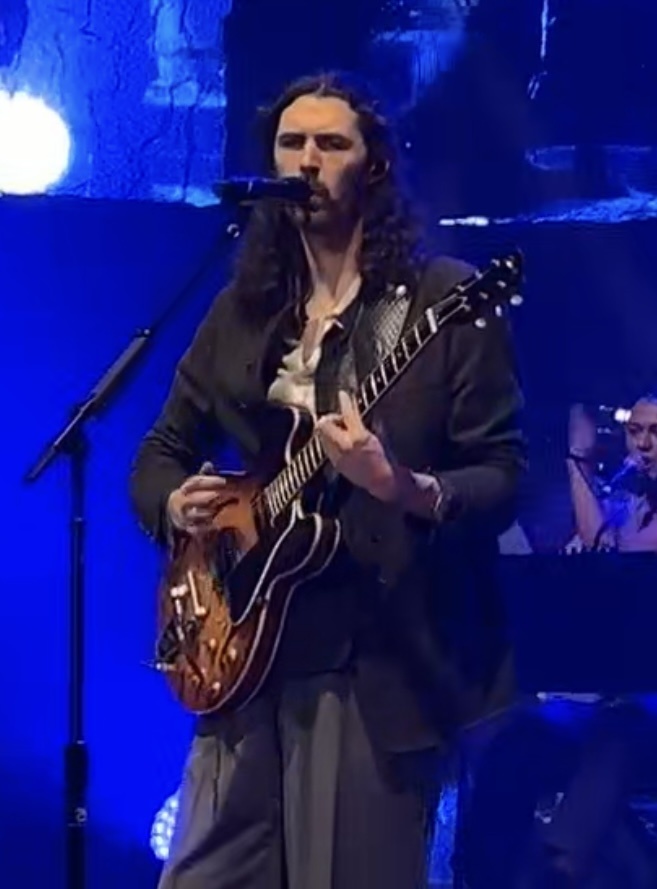
Hozier performing live on stage. Photo: Wikimedia Commons, CC BY-SA 4.0
The Childhood Home in Bray
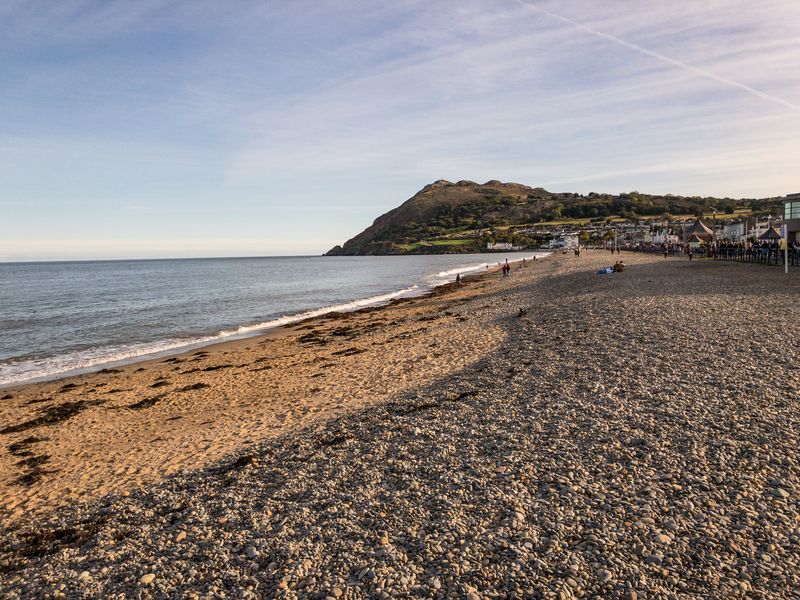
The seaside town of Bray, County Wicklow, where Hozier grew up. Photo: fabianwalden / CC BY 2.0, via Wikimedia Commons
Before the 18th-century estate, there was a modest family home in Bray, County Wicklow, a seaside town just south of Dublin. This is where Andrew Hozier-Byrne grew up, raised by his father John Byrne, a banker by day and a blues and jazz drummer by night, and his mother Raine Hozier-Byrne, a visual artist. The household was creative, musical, and deeply Quaker in its values of simplicity and reflection.
The childhood home was far from glamorous, but it was fertile ground for a future songwriter. His father’s evening gigs and record collection filled the house with the sounds of Chicago blues, Delta roots, and Irish folk. His mother’s artistic eye surrounded him with visual creativity. This blend of auditory and visual influence became the foundation for the moody, layered music Hozier would later create.
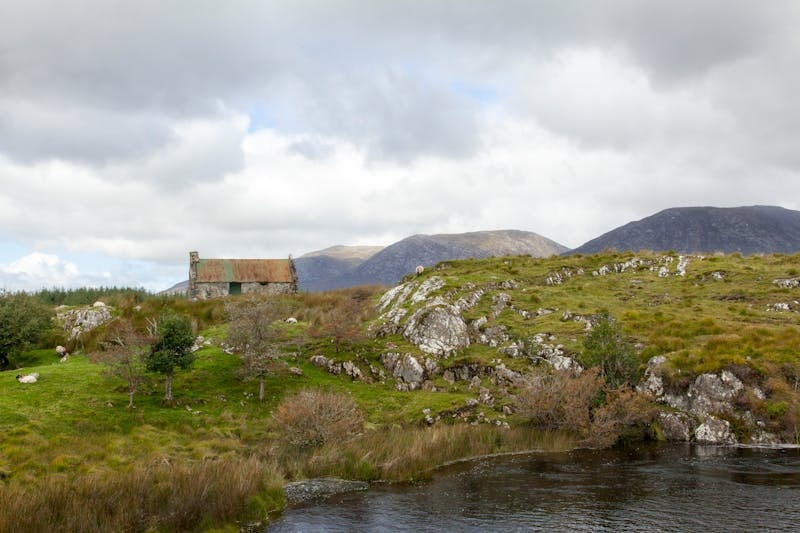
An Irish stone cottage in the County Wicklow countryside. Photo: Pexels (free license)
The most famous room in that Bray house is, without question, the attic. It was there, in a cramped, basic home studio, that “Take Me to Church” was written and recorded. Hozier was struggling financially at the time, living with his parents and recording demos on equipment that most professional producers would consider laughable. The song, born from a difficult breakup and a simmering anger at institutional dogma, went on to become a worldwide phenomenon. Another track, “Cherry Wine,” was recorded in a nearby derelict hotel and left virtually untouched by studio production, preserving its raw, intimate quality.
The attic origin story has become central to Hozier’s mythology. It underscores the idea that great art does not require great resources, only honesty and the willingness to create from wherever you are. That philosophy still informs his approach to music and home life today.
The Home Studio and Creative Process
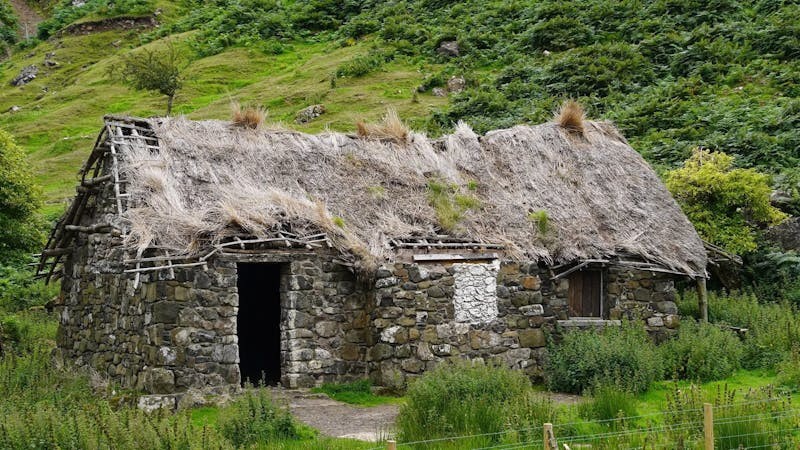
A historic Irish stone cottage with thatched roof typical of the Wicklow countryside. Photo: Pexels (free license)
Hozier’s living space has always doubled as a creative sanctuary. From the attic recordings in Bray to his current setup at Oldfort, his home recording studio approach remains consistent: keep it intimate, keep it real. He has spoken in interviews about how his home environment shapes the way he writes. The quiet of the Wicklow countryside, the sound of wind through old stone walls, and the absence of urban distraction all feed directly into the atmospheric quality of his recordings.
His songwriting process is notoriously deliberate. In a 2024 interview with IrishCentral, Hozier described how a single song can take him a year or more to complete. He writes, records fragments, steps away, returns, revises, and often scraps entire versions before arriving at a final take. This patient, iterative method thrives in a home environment where there is no studio clock ticking and no producer waiting in the next room.
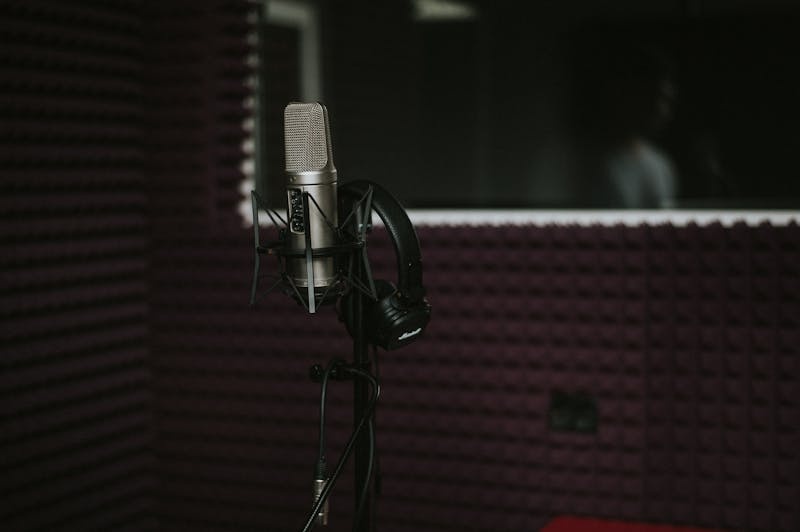
A home recording studio setup with condenser microphone and acoustic treatment. Photo: Pexels (free license)
The approved guest lodge and gym expansion at Oldfort may also serve a creative function. A dedicated guest space could accommodate collaborating musicians for extended writing sessions, while the gym addresses a practical need for the touring artist. Together, these additions transform the property from a private residence into a self-contained creative compound, mirroring the approach taken by artists like Bon Iver’s Justin Vernon, whose Wisconsin cabin studio became legendary.
The “Hozier House” Aesthetic: How to Get the Look
Hozier’s music evokes a very specific atmosphere: dark, warm, earthy, and deeply connected to nature. Fans have labeled this vibe “cottagecore,” “bogcore,” or simply “the Hozier aesthetic.” It is no surprise that his actual home mirrors this sensibility. An 18th-century stone house in the Wicklow countryside, surrounded by ancient trees and mist-covered hills, is the physical embodiment of his sound.
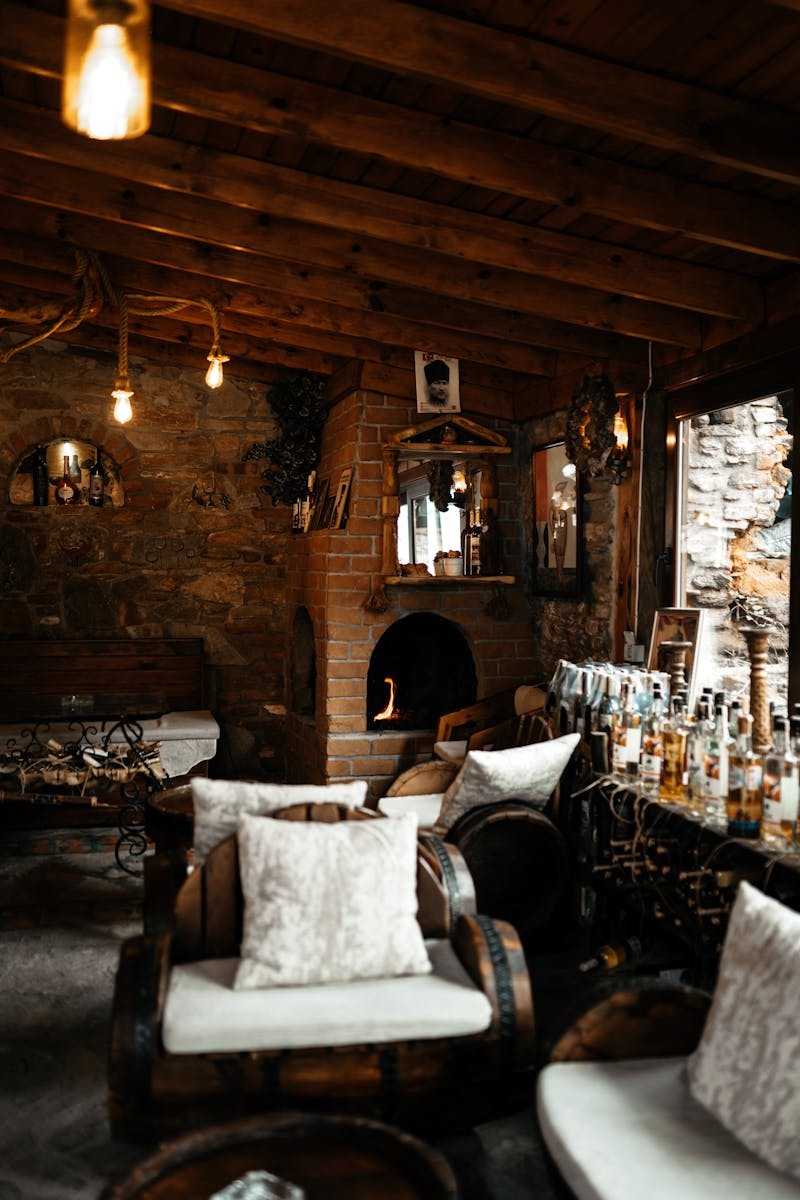
A cozy cottage interior with stone fireplace and rustic decor reflecting the Hozier house aesthetic. Photo: Pexels (free license)
The interior of such a period home in this region would naturally feature elements that fans associate with the Hozier look. Think exposed stone walls, wide-plank wooden floors darkened by centuries of use, heavy timber beams overhead, and fireplaces that serve as the heart of every room. Vintage rugs layered over stone or wood, well-worn leather armchairs, and shelves lined with books and records complete the picture. It is a space that feels collected over time rather than decorated, lived-in rather than styled.
Key Elements of Hozier-Inspired Decor
- Dark Woods and Exposed Stone: Opt for reclaimed oak, walnut, or mahogany furniture. Leave stone walls exposed wherever possible, or use textured stone veneer for a similar effect. The interplay of dark timber and rough stone creates the moody foundation of the look.
- Vintage and Antique Rugs: Layer Persian, Turkish, or Irish-made kilim rugs over wooden or stone floors. Imperfections and faded colors add authenticity. Avoid anything too pristine or geometric; the feel should be organic and timeworn.
- Crackling Fireplaces: A working fireplace is non-negotiable. Whether it is a grand stone hearth or a cast-iron wood burner, the glow and sound of real fire is essential to the atmosphere. If a real fire is not possible, a high-quality electric log burner can approximate the effect.
- Abundant Nature Indoors: Bring the Wicklow landscape inside with wildflower arrangements, dried eucalyptus, trailing ivy, and potted ferns. Choose ceramics and vases in earthy tones. Open curtains wide to let natural light flood in during the day, and use candles or amber-toned lamps at night.
- Books, Records, and Art: Fill shelves with well-thumbed poetry collections, vintage vinyl, and framed art that reflects the Irish landscape. Avoid minimalism; the space should feel rich and layered, as though every object has a story.
- Warm, Dim Lighting: Replace cool LED bulbs with warm-toned alternatives. Use table lamps, wall sconces, and candles rather than overhead lighting. The goal is to create pools of warm light that mimic firelight.
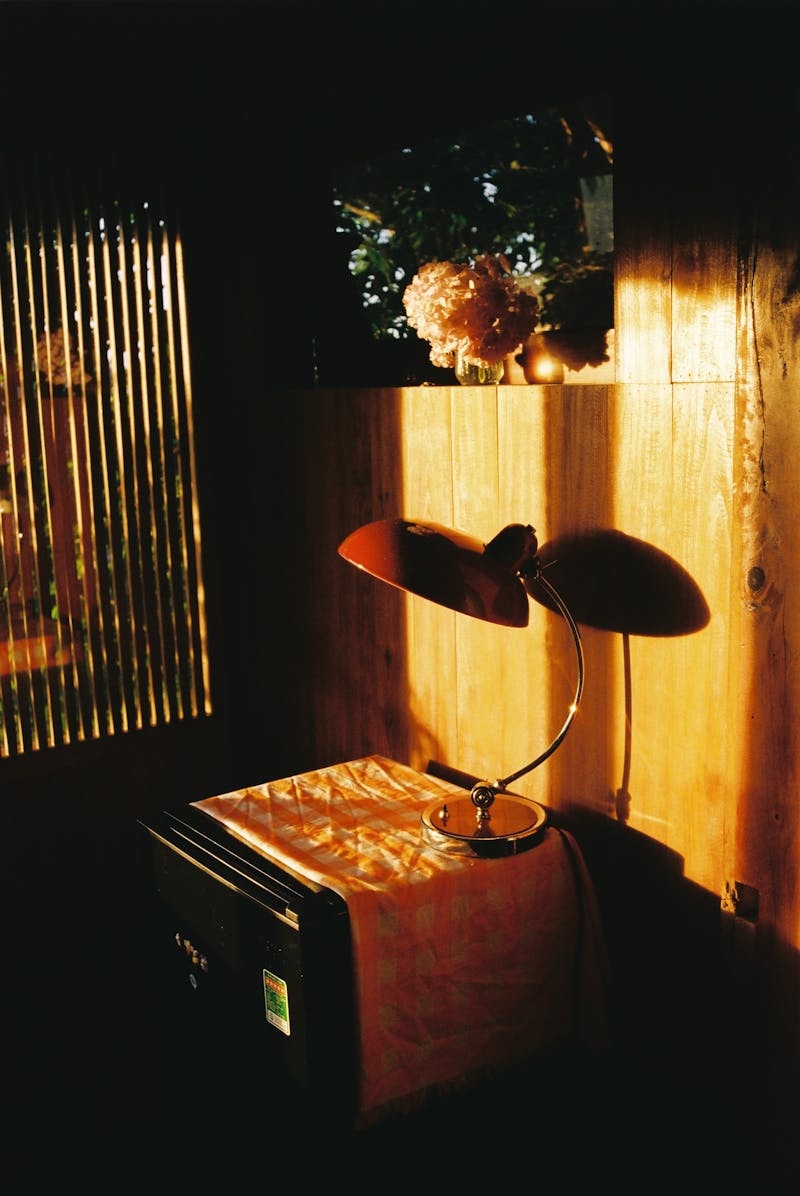
A warm vintage interior with dark wood and cottagecore decor capturing the Hozier-inspired aesthetic. Photo: Pexels (free license)
Key Features and Design Insights
Hozier’s Oldfort property is a textbook example of how heritage architecture and creative lifestyle can coexist. The 18th-century structure provides period features that no modern build can replicate: thick stone walls that regulate temperature naturally, original window casements that frame views of the Wicklow hills, and a footprint designed for rural life rather than suburban convenience.
The decision to expand rather than relocate also speaks to a design philosophy rooted in adaptation rather than replacement. By adding a guest lodge and gym within the existing grounds, Hozier preserves the historic integrity of the main house while accommodating modern needs. This approach mirrors the careful, respectful renovation practices common in Irish heritage properties, where original features are retained and new additions are designed to complement rather than compete.
From a real estate perspective, the Wicklow area has seen steady growth in property values, driven by its proximity to Dublin, its natural beauty, and its appeal to high-profile buyers seeking privacy. Hozier’s 2015 purchase at approximately €800,000 reflects the pre-boom market. Current estimates placing the property between $900,000 and $1.2 million align with the broader trend of rural Irish properties appreciating as remote work and lifestyle migration reshape housing demand across Ireland.
Frequently Asked Questions
Where does Hozier live currently?
Hozier lives in an 18th-century home at Oldfort, near Newcastle in County Wicklow, Ireland. He purchased the four-bedroom property in 2015 for nearly €800,000 and has since received planning approval to add a guest lodge and gym on the grounds.
Was “Take Me to Church” really recorded in an attic?
Yes. Hozier wrote and recorded “Take Me to Church” in the attic of his parents’ home in Bray, County Wicklow. He was a struggling musician at the time, using basic home recording equipment. The song went on to become a global hit, reaching number two on the Billboard Hot 100.
What is the Hozier house aesthetic?
The Hozier house aesthetic combines cottagecore and bogcore design elements: dark woods, exposed stone, vintage rugs, crackling fireplaces, and abundant natural textures. It is warm, moody, and deeply connected to the Irish countryside, mirroring the atmospheric quality of his music.
How much is Hozier’s Wicklow house worth?
The property is currently estimated to be worth between $900,000 and $1.2 million. Hozier purchased it in 2015 for nearly €800,000. The value reflects both the historic character of the 18th-century home and the desirability of the County Wicklow location.
Is Hozier building an extension to his house?
Yes. In 2024, Wicklow County Council granted planning permission for Hozier to build a guest lodge and gym on the grounds of his Oldfort property. Initial plans for a two-storey, two-bedroom guest lodge were scaled back following council feedback before final approval was granted.
How Home Shapes the Music
Hozier’s journey from a cramped attic in Bray to an 18th-century estate in the Wicklow countryside is not just a story of real estate upgrades. It is a story of an artist whose environment and output are inseparable. The solitude of County Wicklow, the stone walls of Oldfort, the mountain trails he walks, and the fireside rooms where he writes are all ingredients in the moody, soulful music that has earned him a devoted global following.
His home choices reflect a rare consistency in an industry that often rewards excess. Rather than trading privacy for proximity to fame, Hozier invested in the landscape and heritage that made him who he is. The result is a body of work that feels genuinely rooted in place, and a home that stands as a quiet testament to the power of staying true to your roots.
Image Credits
Wicklow Mountains landscape: Tony Webster / CC BY 2.0, via Wikimedia Commons.
Hozier performing live: Wikimedia Commons, CC BY-SA 4.0.
Bray seaside town: fabianwalden / CC BY 2.0, via Wikimedia Commons.
Irish stone cottage, historic cottage, cozy fireplace, home recording studio, vintage interior: Pexels (free license).
