

Michael Flatley built a global empire on Irish dance. From Riverdance to Lord of the Dance, his performances earned him a fortune estimated at over $600 million. His most personal investment? A sprawling mansion in County Cork called Castlehyde, a property that cost over €50 million to create. Today, the estate sits at the center of a legal battle that has kept it empty since 2023.
Quick Facts About Michael Flatley’s House
| Detail | Information |
|---|---|
| Property Name | Castlehyde House |
| Location | Fermoy, County Cork, Ireland |
| Purchase Year | 1999 |
| Purchase Price | €3 million |
| Renovation Cost | €27–30 million |
| Furnishings Cost | €20 million |
| Estate Size | 150 acres |
| Mansion Size | 35,000 sq ft |
| Bedrooms | 12 suites |
| Current Status | Uninhabitable (chemical residue) |
Where is Michael Flatley’s House?
Castlehyde House sits on the banks of the River Blackwater in Fermoy, County Cork, Ireland. The River Blackwater valley is one of Ireland’s most scenic landscapes, often called the “Irish Rhine.” The estate spans approximately 150 acres of rolling countryside.
The mansion is a protected structure dating back to the 1780s. It was originally built for the Hyde family, ancestors of Douglas Hyde, who served as the first President of Ireland from 1938 to 1945. This connection gives Castlehyde deep historical significance well beyond its celebrity ownership.
Flatley purchased the derelict property in 1999 for roughly €3 million. At the time, the 18th-century Georgian mansion had fallen into severe disrepair. Its historical pedigree and stunning riverside setting made it an irresistible project for the dancer, who has often spoken of his emotional connection to Ireland.
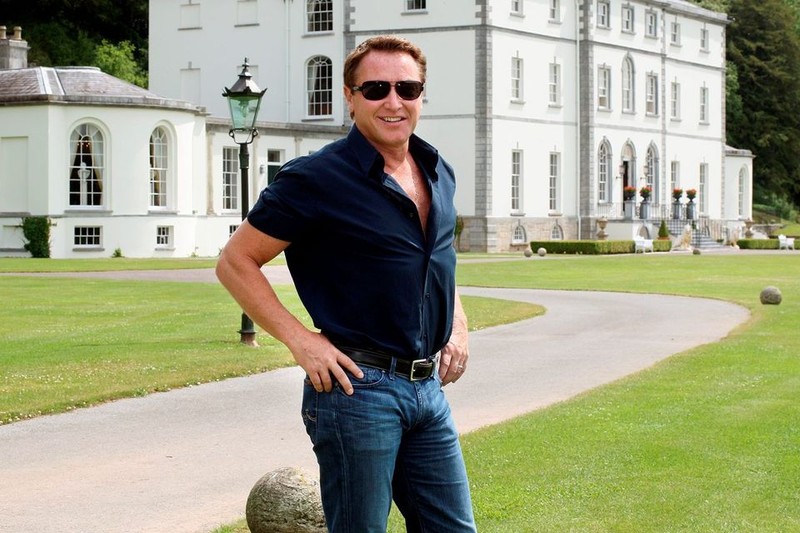
Michael Flatley stands before the exterior of Castlehyde House in Cork, Ireland
The Staggering Cost and Lavish Renovations
The purchase price was just the beginning. Flatley poured between €27 million and €30 million into a complete restoration of the 35,000-square-foot Georgian mansion. The renovation was painstaking, aiming to preserve the building’s 18th-century character while adding modern luxuries throughout.
On top of the structural work, he spent an additional €20 million on interiors. This covered artwork, antiques, and a collection of eccentric curiosities. The furnishings included suits of armor lining the hallways, antique pieces sourced from across Europe, and even an illuminated Hannibal Lecter mask displayed as a conversation piece.
Flatley has proudly stated that most of the craftsmanship during the renovation was sourced in Ireland. The total investment, including purchase, renovation, and furnishings, exceeded €50 million. That makes Castlehyde one of the most expensive private residences in Irish history.
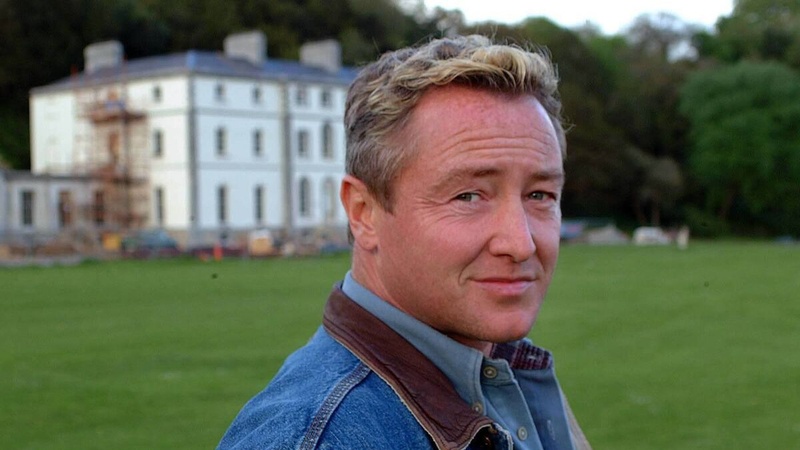
Castlehyde House neoclassical mansion exterior with scaffolding during restoration in Cork
Inside Castlehyde: A Tour of the Amenities
The amenities at Castlehyde read like a luxury resort brochure. The estate includes:
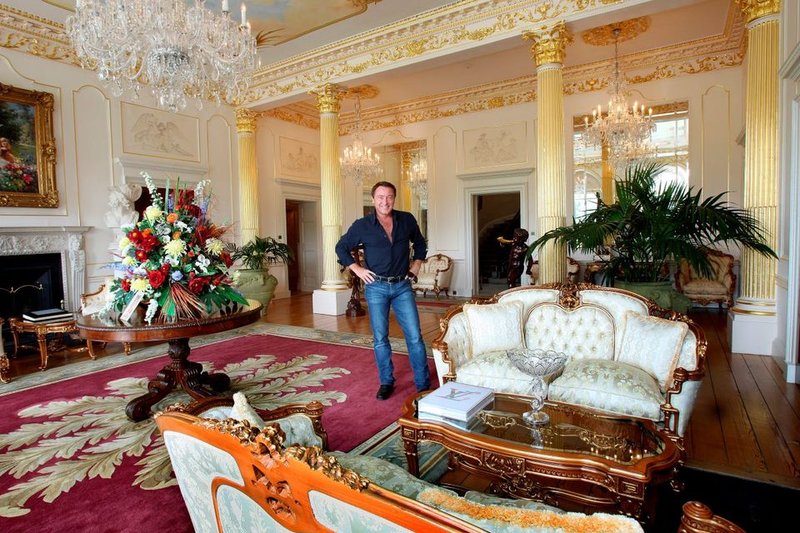
Opulent ballroom inside Castlehyde House featuring gilded columns and crystal chandeliers
- 12 bedroom suites and 7 reception rooms, each individually designed with period-appropriate furnishings and modern comforts.
- A 20-seat home cinema with tiered seating and professional-grade audio.
- An indoor swimming pool, complete with a spa area.
- A whiskey room and two wine cellars, stocked for grand entertaining.
- A billiards room with antique fixtures.
- Tennis courts, a driving range, and a putting green for outdoor recreation.
- The ruins of a 12th-century Norman castle on the grounds, adding a layer of medieval history to the estate.
The interiors blend Georgian elegance with theatrical flair. Crystal chandeliers hang above marble floors. Oil paintings line the walls alongside the more unusual items in Flatley’s collection. The overall effect is part stately home, part personal museum.
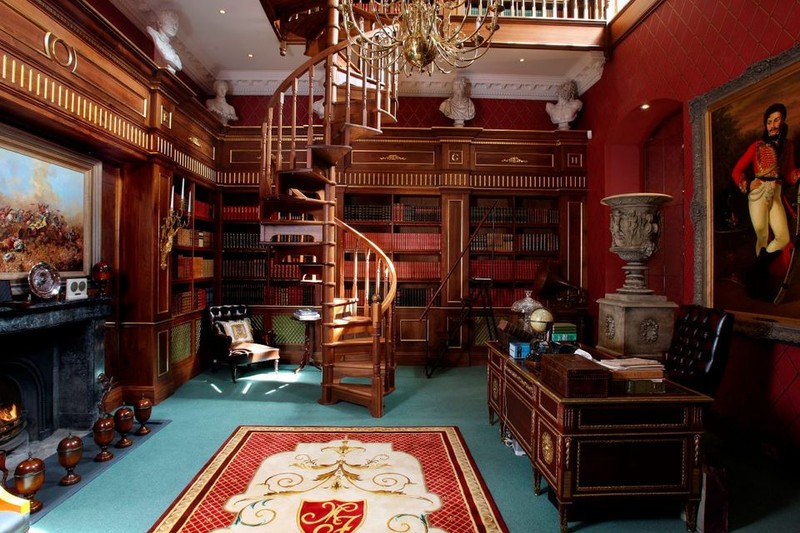
Castlehyde House library with spiral wooden staircase and mahogany bookshelves
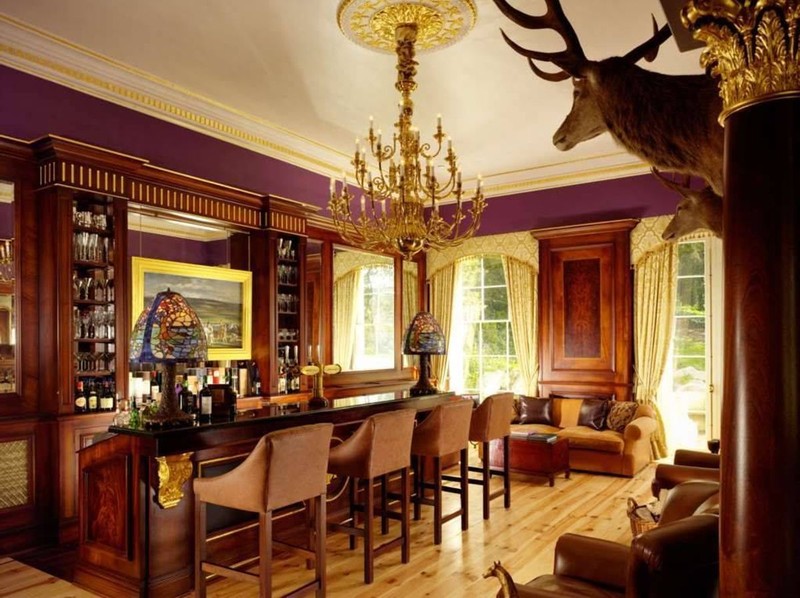
Opulent bar area in Castlehyde House with wood paneling, gilded chandelier and leather seating
Design and Architecture Insights
Castlehyde’s architecture is a study in contrasts. The original 1780s Georgian shell features symmetrical facades, sash windows, and high-ceilinged rooms typical of the period. Flatley’s renovation respected these elements while inserting decidedly modern additions behind classical doorways.
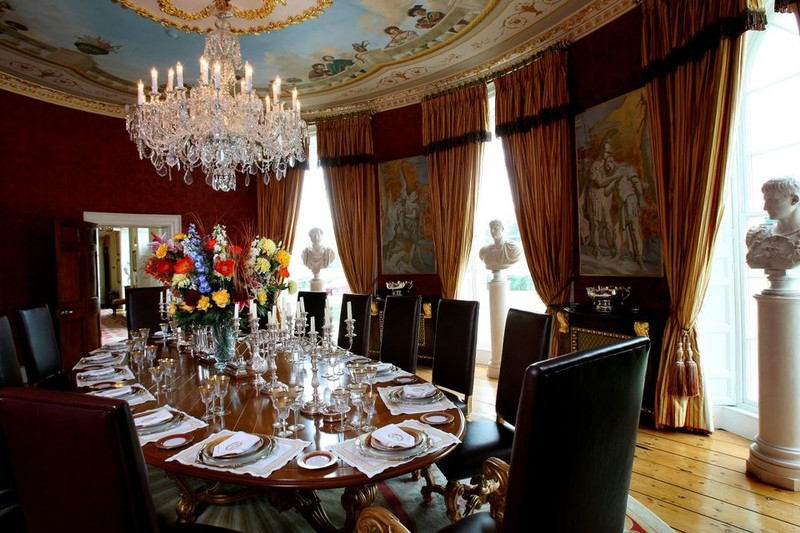
Grand dining room in Castlehyde with fresco ceiling, crystal chandelier and ornate table setting
The indoor pool and cinema, for example, are housed in spaces that from the exterior remain faithful to the Georgian aesthetic. Inside, the design language shifts to contemporary luxury. Marble, dark wood, and gold accents dominate, reflecting Flatley’s personal taste for opulence and grandeur.
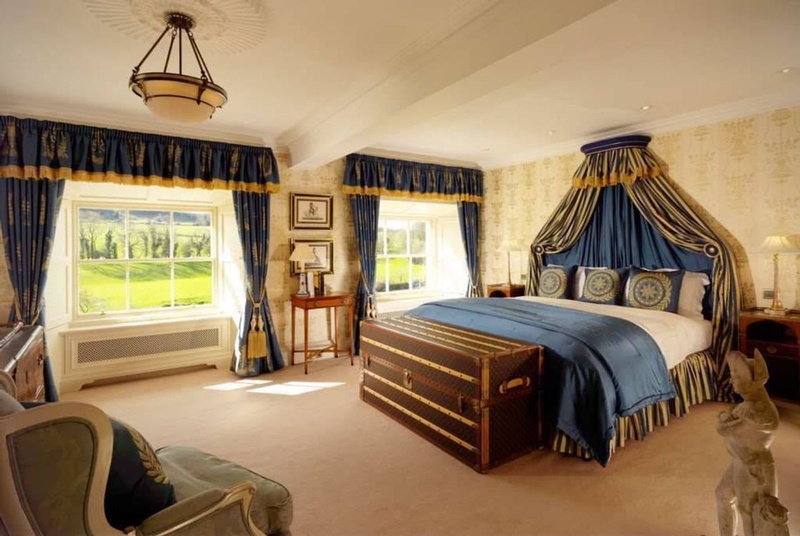
Elegant bedroom suite in Castlehyde House with ornate canopy bed and pastoral views
The craftsmanship was almost entirely Irish. Stonemasons, woodworkers, and artisans from across the country contributed to what Flatley described as a labor of love. The result is a property that bridges centuries of Irish heritage with the spectacle of a performer who made his name on the world stage.
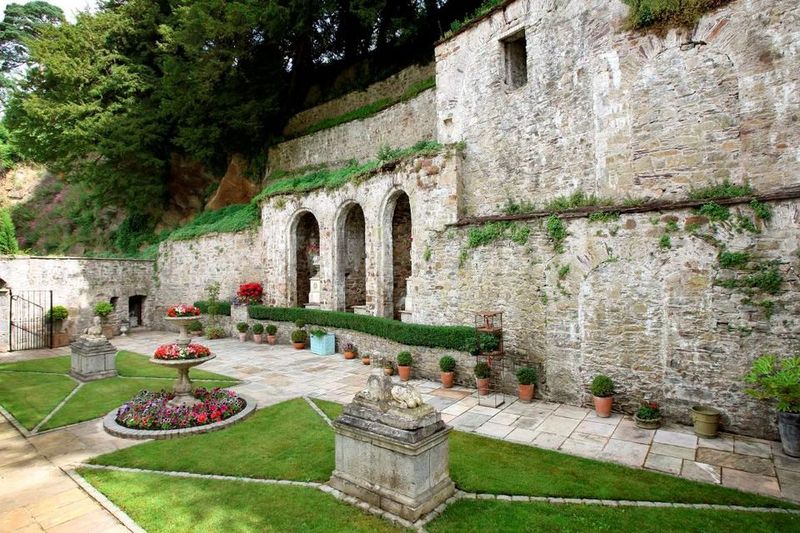
Stone courtyard of Castlehyde House with central fountain, manicured lawn and arched openings
Why Did Michael Flatley Leave His Cork Mansion?
In October 2023, Michael Flatley, his wife Niamh, and their son evacuated Castlehyde after hazardous chemical residue was detected at the property. The residue, identified as chloride, was traced back to a fire that occurred at the estate in 2016. Flatley alleges that PVC combustion from that fire left unsafe levels of toxic chemicals on surfaces throughout the mansion, including in the pool, spa, and cinema areas.
The renovation contractor, Austin Newport Group Ltd, had carried out remediation work after the fire. Flatley claims the contractor was aware of the hazardous residue but failed to inform him or address it properly. In December 2023, the High Court heard that the family was “devastated” at having to leave their home.
Flatley has stated that the toxic residue contributed to his cancer diagnosis. He estimates that fully remediating the contamination would cost approximately €30 million. He is now pursuing a €30 million legal action against the contractor, an insurer, and other parties involved in the post-fire restoration.
The legal proceedings have been complex. In August 2025, the Commercial Court ordered Flatley to pay €3 million upfront as security for costs in advance of the full trial. In November 2025, a judge further directed him to pay €1.1 million as additional security. The case remains ongoing.
Separately, Flatley faced a financial dispute over a €5.7 million loan he had taken out using Castlehyde as security. That loan grew to €6.9 million, and in early 2025 the lender moved to appoint receivers. Flatley was given a court deadline to repay, and in March 2025 he successfully paid off the full €6.9 million loan, saving Castlehyde from receivership.
Did Michael Flatley Sell His House?
Flatley has attempted to sell Castlehyde multiple times, but emotional attachment always won out. The property was first listed in 2015 for approximately €20 million. By 2018, the asking price had been reduced to €12.5 million. It was placed back on the market in 2020.
Despite interest, no sale was completed. Flatley ultimately pulled the property off the market, stating he was “too emotionally attached” to Castlehyde to part with it. The estate has been his most cherished project, and walking away proved impossible.
In 2020, Sheppard’s Irish Auction House sold off many of the quirky contents of the home, including the suits of armor and other eccentric collectibles. This suggested that Flatley was at least considering a future without the property, even as he held on to the house itself.
As of recent reports, Castlehyde remains in Flatley’s ownership. The chemical contamination issue and the ongoing legal dispute mean the property’s future is uncertain. However, his repayment of the €6.9 million loan in 2025 signals a clear intent to retain the estate.
Does Michael Flatley Own Other Properties?
Castlehyde may be Flatley’s most famous home, but it is far from his only one. His global real estate portfolio reflects a career spent performing and living across multiple continents.
He owns a mansion in London’s Little Venice neighborhood, a three-story white-stucco villa that was listed for approximately £26 million. He has held properties in the Caribbean, including in Barbados. In the United States, he has owned homes in New York and Beverly Hills. His primary residence is in Monaco, the tax-friendly principality on the French Riviera.
These properties, combined with Castlehyde, represent a real estate portfolio that mirrors the scale of his career earnings. Yet it is the Cork mansion, with its deep Irish roots and personal investment, that remains the most significant property in his story.
Frequently Asked Questions
How much did Michael Flatley’s house cost?
Flatley bought Castlehyde for approximately €3 million in 1999. He then spent €27–30 million on renovations and €20 million on furnishings, bringing the total investment to over €50 million.
Why is Michael Flatley’s house uninhabitable?
In 2023, toxic chloride residue from a 2016 fire was detected at the property. Flatley claims the post-fire renovation contractor failed to properly address the contamination, rendering the home unsafe to occupy.
What is the historical significance of Castlehyde?
Castlehyde was built in the 1780s for the Hyde family. It is the ancestral home of Douglas Hyde, who served as the first President of Ireland from 1938 to 1945.
Did Michael Flatley sell his Cork mansion?
No. Despite listing the property multiple times between 2015 and 2020, Flatley pulled it off the market, saying he was “too emotionally attached” to sell. The property remains in his ownership.
What is the current status of the Castlehyde legal case?
The €30 million lawsuit over alleged defective renovation work is ongoing. Flatley has been ordered to pay security for costs totaling approximately €3 million. He also repaid a €6.9 million loan in March 2025, preventing receivers from taking control of the property.
