

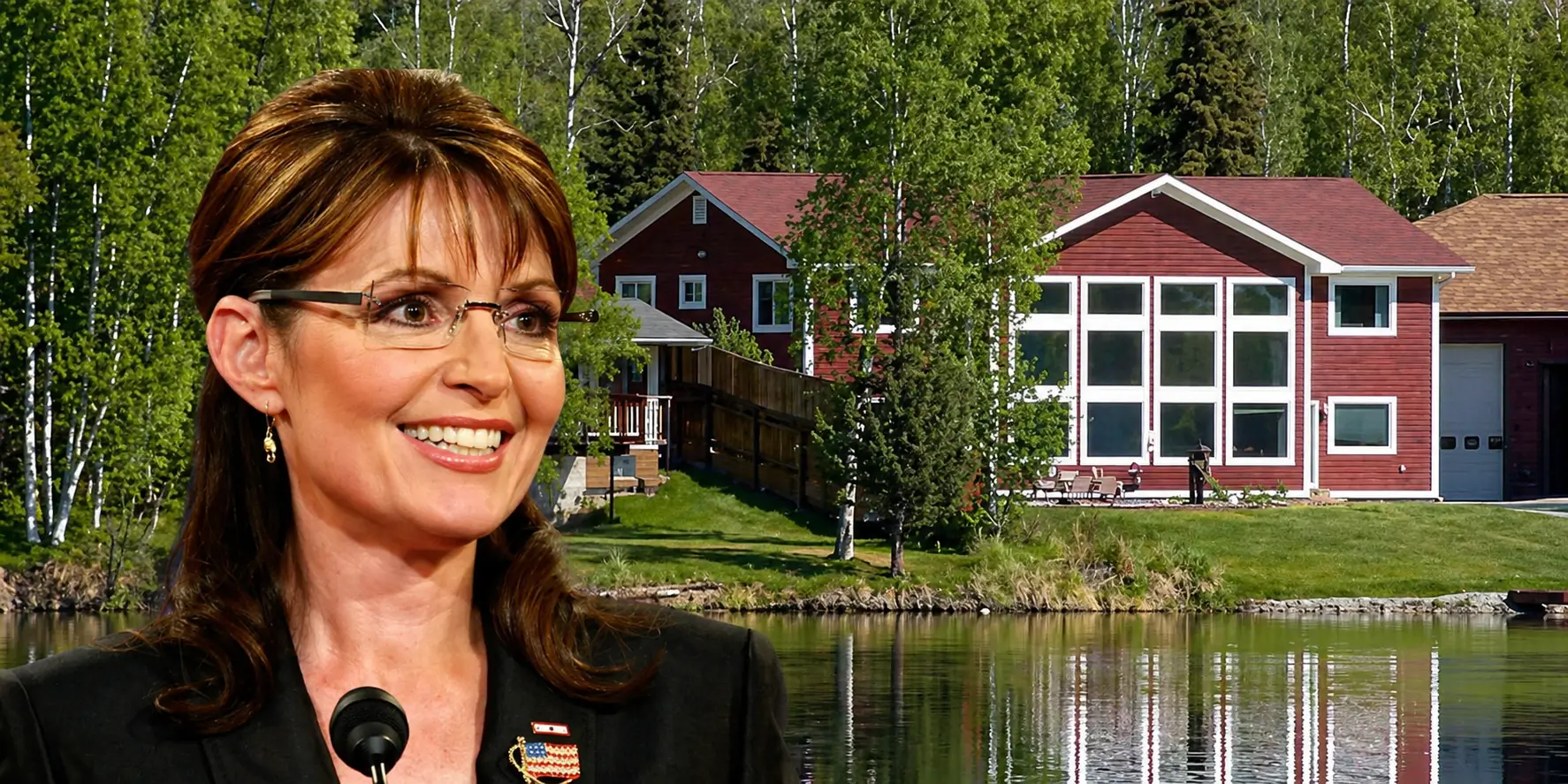
Most celebrity home tours showcase marble countertops and infinity pools, but Sarah Palin’s house on Lake Lucille tells a different story. The former Alaska governor and 2008 vice presidential nominee still lives in the same Wasilla lakefront property she and her husband Todd have owned for over two decades.
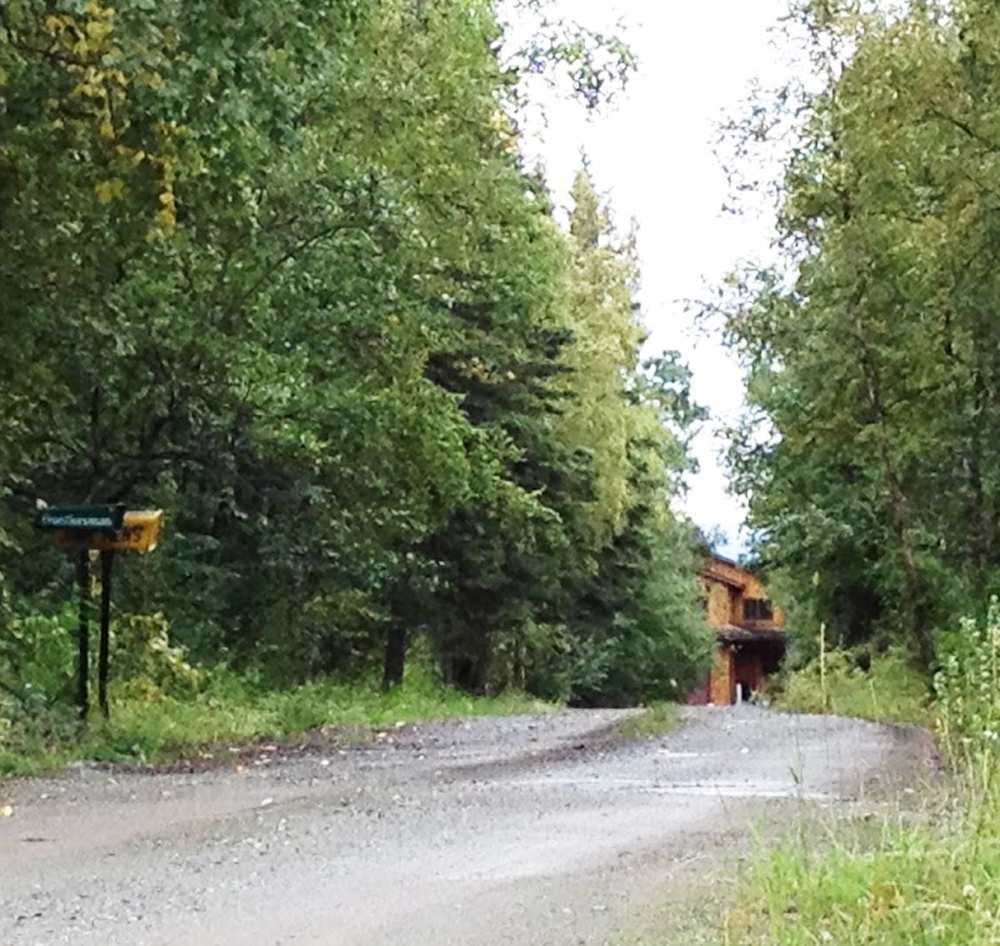
Where does Sarah Palin live? Palin’s primary residence remains at 1140 W Parks Highway in Wasilla, Alaska, a two-story framed home built in 2002 on the western shore of Lake Lucille. The property sits on a couple of acres, with a poured concrete foundation and direct waterfront access that includes a private dock where the family keeps a floatplane.
What makes this property architecturally interesting is not luxury finishes but how it reflects Alaskan residential building in a practical, landscape-driven way. From a design analysis perspective, the Palin home offers a case study in how high-profile homeowners in remote environments balance livability, privacy, and connection to the natural surroundings.
TL;DR
Sarah Palin lives in a two-story, approximately 3,400-square-foot lakefront home on Lake Lucille in Wasilla, Alaska, built in 2002 on a poured concrete foundation. The property includes a private dock with floatplane access, a second larger structure added around 2010, and became nationally known when Palin erected a 14-foot privacy fence to block author Joe McGinniss from the neighboring property. Palin also previously owned two Scottsdale, Arizona properties, an equestrian estate sold in 2016 for $2.275 million and a Silverleaf mansion sold in 2019 for $6.2 million through Safari Investments LLC.
Quick Facts: Sarah Palin’s Lake Lucille Residence
| Detail | Information |
|---|---|
| Property Type | Two-story lakefront home with adjacent second residence |
| Location | 1140 W Parks Hwy, Wasilla, AK 99654 (Lake Lucille) |
| Year Built | Original home built in 2002; second structure added circa 2010 |
| Lot Size | Approximately 2 to 3 acres of lakefront property |
| Square Footage | Original: ~3,400 sq ft; second structure: larger footprint |
| Construction | Framed structure on poured concrete foundation |
| Architectural Style | Rustic Alaskan lakefront, functional and utilitarian design |
| Key Features | Private dock, floatplane access, panoramic lake and mountain views |
| Notable Addition | 14-foot wooden privacy fence (2010) |
| Other Properties | Scottsdale, AZ (sold 2016 for $2.275M; Silverleaf sold 2019 for $6.2M) |
| Current Status | Primary residence; Palin confirmed to live in Wasilla |
| Estimated Value | Lake Lucille property valued in the mid-six figures range |

The Property: Layout and Location on Lake Lucille
Sarah Palin’s Wasilla home occupies one of the more desirable positions along Lake Lucille. The property is located on the western end of town, where the lake is framed by evergreen forests and jagged mountain peaks. The Palin compound sits within view of the public boat launch near the Best Western Lake Lucille Inn, a detail that contributed to both its tourism curiosity and its privacy challenges.
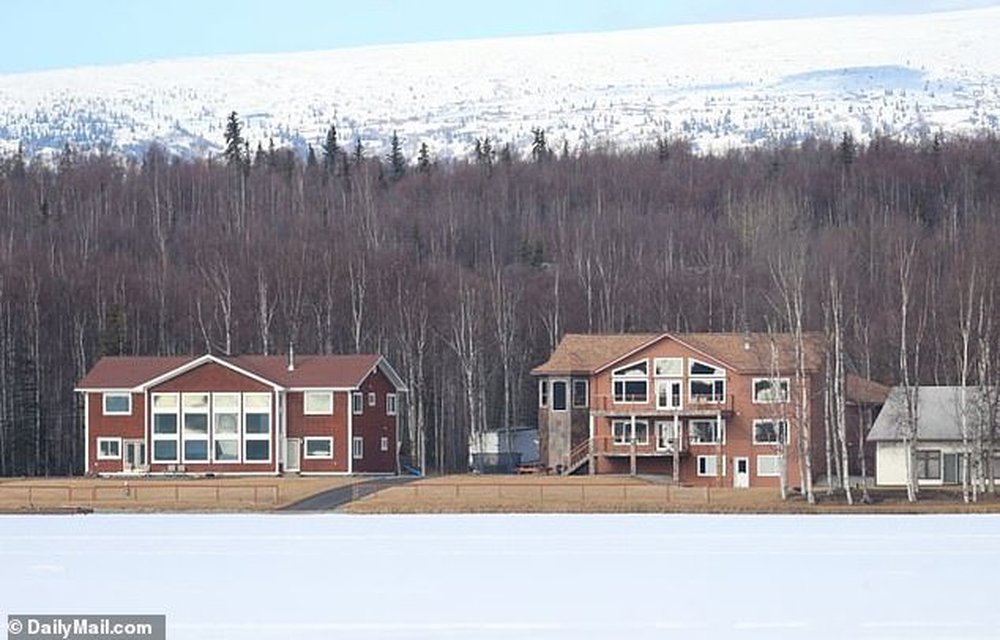
The original structure, designed by Todd Palin and built with the help of contractor friends, is roughly 3,400 square feet across two stories. A poured concrete foundation anchors the home to the lakeside terrain, a critical detail in a region where permafrost and ground shifting pose ongoing structural concerns. The two-story framed construction is typical of custom-built Alaskan homes, where framed structures offer flexibility for insulation upgrades and are more forgiving of ground movement than masonry.
What sets this property apart from a purely functional standpoint is the paved-road access along the Parks Highway. In Alaska, many waterfront properties are accessible only by boat or unpaved trails, which dramatically affects both convenience and resale value. The Palin home benefits from year-round road access, a significant factor in its market positioning within the Matanuska-Susitna Valley.

The Second Structure: A Compound Takes Shape
Around 2010, construction began on a second, larger home on the same lakefront parcel. The New York Times reported it as “an enormous structure rising beside their existing 3,400-square-foot house.” This addition effectively transformed the single-family residence into a multi-structure compound.
From a design perspective, the decision to build an adjacent structure rather than expand the original home suggests a few things. First, it preserves the original home’s footprint and structural integrity, an important consideration on lakefront terrain where extensive excavation can destabilize shoreline banks. Second, it creates functional separation between living and entertaining spaces, a common approach in high-end compound-style properties.
The compound layout also reflects the Palin family’s lifestyle needs. Todd Palin is a commercial fisherman, pilot, and snowmobile racer. The property needed to accommodate not just family living but also equipment storage, workspace, and watercraft access. The dual-structure approach addresses these demands without compromising the main home’s residential character.
Inside the Palin Home: An Architectural Walkthrough
Kitchen and Living Areas
While interior photographs are limited, the Palin home follows the pattern of most custom-built Alaskan lakefront residences: open-concept main living areas oriented toward the water. In homes of this type, the kitchen typically functions as the central hub, with large windows positioned to maximize natural light and lake views. The kitchen likely features durable, cold-climate-appropriate materials like granite or quartz countertops, stainless steel appliances, and cabinetry built to withstand temperature fluctuations between heating seasons.
The living areas are designed for both family comfort and the capacity to host guests, a practical necessity in a state where visiting often means extended stays. Vaulted ceilings are common in this style of home, creating visual volume while allowing heat to distribute more efficiently in extreme cold. Stone or brick fireplace elements provide supplemental heating and serve as the visual anchor of the main gathering space.
Bedrooms and Private Spaces
The home’s upper level houses the primary bedrooms. In a two-story lakefront home of this era, the master suite is typically positioned to capture the best water views, often with a balcony or deck access. The bedroom layout prioritizes thermal efficiency; in Alaska, upper floors can lose heat rapidly if insulation and window quality are not carefully specified.
Guest rooms and additional family bedrooms fill out the second floor. The floor plan likely includes a dedicated mudroom or entry buffer, an essential feature in any Alaskan home where residents regularly transition between outdoor gear and indoor living.
The Practical Side: Dock and Outbuildings
One of the property’s most distinctive features is the private dock on Lake Lucille. The Palin family keeps a floatplane at the dock, reflecting a mode of transportation that is genuinely common in Alaska (approximately 1 in 15 Alaskans owns a plane). The dock represents both a lifestyle choice and a functional asset; in a state with limited road infrastructure, floatplane access is a genuine convenience rather than a luxury affectation.

The Famous 14-Foot Fence: Privacy Meets Architecture

In May 2010, Sarah Palin made national headlines when she erected a 14-foot wooden fence between her property and the neighboring house. The neighbor was Joe McGinniss, a veteran journalist who had rented the adjacent home to research a book about Palin. The fence became one of the most widely discussed residential privacy structures in modern American political history.
From a design standpoint, a 14-foot fence is unusual for a residential setting. Standard privacy fences typically range from 6 to 8 feet. Going to 14 feet required substantial structural engineering. At that height, wind load becomes a serious concern, especially in a region prone to strong gusts off the lake. The fence had to be anchored deep and built with pressure-treated lumber capable of withstanding moisture exposure from the lakeside environment.
The fence also raised questions about local zoning compliance. Wasilla’s residential fence height limits typically cap at 6 to 8 feet, and any structure exceeding that requires a variance or special permit. The Palin fence became a flashpoint not just politically but in terms of local building governance.
Palin’s Arizona Real Estate: The Scottsdale Chapter
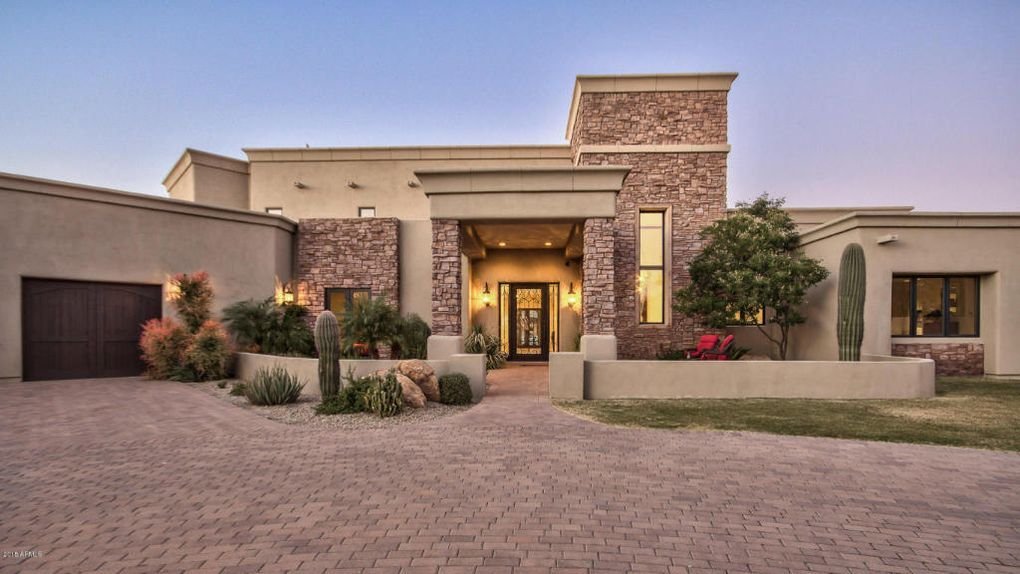
While Wasilla remains Palin’s primary residence, her real estate portfolio has included significant Arizona properties. In 2011, Palin purchased a nearly 8,000-square-foot equestrian estate in the Pinnacle Peak area of Scottsdale through Safari Investments LLC for approximately $1.695 million.
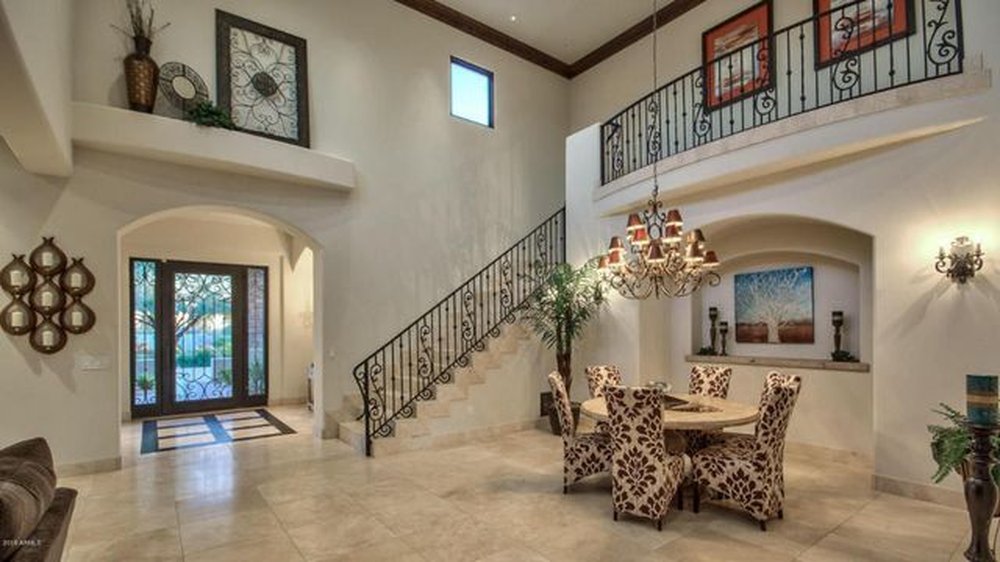
That Scottsdale property, a contemporary and Tuscan-style hybrid, featured six bedrooms, seven bathrooms, a chef’s kitchen, wine cellar, media room with tiered seating, lighted sports court, putting green, pool and spa, and a six-car garage on nearly five gated acres. It was listed for $2.5 million in 2015 and sold in 2016 for $2.275 million.
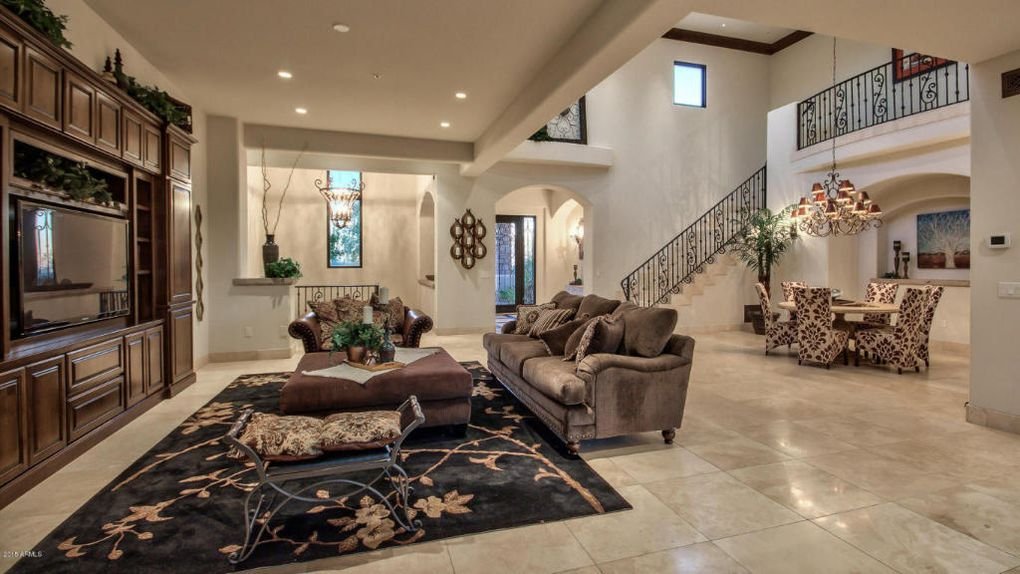
Palin’s second Arizona investment was more ambitious. In 2015, Safari Investments LLC purchased a vacant 2.18-acre lot in Silverleaf, one of Scottsdale’s most exclusive neighborhoods in the McDowell Mountains, for $937,000. A 7,660-square-foot mansion was constructed featuring four bedrooms, 5.5 bathrooms, a chef’s kitchen, negative-edge pool, elevator, and collector car garage. The property, still unfinished at the time, sold in late 2019 for $6.2 million, a remarkable return on investment that illustrates the strength of the Scottsdale luxury market.
The contrast between Palin’s Alaska and Arizona properties reveals an interesting real estate strategy: maintaining a modest primary residence while leveraging investment properties in high-appreciation luxury markets. It is an approach that has clearly paid off.
What the Palin Home Tells Us About Alaskan Residential Design
Sarah Palin’s Lake Lucille home, viewed through an architectural and material analysis lens, is a study in pragmatic Alaskan design. There are no imported Italian marbles or designer finishes. Instead, the home’s value lies in its siting, its structural choices, and its responsiveness to a demanding climate.
The poured concrete foundation is worth noting. In Alaska, many homes are built on post-and-pad systems that elevate structures above frozen ground. A full poured foundation signals a commitment to permanence and indicates that the site’s soil conditions and drainage were favorable enough to support conventional construction. This adds both stability and resale value.
The framed construction method is equally deliberate. In sub-zero climates, framed walls with thick cavity insulation outperform concrete or masonry in thermal performance. They also allow for easier modification over time, an important consideration for a family that has lived in the home through multiple life stages.
As of recent reports, Palin continues to reside at the Lake Lucille property, which sustained damage during a 2018 Alaska earthquake but remains the family’s home base. In a real estate market increasingly shaped by remote-work migration and second-home demand, waterfront Alaska properties like this one occupy a unique niche: they are not conventional luxury homes, but their combination of location, access, and compound potential gives them a distinct market identity.
Frequently Asked Questions
Where does Sarah Palin live?
Sarah Palin lives in Wasilla, Alaska, on the shores of Lake Lucille. Her primary residence sits at 1140 W Parks Hwy, a lakefront property she has owned since 2002.
How big is Sarah Palin’s Wasilla house?
The original Palin home on Lake Lucille is approximately 3,400 square feet. A second, larger structure was built adjacent to it starting around 2010.
Does Sarah Palin still own property in Arizona?
No. Palin sold her Scottsdale equestrian estate in 2016 for $2.275 million and her Silverleaf mansion via Safari Investments LLC in late 2019 for $6.2 million.
Why did Sarah Palin build a 14-foot fence?
Palin erected the fence in 2010 after author Joe McGinniss rented the neighboring house to write a book about her, prompting privacy concerns.
What is Sarah Palin’s Lake Lucille property worth?
While exact figures vary, the Lake Lucille compound has been valued in the mid-six-figure range, with its value driven primarily by waterfront positioning and paved-road access.
Final Thoughts
Sarah Palin’s Lake Lucille residence is not a showpiece estate in the traditional celebrity home sense. It is, instead, a working lakefront compound that reflects the realities of Alaskan life, practical construction, water access, climate-conscious design, and a kind of self-sufficient residential scale that you rarely see in the lower 48 states.
From an architectural analysis perspective, the property’s most compelling feature is its evolution: from a single family home to a multi-structure compound, shaped by the family’s needs, public attention, and the demands of its environment. It is a reminder that the most interesting homes are not always the most expensive ones. Sometimes they are the ones that tell the clearest story about how people actually live.
